
In This Article
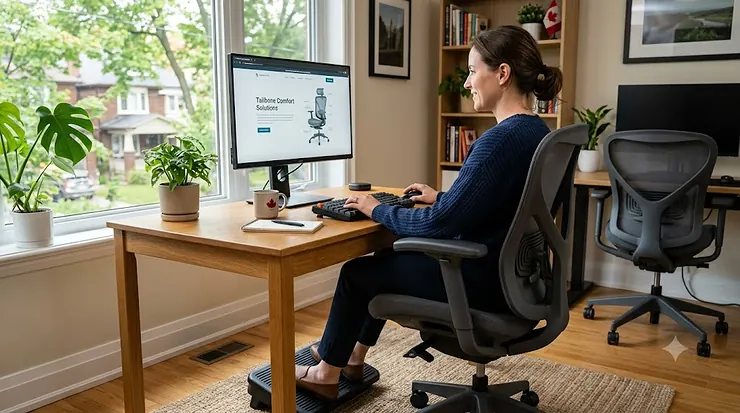
If you’ve ever stood up from your desk and felt that sharp, bruised twinge right at the base of your spine, you already know that “just get a better chair” is easier said than done. That nagging ache is usually coccydynia — tailbone pain caused by too much direct pressure on the small triangle of bone at the very bottom of your spine. It’s common among anyone who sits for long stretches: home-office workers, gamers, students, and especially Canadians settling in for another grey, indoor winter at a desk that wasn’t built with their body in mind.
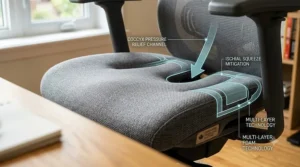
An office chair that doesn’t hurt your tailbone isn’t magic — it’s just one that redistributes weight off the coccyx and onto your thighs and sit bones instead, usually through a contoured or cut-out seat pan, a properly adjustable backrest, and a seat depth that actually matches your leg length. The good news is you don’t have to guess. Below is a side-by-side comparison, seven real products available on Amazon.ca (chairs and cushions, budget through premium), and a plain-language guide — backed by the Canadian Centre for Occupational Health and Safety (CCOHS) — on how to set one up properly so it actually does its job. All prices are in CAD and shown as ranges, since Amazon pricing shifts often.
What Causes Tailbone Pain at a Desk?
Tailbone pain at a desk is usually mechanical, not medical: prolonged sitting on a flat or thin seat concentrates body weight directly on the coccyx instead of spreading it across the sit bones and thighs. Slouching, a chair that’s the wrong height, or a seat with no contouring all make it worse over the course of a workday. For background on coccydynia itself, Coccyx.org — a long-running patient information resource — is a useful starting point, though it’s not a substitute for seeing a doctor if pain is severe, sudden, or follows a fall.
Quick Comparison Table
| Product | Type | Best For | Price Range (CAD) | Amazon.ca |
|---|---|---|---|---|
| Steelcase Series 1 | Premium chair | Long-term investment, all-day WFH | $550–$800 | Listing |
| SIHOO Doro C300 | Mid-premium chair | Dynamic lumbar + certified build | $450–$650 | Listing |
| Duramont Ergonomic Chair | Mid-range chair | Best all-rounder for the price | $250–$400 | Listing |
| NOUHAUS Ergo3D | Budget-mid chair | Tight budgets, smaller frames | $300–$450 | Listing |
| FelixKing Mesh Chair | Budget chair | Renters, students, trial-run buyers | $90–$180 | Listing |
| Cushion Lab Pressure Relief Cushion | Premium cushion | Pairing with an existing chair | $70–$100 | Listing |
| Everlasting Comfort Coccyx Cushion | Budget cushion | Cheapest fix that still works | $35–$55 | Listing |
A quick read on the numbers: the gap between the cheapest chair on this list and the Steelcase isn’t really about comfort on day one — most of these chairs feel fine for the first few weeks. The difference shows up six months in, in how well the foam holds its shape and whether the lumbar and tilt mechanisms still track correctly. If you’re not ready to commit to a chair at all, a cushion is the lower-risk way to test whether seat contouring even solves your specific pain before you spend more.
💬 Just one click — help others make better buying decisions too! 😊
✨ Don’t Miss These Exclusive Deals!
🔍 Click through any product above to check current pricing and availability on Amazon.ca — stock and prices shift often, especially around seasonal sales.
The 7 Best Picks for Tailbone Pain, Reviewed
1. Steelcase Series 1 — Best Overall Investment
The Steelcase Series 1 is built around Steelcase’s LiveBack mesh system, which flexes with your spine rather than holding one fixed curve, and a flexible front seat edge specifically designed to reduce pressure under the thighs and tailbone as you move. What that means in practice: instead of locking you into one “correct” posture, the backrest keeps tracking your spine as you shift — which matters more than people expect, since sitting perfectly still for eight hours is itself part of what aggravates the coccyx.
It’s also one of the few chairs in this price tier with carbon-neutral product certification and a limited lifetime warranty, which says something about how long Steelcase expects the foam and mechanisms to hold up — a real consideration in Canada, where a chair often does double duty as a home-office staple for years, not months.
Pros: Long warranty; flexible seat edge genuinely reduces tailbone pressure; widely serviceable parts.
Cons: Ships unassembled; among the pricier options here.
Best for: Someone who’s done with replacing a cheap chair every year.
2. SIHOO Doro C300 — Best Dynamic Lumbar System
The Doro C300 uses a “dynamic” lumbar mechanism that shifts with your lower back as you recline, rather than staying fixed in one spot — and it’s TÜV-certified to European EN1335 safety standards, with an SGS-certified pneumatic lift. The seat itself uses a waterfall-style front edge meant to take pressure off the backs of the thighs, which indirectly helps the tailbone too, since less pressure on the thighs means less compensatory weight shifted backward onto the coccyx.
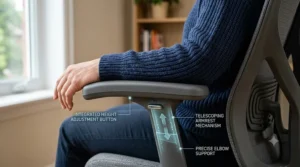
What stands out for tailbone sufferers specifically is the seat-depth adjustment on the Pro variants, letting shorter or taller users slide the seat pan so their tailbone actually reaches the backrest instead of perching mid-seat — a fit issue that’s easy to overlook and that CCOHS flags as one of the most common chair-sizing mistakes.
Pros: Certified safety testing; adjustable seat depth on Pro models; strong warranty (3 years).
Cons: Assembly is more involved than budget chairs; mid-premium price for a chair without a brand name like Steelcase or Herman Miller.
Best for: Buyers who specifically need the seat pan to fit a shorter or taller frame.
3. Duramont Ergonomic Office Chair — Best All-Rounder
The Duramont Ergonomic Office Chair is the chair most often recommended as a default “good enough for almost everyone” pick, and the reason is fairly simple: it offers 4D lumbar adjustment (up, down, in, out), multiple recline angles, and a thick memory-foam seat cushion, all at a price well below premium brands, with a 5-year warranty and a 330 lb (150 kg) weight rating.
For tailbone pain specifically, the thick memory foam matters more than the brand name — it compresses and contours rather than staying flat under the sit bones, which is the basic mechanism every coccyx-relief feature is trying to achieve. It won’t track your spine the way the Steelcase does, but for the price difference, that’s a reasonable trade.
Pros: Strong adjustability for the price; thick seat cushion; long warranty.
Cons: Mesh back runs slightly firm for some users; armrests aren’t as refined as pricier chairs.
Best for: Someone who wants 80% of the ergonomic benefit without the premium price.
4. NOUHAUS Ergo3D — Best for Smaller Budgets and Frames
The Ergo3D passed BIFMA stability testing and a 1136 kg static pressure test, with a five-point aluminum alloy base and full-mesh construction that keeps it lighter and cooler than foam-heavy alternatives — useful during Canadian summers when a stuffy home office can make any chair feel worse. Its 4D armrests and 3D lumbar support cover the basics without the premium price tag.
It’s a smaller-bodied chair than the Duramont or SIHOO, which is actually a point in its favour for petite users: a seat pan that’s too deep is one of the more common ways office chairs end up worsening tailbone pain instead of helping it, because the front edge ends up digging into the backs of the knees while the tailbone still doesn’t reach proper backrest support.
Pros: Budget-friendly; BIFMA-tested stability; good fit for smaller frames.
Cons: Less adjustability than the Duramont or SIHOO; tilt range is more limited.
Best for: Smaller-statured users or anyone furnishing a home office on a tight budget.
5. FelixKing Ergonomic Mesh Chair — Most Affordable Starting Point
The FelixKing mesh chair is the cheapest true ergonomic chair on this list, with basic lumbar support, flip-up armrests, and a five-point support layout, frequently discounted to well under $100 CAD during Amazon sales. It’s a reasonable way to test whether an ergonomic chair even helps your particular pain before spending more — and it’s a real, popular pick among Canadian shoppers, judging by discussion on Canada’s RedFlagDeals forums, where it’s a recurring deal pick.
Worth knowing before you buy: that same Canadian buyer thread is mixed — some users report the cushion flattening and the armrests becoming uncomfortable within months, while others found it perfectly fine for the price. That’s a fair trade-off for a budget chair, but it means treating this as a short-to-medium-term solution rather than the last chair you’ll ever buy.
Pros: Very low price; decent for short-term or trial use; widely available.
Cons: Foam and armrest comfort reportedly degrade faster than pricier options; less suited to taller or heavier users.
Best for: Students, renters, or anyone who wants to test ergonomic seating cheaply before committing.
6. Cushion Lab Pressure Relief Seat Cushion — Best Premium Cushion
If your current chair is otherwise fine but the seat itself is the problem, the Cushion Lab Pressure Relief Seat Cushion is a well-known add-on, using a dense, charcoal-infused memory foam shaped to take weight off the hips and tailbone, with a non-slip grip base so it doesn’t slide on a leather or fabric chair.
It’s worth being candid here, because not every review of this cushion is glowing: a hands-on test from Reviewed.com found the relief inconsistent across different chairs and noted the price felt steep relative to the improvement for some users — useful context before paying premium pricing for a cushion. It tends to perform best on harder, flatter seats (a wooden dining chair, a basic task chair) than on a seat that already has decent padding.
Pros: Dense, durable foam; grippy base stays in place; good for hard/flat existing chairs.
Cons: Mixed real-world results depending on your existing chair; pricier than other cushion options.
Best for: Pairing with an otherwise-decent chair that just lacks coccyx relief in the seat pan.
7. Everlasting Comfort Memory Foam Coccyx Cushion — Best Budget Cushion
The Everlasting Comfort cushion is the most affordable true coccyx-relief product here, using a U-shaped cutout at the back of the cushion specifically so the tailbone hovers above the surface rather than pressing into it, paired with a washable cover and a non-slip base.
This is the lowest-risk way to address tailbone pain in this whole list — it’s portable enough to move between a desk chair, a car seat, or even carry on a flight, and the price means trying it isn’t much of a gamble even if it doesn’t fully solve the problem.
Pros: Genuine coccyx cutout design; very affordable; portable across chair, car, and travel use.
Cons: Basic memory foam doesn’t hold its shape quite as long as denser premium foams; less structured than chair-integrated solutions.
Best for: Anyone who wants to try a coccyx cutout cushion before spending more.
✨ Worth Bookmarking
🔍 If you’re not sure which tier fits your situation yet, start with the cheapest option that matches your pain (a cushion, not a $700 chair) — you can always upgrade once you know what actually helps.
How to Choose an Office Chair for Tailbone Pain in Canada
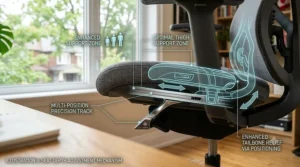
- Start with seat depth, not price. A chair that’s too deep keeps your tailbone from reaching the backrest at all — CCOHS’s guidance on adjusting office chairs recommends about a two-inch (5 cm) gap between the seat edge and the back of your knees.
- Look for a contoured or cut-out seat pan, not just “thick” padding — thickness alone doesn’t redirect pressure away from the coccyx the way a shaped seat does.
- Prioritize lumbar support over headrests or massage features. Supporting the lower back’s natural curve reduces the slouching that shifts weight onto the tailbone in the first place.
- Match weight capacity and frame size to your body, not the average. CCOHS notes plainly that no single chair design suits every body — a chair becomes ergonomic only once it fits the person using it.
- Check the warranty length as a comfort proxy. Manufacturers backing foam and mechanisms for 3+ years are generally more confident the materials won’t flatten or fail early.
- If you’re unsure, cushion first, chair second. It’s the cheapest way in CAD terms to find out whether coccyx-specific design actually changes anything for your pain.
Setting Up Your Chair Correctly
Even the best chair on this list won’t help much if it’s set up wrong. CCOHS’s office ergonomics guidance lays out the basics clearly, and they’re worth following exactly:
- Feet flat on the floor (or a footrest), with knees roughly level with your hips.
- Backrest adjusted so it actually fits the curve of your lower back — not just reclined for comfort, but positioned so the lumbar bulge sits in the small of your back.
- Seat tilted slightly forward if you find yourself sliding back onto your tailbone over the course of the day; a small forward tilt shifts weight onto the thighs instead.
- Move every 30–60 minutes. CCOHS specifically notes that no single seated posture stays comfortable indefinitely — standing or stretching briefly resets the pressure pattern on the coccyx before it becomes painful.
This matters more in a Canadian context than it might seem: during winter, shorter days and more time spent indoors at a desk mean these small adjustment habits get tested for longer stretches than they might during a Canadian summer with more outdoor breaks.
Real-World Scenarios
The Toronto condo worker on a 6×8 ft setup: Space is tight, so a smaller-footprint chair like the NOUHAUS Ergo3D, paired with the Everlasting Comfort cushion if pain persists, avoids overcommitting to a bulky premium chair in a small room.
The Calgary remote worker doing 9-hour days: Long, consistent hours make the case for investing once — the Steelcase Series 1 or SIHOO Doro C300 — rather than replacing a cheap chair every year.
The Halifax student on a tight budget: The FelixKing chair, or even just the Everlasting Comfort cushion on an existing desk chair, is a reasonable way to manage pain without a big upfront cost, with the understanding that it may need replacing sooner.
Common Mistakes When Buying for Tailbone Pain
- Buying on price alone and ignoring seat depth. A discounted chair that doesn’t fit your leg length can make tailbone pain worse, not better.
- Assuming “ergonomic” on the label means ergonomic for you. As CCOHS puts it, a chair is only ergonomic once it suits a specific person’s body, workstation, and tasks — not because of marketing language.
- Skipping the cushion option entirely. Spending $600+ CAD on a chair before testing whether coccyx-specific cushioning helps at all is a more expensive way to learn the same lesson a $40 cushion could teach first.
- Ignoring shipping and assembly realities. Larger chairs can take longer to reach more remote parts of the country, and many require real assembly — factor that into how soon you’ll actually get relief.
Office Chair vs. Coccyx Cushion: Which First?
| Chair Replacement | Coccyx Cushion | |
|---|---|---|
| Upfront cost | Higher | Lower |
| Speed to test if it helps | Slower (shipping + assembly) | Faster |
| Best for | Long-term, daily heavy use | Testing the theory, or supplementing an otherwise fine chair |
| Portability | None | High (desk, car, travel) |
If your current chair is structurally fine — decent back support, right height, just a flat or thin seat — a cushion is the more sensible first step. If the chair itself is too small, lacks any lumbar adjustment, or is falling apart, a cushion is just delaying a chair purchase you’ll need anyway.
Canadian Standards and What “Ergonomic” Actually Means
In Canada, office seating ergonomics is formally addressed by the CSA Z412-17 standard (“Office ergonomics — An application standard for workplace ergonomics”), referenced directly in CCOHS’s guidance on seated work. One of its core points is that there’s no single “correct” posture that remains comfortable for an extended period — which is the standards-level justification for everything above about moving regularly and choosing adjustability over a fixed “perfect” design.
It’s also worth knowing that Canadian advertising rules — enforced by the Competition Bureau of Canada — require that product reviews and endorsements reflect genuine, substantiated experience, not invented enthusiasm. That’s a useful filter to apply as a shopper, too: be a little skeptical of reviews (on any site) that read like marketing copy rather than specific, lived detail.
FAQ
❓ What's the fastest way to relieve tailbone pain at a desk today?
❓ Do coccyx cushions actually work, or is it placebo?
❓ Will Amazon.ca chairs ship to rural or northern parts of Canada?
❓ Is free shipping available on these products in Canada?
❓ When should tailbone pain be checked by a doctor instead of fixed with a chair?
Conclusion
There’s no single “best” chair for tailbone pain — there’s a best chair for your body, your budget, and how many hours a day you’re actually sitting. If you’re not sure where to start, the cheapest reasonable first step is the Everlasting Comfort cushion on whatever chair you already own; if that helps, you’ve confirmed the problem is pressure-related and can decide whether a fuller chair upgrade — the Duramont for value, the SIHOO or Steelcase if you’re investing for the long haul — is worth it. Whatever you choose, the setup matters as much as the product: even the best chair on this list won’t help much if the seat depth, lumbar position, and your own habit of moving regularly aren’t dialled in too.
✨ Found this helpful?
💬 Click through to any listing above to check current pricing and availability on Amazon.ca before you decide.
Recommended for You
- Best Office Chair for Tall Person 6’4: Top 7 Picks for Canada (2026)
- 7 Best Office Chair for Short Person Canada 2026
- 7 Best Stackable Office Chairs in Bulk for Canadian Offices (2026)
Disclaimer: This article may contain affiliate links. As an Amazon Associate, I earn from qualifying purchases. If you purchase products through these links, I may earn a small commission at no additional cost to you. (Replace with your own Associate ID/disclosure before publishing.)
Found this helpful? Share it with someone whose desk chair is the actual problem.
