
In This Article
Your chair isn’t the problem. That’s the uncomfortable truth nobody tells you when your tailbone starts throbbing around 2 p.m. and your lower back feels like it’s been in a headlock since lunch. Office chair seat cushions exist precisely because even a genuinely well-built ergonomic chair can’t fix the pressure points that build up over eight, nine, sometimes eleven hours of sitting — and in a country where remote and hybrid work has quietly become the default for millions of Canadians, that math adds up fast.
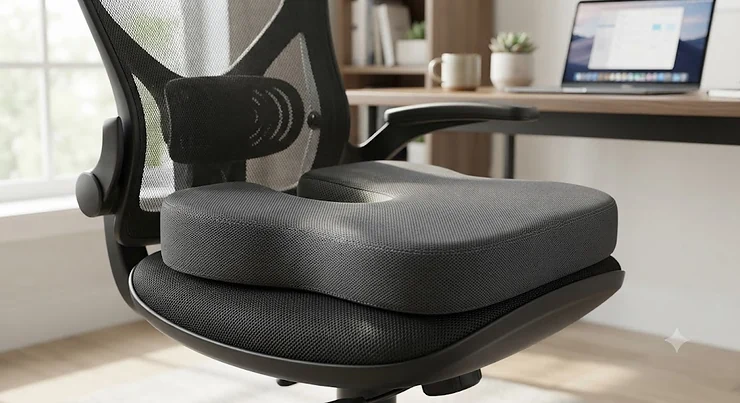
An office chair seat cushion is a standalone pad — typically built from memory foam, gel, or a hybrid of both — that sits on top of your existing chair to redistribute weight away from the tailbone and sit bones, reducing localized pressure during long stretches of sitting. Done right, it turns a merely adequate chair into one you can actually tolerate past hour four.
This office chair seat cushion review digs into seven real, currently available options spanning gel-infused foam, extra-dense orthopedic builds, and a genuinely different gel-grid technology that skips foam entirely. We weighed the marketing claims against real spec sheets and aggregated customer sentiment, not glossy product copy, and we’ll walk through what separates a C$30 pad that flattens by March from a C$120 cushion that’s still doing its job two winters later. According to the Canadian Centre for Occupational Health and Safety, alternating positions and proper seat support are core to preventing the musculoskeletal strain that builds from prolonged sitting — and the right office chair seat cushion is one of the simplest, cheapest ways to get there without replacing your whole chair.
Quick Comparison: Top Office Chair Seat Cushions at a Glance
| Cushion | Core Material | Price Range (CAD) | Best For |
|---|---|---|---|
| Xtreme Comforts Seat Cushion | Dense memory foam, forward-tilt contour | under C$45 | Budget pick for fixing slouchy posture |
| ComfiLife Gel Enhanced Seat Cushion | Gel layer + memory foam, U-cutout | C$50-C$65 range | Best-reviewed all-rounder |
| Everlasting Comfort Gel-Infused Seat Cushion | Gel-infused memory foam, U-cutout | C$80-C$110 range | Doctor-recommended cooling pick |
| Cushion Lab Extra-Dense Seat Cushion | Charcoal-infused extra-dense foam | C$100-C$120 range | Heavy daily use, longest lifespan |
| Purple Double Seat Cushion | GelFlex Grid (foam-free) | C$110-C$140 range | Hot sitters who need zero heat buildup |
Looking at the table above, the split isn’t really budget-versus-premium so much as foam-versus-something-else: everything under roughly C$65 here is some form of memory foam, while the pricier picks either densify that foam dramatically or abandon it in favour of a structurally different gel grid. The right column matters more than the price column — a C$40 cushion that solves your actual problem beats a C$130 one that solves someone else’s.
💬 Just one click — help others make better buying decisions too!😊
Top 7 Office Chair Seat Cushions: Expert Analysis
Before the individual breakdowns, here’s how all seven actually stack up side by side on the specs that matter most for day-to-day comfort.
| Cushion | Cutout Design | Approx. Rating | Price Range (CAD) |
|---|---|---|---|
| Xtreme Comforts Seat Cushion | No cutout, tilted contour | ~4.4/5 | under C$45 |
| Gorilla Grip Memory Foam Chair Cushion | No cutout, flat pad | ~4.5/5 | C$35-C$55 range |
| Aylio Coccyx Orthopedic Seat Cushion | Deep U-cutout | ~4.5/5 | C$45-C$60 range |
| ComfiLife Gel Enhanced Seat Cushion | U-cutout | ~4.6/5 | C$50-C$65 range |
| Everlasting Comfort Gel-Infused Seat Cushion | U-cutout | ~4.5/5 | C$80-C$110 range |
| Cushion Lab Extra-Dense Seat Cushion | Multi-region contour | ~4.5/5 | C$100-C$120 range |
| Purple Double Seat Cushion | Multi-region grid | ~4.4/5 | C$110-C$140 range |
A quick read on this table: ratings cluster tightly between 4.4 and 4.6 across nearly every price tier, which tells you something useful on its own — a higher price here buys longevity, cooling, or targeted relief, not necessarily a “better” cushion in some universal sense. The two flat, no-cutout options sit at opposite price extremes, which matters if a coccyx cutout isn’t actually what your body needs.
1. Xtreme Comforts Seat Cushion — best budget pick for fixing slouchy posture
At under C$45, this is the cushion Xtreme Comforts built specifically around a forward pelvic tilt, which is a genuinely different design philosophy from most of the pads on this list. The core is dense memory foam wrapped in a zip-off, machine-washable mesh cover, and the whole thing is contoured rather than flat — the front edge tapers down while the rear sits marginally higher, and that geometry is what creates the forward tilt. In practice, that means less rounding through your lower back during long typing sessions, since your spine naturally wants to stack itself over a level pelvis rather than a tucked one. This is the cushion to buy if your main complaint is slouching and lower-back ache rather than a specific tailbone hot spot — the flat, uncut top won’t isolate pressure away from your coccyx the way a U-shaped cushion will, but it also won’t create the awkward “floating” sensation some sitters dislike about cutout designs. Based on the spec comparison, it’s the most posture-focused option in this lineup rather than the most pressure-relief-focused one. Reviewers consistently note it holds its shape well over months of daily use, and it’s the highest-rated cushion in the brand’s own lineup at roughly 4.4 out of 5 across thousands of ratings, though a handful mention the mesh cover runs warm in un-air-conditioned rooms.
Pros:
- ✅ Forward-tilt design genuinely reduces slouching
- ✅ Machine-washable mesh cover is easy to maintain
- ✅ Non-slip base stays put on leather and fabric
Cons:
- ❌ No coccyx cutout for tailbone-specific pain
- ❌ Mesh cover traps heat in warm rooms
At under C$45, it’s one of the least expensive genuinely posture-corrective cushions in this roundup, and it earns its price if slouching — not tailbone pain — is your actual problem.
2. Gorilla Grip Memory Foam Chair Cushion — best slip-resistant everyday pad
Gorilla Grip built its reputation on grip technology for bath mats and rugs, and that DNA shows up here as a cushion that genuinely does not slide, even on smooth leather office chairs. The pad is a flat, tufted slab of memory foam roughly 5 cm (2 inches) thick, finished in a plush microfibre cover, and sold both as a single cushion and in multi-packs — useful if you’re outfitting a whole home office or a shared meeting room. There’s no coccyx cutout and no gel layer, so this is a straightforward comfort-and-grip pad rather than a targeted pressure-relief tool. What most buyers overlook about this model is that its real value proposition isn’t the foam itself — plenty of cushions use comparable memory foam — it’s the backing. A cushion that migrates several centimetres every time you stand up defeats the purpose of buying one at all, and Gorilla Grip‘s non-slip base solves that specific annoyance better than most of the higher-priced options here. Reviewers consistently praise the grip and the plush feel out of the box, though several note the foam softens and loses some loft after roughly a year of daily use — typical for standard-density memory foam without a denser core.
Pros:
- ✅ Genuinely non-slip on smooth and leather seats
- ✅ Available in multi-packs for whole offices
- ✅ Soft, plush microfibre cover feels premium
Cons:
- ❌ No cutout or gel for targeted pressure relief
- ❌ Foam compresses faster than denser competitors
Priced in the C$35-C$55 range depending on pack size, it’s an easy add for anyone who just wants a comfortable pad that stays exactly where you put it.
3. Aylio Coccyx Orthopedic Seat Cushion — best firm suspension for true tailbone pain
Aylio takes a firmer, more clinical approach than most cushions on this list, and that firmness is the entire point. Instead of memory foam, Aylio molds its core from high-resilience foam — a denser, springier material that resists the flattening low-density memory foam is prone to. The U-shaped cutout runs clean through to the base at the rear midline, so your tailbone suspends over open space entirely while your sit bones and thighs carry the load on undisturbed foam roughly 6-7 cm thick. This is the cushion built for people who’ve been told by a physiotherapist or chiropractor to keep pressure completely off the coccyx, not just reduced. What most buyers overlook is that a firmer cushion like this actually holds its shape and cutout geometry far longer under daily use than a softer memory-foam equivalent — the trade-off is that the initial feel is noticeably less plush. With more than 14,000 customer ratings on Amazon, the recurring theme in reviews is genuine relief for tailbone and sciatica pain specifically, alongside a smaller but consistent group of reviewers who find the firmness too rigid for casual daily comfort.
Pros:
- ✅ True tailbone suspension via deep U-cutout
- ✅ High-resilience foam resists flattening over time
- ✅ Washable velvet cover with non-slip base
Cons:
- ❌ Firmer feel than most memory-foam alternatives
- ❌ Cutout geometry doesn’t suit every body size
In the C$45-C$60 range, it’s a smart, targeted buy specifically for coccyx or sciatica pain — less so if you’re simply after generic all-day plushness.
4. ComfiLife Gel Enhanced Seat Cushion — best-reviewed gel seat cushion for office chair use
ComfiLife is arguably the cushion that popularized the gel-layer-over-memory-foam format, and it remains one of the most reviewed office accessories on Amazon for a reason. A thin cooling gel layer sits directly beneath the velvet-covered top surface, above a base of standard memory foam shaped into the now-familiar U-cutout. The gel layer’s job isn’t structural support — the foam underneath handles that — it’s thermal: gel conducts heat away from your body faster than foam alone dissipates it, which is why this style of gel seat cushion for office chair use feels noticeably cooler for the first 20-30 minutes of sitting compared with foam-only designs. Based on the spec comparison, this is the cushion to choose if you want the coccyx relief of a U-cutout design without sacrificing the initial cushioned plushness that firmer orthopedic foams, like Aylio‘s, don’t offer. Reviewers consistently note that gel-topped cushions like this one feel dramatically cooler than plain memory foam, particularly in un-air-conditioned home offices during summer. This is one of the most-rated seat cushions on Amazon, with well over 100,000 ratings and an average hovering around 4.6 out of 5 — the sheer volume makes its aggregated sentiment unusually reliable, and the recurring praise centres on tailbone and lower-back relief within the first few uses.
Pros:
- ✅ Gel layer noticeably cools initial sitting temperature
- ✅ U-cutout genuinely reduces tailbone pressure
- ✅ Enormous review base makes sentiment highly reliable
Cons:
- ❌ Gel cooling effect fades after 20-30 minutes
- ❌ Foam base softens faster than extra-dense competitors
Typically found in the C$50-C$65 range, it’s the safest all-rounder pick on this list — broad appeal, a proven track record, and a moderate price.
5. Everlasting Comfort Gel-Infused Memory Foam Seat Cushion — best doctor-recommended cooling pick
Everlasting Comfort leans hard into its “doctor recommended” positioning, and unlike some brands that use the phrase loosely, its foam is CertiPUR-US certified and its cover is OEKO-TEX certified — both are real third-party certifications, not marketing filler. The foam itself is gel-infused rather than gel-topped, meaning the cooling gel is blended directly into the memory foam rather than layered on top, which tends to spread the cooling effect more evenly through the full 7 cm or so of foam depth rather than concentrating it near the surface. The coccyx cutout follows the standard U-shape, and the cover is a removable, breathable weave. Here’s what to weigh: gel-infused foam generally holds its cooling properties longer than gel-topped foam because the gel doesn’t wear thin at the surface the way a laminated layer can, but it also tends to cost more to manufacture — which shows up in the price. For anyone specifically sold on cooling as their top priority, this construction method has a real, physical edge over the layered approach used by cheaper competitors. Reviewers consistently cite over 12,000 recent purchases and a roughly 4.5-star average with an 86% recommend rate, with the most common praise centred on sciatica and lower-back relief rather than the cooling feature specifically.
Pros:
- ✅ CertiPUR-US and OEKO-TEX third-party certifications
- ✅ Gel-infused, not just gel-topped, for lasting cooling
- ✅ Backed by a lifetime replacement guarantee
Cons:
- ❌ Pricier than comparable gel-topped alternatives
- ❌ Cutout size may feel narrow for larger frames
In the C$80-C$110 range, it costs meaningfully more than ComfiLife‘s gel-topped design, but the certifications and infused-gel construction are genuine, verifiable reasons why.
6. Cushion Lab Extra-Dense Seat Cushion — best for heavy daily use
Where most cushions on this list use standard-density memory foam, Cushion Lab‘s entire pitch is density — its charcoal-infused foam core is noticeably firmer and heavier than a typical foam cushion, and that’s a deliberate engineering choice, not a cost-cutting one. At roughly 10 cm thick in the standard size, with a larger variant recommended for users over about 86 kg (190 lbs), it’s among the thickest cushions in this roundup. The design targets what Cushion Lab calls “multi-region pressure relief” — rather than a single coccyx cutout, the foam is contoured to spread load across the hips, thighs, and tailbone simultaneously, and the charcoal infusion is marketed for moisture control and odour resistance over years of daily use. What most buyers overlook about extra-dense foam is that it resists the classic memory-foam failure mode — bottoming out, where your weight compresses the foam all the way to the base and you start feeling the chair underneath. Based on the spec comparison, this is the cushion most likely to still feel supportive after two or three years of five-day-a-week use, which matters if you’re doing the math on cost-per-year rather than sticker price alone. Reviewed independently by outlets like CNN Underscored and Reviewed.com alongside strong verified-buyer ratings, the consistent theme is firm, lasting support that holds up over time, with a smaller subset of reviewers noting the firmness takes a session or two to adjust to.
Pros:
- ✅ Extra-dense foam resists bottoming out long-term
- ✅ Multi-region design supports hips, thighs, and tailbone
- ✅ CertiPUR-US certified with a 1-year warranty
Cons:
- ❌ Noticeably firmer break-in than gel-topped cushions
- ❌ Premium pricing versus standard-density alternatives
Usually landing in the C$100-C$120 range, it’s the priciest foam-based option here, but the density genuinely translates into a longer usable lifespan.
7. Purple Double Seat Cushion — best for hot sitters who want zero heat buildup
Purple skips foam entirely, and that single decision is what separates this cushion from every other product on this list. Its GelFlex Grid is a lattice of hundreds of individual air channels moulded from a proprietary gel-elastomer, the same core material family Purple uses in its mattresses. Because the structure is mostly open air rather than dense closed-cell foam, heat simply passes through instead of building up the way it does in foam over a 30-minute sitting session — reviewers and independent testers consistently describe it as the only cushion in this category that genuinely never feels warm underneath. It’s also double-sided: one face is firmer, the other softer, so you can flip it based on preference or the chair you’re using it on. Here’s what to weigh: the GelFlex Grid doesn’t compress and rebound the way foam does, so it feels distinctly different sitting down for the first time — less “sinking in,” more “floating on a grid.” For anyone who’s tried multiple foam cushions and still runs hot, this is a genuinely different mechanism worth the higher price, not just a rebrand of the same gel-over-foam idea most competitors use. Independent reviewers at outlets like Bob Vila consistently rate it highly for temperature neutrality and pressure relief, while noting the up-front cost is the main barrier compared with foam-based alternatives.
Pros:
- ✅ Genuinely stays cool — no foam heat buildup
- ✅ Two-sided design offers a firm or soft feel
- ✅ Backed by a 30-day trial and 1-year warranty
Cons:
- ❌ Noticeably heavier than foam-based cushions
- ❌ Premium price versus gel-topped foam competitors
In the C$110-C$140 range, it’s the most expensive cushion here, and it’s aimed squarely at people for whom temperature — not just pressure — has been the dealbreaker with every foam cushion they’ve tried.
✨ Don’t Miss These Exclusive Deals!
🔍 Take your home office setup to the next level with these carefully selected seat cushions. Click on any highlighted product to check current pricing and availability on amazon.ca. The right cushion turns a merely tolerable chair into one that actually supports a full workday!
How to Break In, Adjust, and Maintain Your Seat Cushion
Most seat cushions need a genuine adjustment period, and skipping it is the single biggest reason people give up on an otherwise good product within the first week.
In the first 48 hours, sit on the cushion in short stretches rather than committing to a full eight-hour day immediately, especially with firmer builds like the Aylio Coccyx Orthopedic Seat Cushion or the Cushion Lab Extra-Dense Seat Cushion. Your body needs time to adapt to redistributed pressure points, and a little post-cutout soreness in the first day or two is normal rather than a sign the product is wrong for you.
Over the first 30 days, pay attention to cushion placement relative to your chair’s edge. A cushion set too far forward defeats its own coccyx cutout by shifting your weight off the designed pressure zone, and it’s the single most common mistake buried in negative reviews across every brand in this roundup — a setup error, not a manufacturing flaw.
For ongoing maintenance, remove and machine-wash the cover every two to four weeks depending on use — cold water, air dry, since heat degrades both memory foam and gel-infused foam faster than normal wear does. Rotate or flip cushions that allow it, like the Purple Double Seat Cushion, to even out compression across both faces. For foam-only cushions without a flip option, occasionally sitting slightly off-centre for short stretches can spread wear more evenly rather than concentrating compression in one spot. Expect a gradual decline in loft regardless of brand — even extra-dense foam softens over 18-24 months of daily use — and treat that as the natural end-of-life signal rather than a defect.
Who Actually Needs a Seat Cushion? Three Real Sitting Profiles
The hybrid commuter with a basic chair. If you’re splitting time between a standard mesh office chair three days a week and a laptop-on-the-couch setup the other two, you don’t need the most expensive cushion here — you need something portable, easy to move between setups, and forgiving of inconsistent use. The ComfiLife Gel Enhanced Seat Cushion or the budget-friendly Xtreme Comforts Seat Cushion both include carry handles specifically for this use case, and neither requires the multi-day break-in period firmer options do.
The desk worker with diagnosed tailbone or sciatic pain. If a physiotherapist or chiropractor has specifically told you to keep weight off your coccyx, generic comfort isn’t the goal — targeted suspension is. The Aylio Coccyx Orthopedic Seat Cushion‘s deep U-cutout and the Cushion Lab Extra-Dense Seat Cushion‘s multi-region support are both built around that specific clinical need, and the firmer foam in both holds its designed shape longer than softer alternatives, which matters when consistent geometry is the whole point.
The hot-running home-office worker in a poorly ventilated space. Plenty of Canadian home offices are converted spare rooms, basements, or attic nooks without central air, and if you’ve already tried a gel-topped foam cushion and still find yourself sweating through the afternoon, the problem isn’t the gel layer — it’s that the foam underneath still traps heat. The Purple Double Seat Cushion‘s GelFlex Grid is the one genuine structural fix for that specific complaint in this entire roundup.
Common Sitting Pain Points and Which Cushion Feature Solves Them
Sharp pain when you sit down, worse than when you stand, is the classic sign of coccyx or tailbone irritation, and the fix isn’t more cushioning overall — it’s a cutout that removes contact with that specific point entirely. Both the Aylio Coccyx Orthopedic Seat Cushion and the U-cutout on the ComfiLife Gel Enhanced Seat Cushion solve this directly; a flat pad without a cutout, however plush, generally won’t.
A dull, spreading lower-back ache by mid-afternoon is often a posture problem disguised as a cushion problem — your pelvis is rolling backward, rounding your lumbar spine. The Xtreme Comforts Seat Cushion‘s forward-tilt contour addresses the actual mechanism rather than just adding padding over the symptom.
Sweating through your clothes by 2 p.m. happens because standard memory foam is a poor heat conductor, so body heat has nowhere to go. Gel-infused options like the Everlasting Comfort Gel-Infused Memory Foam Seat Cushion spread the cooling effect through the whole foam depth, while the Purple Double Seat Cushion‘s foam-free GelFlex Grid solves it structurally rather than chemically.
A cushion that slides every time you stand or shift is purely a backing issue, unrelated to the foam or gel inside. Non-slip bases like the Gorilla Grip Memory Foam Chair Cushion‘s or the Aylio Coccyx Orthopedic Seat Cushion‘s solve it outright; if your current cushion lacks one, a thin rubber shelf liner underneath is a genuine stopgap.
A cushion that feels noticeably flatter after six months is standard-density memory foam compressing permanently under repeated daily load. Extra-dense builds like the Cushion Lab Extra-Dense Seat Cushion resist this specific failure mode longest, because higher-density foam has more material resisting compression per square centimetre.
Buyer’s Decision Framework: Which Seat Cushion Actually Fits Your Situation
If you’re short on time and just want a straight answer, use this framework.
If your pain is sharp and localized to the tailbone, choose a U-cutout cushion like the Aylio Coccyx Orthopedic Seat Cushion or ComfiLife Gel Enhanced Seat Cushion, because cutout geometry is the only design feature that actually removes direct contact with that specific point.
If your discomfort is a general, spreading ache rather than one sharp spot, choose a contoured, non-cutout cushion like the Xtreme Comforts Seat Cushion, because the issue is likely postural rather than point-pressure, and a cutout won’t fix a tilted pelvis.
If you sit more than seven hours a day, five days a week, choose extra-dense foam or a foam-free grid, like the Cushion Lab Extra-Dense Seat Cushion or Purple Double Seat Cushion, because standard-density foam simply doesn’t survive that workload without premature flattening.
If your workspace runs warm, or you’ve already tried a gel-topped cushion and still overheat, choose gel-infused foam or, for the strongest effect, the Purple Double Seat Cushion‘s foam-free GelFlex Grid, because the heat problem is structural, not cosmetic.
If your budget is under C$50 and your needs are modest, the Gorilla Grip Memory Foam Chair Cushion or Xtreme Comforts Seat Cushion both deliver genuine comfort without overpaying for features you won’t use.
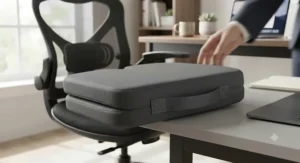
How to Choose an Office Chair Seat Cushion
- Identify your actual pain pattern first. Sharp, localized pain when sitting down points to coccyx or tailbone issues and needs a cutout design; a dull, spreading ache points to postural collapse and needs a contoured, forward-tilt design instead.
- Match density to your body weight and sitting hours. Standard-density memory foam suits lighter frames and shorter sitting stretches; anyone over roughly 90 kg (200 lbs) or sitting more than seven hours daily should lean toward extra-dense foam or a non-foam gel grid to avoid premature bottoming out.
- Decide how much you actually value temperature control. If your workspace runs warm, prioritize gel-infused or gel-grid construction over a plain foam core — this is a real, physical difference, not a marketing add-on.
- Check the cover material and washability. A removable, machine-washable cover isn’t a nice-to-have over months of daily use; sweat and skin oils degrade foam faster from the inside than surface wear does from the outside.
- Confirm the base grip matches your chair type. Leather and vinyl seats need a genuinely non-slip rubberized base; fabric or mesh chairs are more forgiving.
- Look at the warranty and return window as a proxy for confidence. Brands offering 30-day trials or year-plus warranties, like Purple and Cushion Lab, are signalling their own confidence in the foam’s longevity.
- Set a realistic budget tier and stick to it. Budget cushions under C$50 solve posture and basic comfort well; mid-range cushions from C$50-C$100 add targeted relief and certifications; premium cushions over C$100 buy you either extra-dense longevity or a fundamentally different cooling mechanism.
Gel Cushion Technology vs Memory Foam Cushion for Office Chair Use
Understanding gel cushion technology is the key to choosing correctly between these two builds, and it’s a slightly confusing comparison on the surface, since most gel seat cushions are also memory foam cushions — the gel is usually a layer or infusion within a foam base, not a replacement for it. The comparison Canadians usually mean by “seat cushion vs memory foam cushion office chair” actually comes down to two variables: heat and initial firmness.
| Construction | Heat Control | Initial Feel | Longevity | Typical Price Tier |
|---|---|---|---|---|
| Plain memory foam | Poor — traps heat | Soft, deep sink-in | Moderate | Budget |
| Gel-topped foam | Good — cools for the first 20-30 minutes | Soft with a cool top layer | Moderate | Budget-Mid |
| Gel-infused foam | Very good — cooling lasts longer | Soft and evenly cool | Moderate-High | Mid-Premium |
| Foam-free gel grid | Excellent — virtually no heat buildup | Firm, “floating” feel | High | Premium |
Looking at the comparison above, the real decision point isn’t gel versus no gel — it’s how deeply the cooling technology is integrated, and what you’re willing to trade for it. Plain memory foam, like the core in the Gorilla Grip Memory Foam Chair Cushion, wins on initial plushness and price but loses on heat control; the Purple Double Seat Cushion wins on temperature and longevity but costs roughly three times as much and feels structurally different from the moment you sit down.
Plain memory foam is viscoelastic — it responds to body heat by softening slightly, which is what creates that slow, conforming sink-in feeling. That’s genuinely comfortable for the first hour or two, but it’s also why plain foam traps heat: the same heat-responsiveness that makes it mould to your body also stops it from dissipating warmth efficiently. Gel-enhanced versions, whether gel-topped like the ComfiLife Gel Enhanced Seat Cushion or gel-infused like the Everlasting Comfort Gel-Infused Memory Foam Seat Cushion, add a material with higher thermal conductivity into the mix specifically to counteract that. For all-day comfort in a typical Canadian home or office environment — not uncomfortably hot, not perfectly climate-controlled — gel-infused foam tends to be the more balanced middle ground: real comfort with a genuine, lasting temperature benefit, without the premium cost of a fully foam-free design like Purple’s GelFlex Grid.
Common Mistakes When Buying an Office Chair Seat Cushion
Buying based on thickness alone is a common trap. A thicker cushion isn’t automatically better — past roughly 7-8 cm, extra height can actually push your knees above hip level if your desk height doesn’t adjust, throwing off the entire ergonomic chain the cushion was supposed to fix.
Ignoring your chair’s existing seat pan angle is another. A cushion with a built-in forward tilt, like the Xtreme Comforts Seat Cushion‘s, stacked on top of a chair that already tilts forward can overcorrect and create new strain rather than relieving it.
Choosing a coccyx cutout without an actual tailbone problem is surprisingly common. U-shaped cutouts are specifically engineered for coccyx and sciatic pain; without that specific issue, the open cutout can actually feel less supportive than a solid, contoured surface for otherwise pain-free sitters.
Assuming all “gel” cushions work the same way trips up a lot of buyers. As covered above, gel-topped and gel-infused are meaningfully different constructions with different longevity profiles, and the Purple Double Seat Cushion‘s GelFlex Grid is different again — a third, foam-free category entirely. Reading the actual material description matters more than the word “gel” on the packaging.
Skipping the washable-cover check seems minor until it isn’t. It becomes a real problem within a few months of daily use, especially in warmer sitting conditions where sweat and oils accumulate faster than most buyers expect.
What to Expect: Real-World Pressure Distribution and All-Day Comfort
Pressure distribution is the actual mechanism behind every claim in this article, so it’s worth explaining plainly rather than treating it as marketing language. When you sit without a cushion, the majority of your upper-body weight concentrates onto two small areas — your ischial tuberosities, the bony points at the bottom of your pelvis — plus whatever contact your coccyx makes with a hard or thin-padded seat. That concentration is what creates the sharp, specific pain many people describe as “tailbone pain,” even when the actual issue is soft-tissue irritation rather than anything structural.
A well-designed cushion doesn’t eliminate that weight — it can’t, physics doesn’t work that way — but it spreads the same total weight across a meaningfully larger contact area, which lowers the pressure-per-square-centimetre at any single point. That’s the entire principle behind multi-region designs like the Cushion Lab Extra-Dense Seat Cushion‘s: instead of concentrating relief only at the coccyx, the foam is contoured to share load across the hips and thighs simultaneously.
In practice, what that means for all-day comfort is less about the first 20 minutes — almost any cushion feels better than a bare chair initially — and everything about hour five, six, and seven, when uncushioned pressure points have had time to genuinely restrict local blood flow and irritate soft tissue. That’s also precisely why CCOHS ergonomics guidance emphasizes that no single static position, cushioned or not, should be maintained indefinitely — the cushion buys you comfortable hours, not unlimited ones.
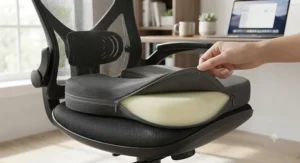
Long-Term Cost & Maintenance: Is a Premium Gel Cushion Worth It?
| Tier | Price Range (CAD) | Typical Lifespan | Approx. Cost-Per-Year |
|---|---|---|---|
| Budget (e.g., Xtreme Comforts Seat Cushion, Gorilla Grip Memory Foam Chair Cushion) | under C$55 | 8-14 months | roughly C$35-C$65 |
| Mid-range (e.g., ComfiLife Gel Enhanced Seat Cushion, Everlasting Comfort Gel-Infused Seat Cushion) | C$50-C$110 | 18-30 months | roughly C$30-C$55 |
| Premium (e.g., Cushion Lab Extra-Dense Seat Cushion, Purple Double Seat Cushion) | C$100-C$140 | 30-48+ months | roughly C$25-C$45 |
Looking at the comparison above, the cost-per-year math actually favours mid-range and premium cushions over the cheapest options, since extra-dense foam and foam-free gel grids resist the compression that shortens a budget cushion’s usable life. Budget picks like the Xtreme Comforts Seat Cushion still make sense for light or occasional use, but for someone sitting eight-plus hours daily, five days a week, the Cushion Lab Extra-Dense Seat Cushion or Purple Double Seat Cushion typically work out cheaper per year despite the higher sticker price.
The Government of Canada’s own internal guidance on workplace ergonomics for public servants treats equipment investment like this as preventive rather than optional, on the logic that a C$100 cushion is trivially cheaper than the physiotherapy visits, missed workdays, or chronic pain management that untreated sitting-related strain can eventually cost. That framing is worth borrowing for a home-office budget too: measured against even a handful of missed productive hours from tailbone or lower-back pain, most of the cushions in this roundup pay for themselves within the first month.
Features That Actually Matter (And Those That Don’t)
Cutout depth and shape actually matters, if you need a cutout at all. A shallow, decorative-looking cutout that doesn’t run clear through the foam won’t meaningfully suspend the tailbone — check product photos and descriptions for cutouts that reach the base, not just a shallow depression.
Foam density, not just thickness, actually matters. A thick, low-density cushion will still bottom out under sustained weight; a thinner, high-density one, like the Cushion Lab Extra-Dense Seat Cushion‘s, often outperforms it over months of use even at a smaller profile.
A genuinely non-slip base actually matters. This sounds minor until you’re readjusting a sliding cushion six times a day, which quietly undoes any pressure-relief benefit by shifting your seated position constantly.
Cushion colour or cover pattern doesn’t really matter. It’s cosmetic, full stop — buy based on function and match your office decor separately if you care.
Carrying handles don’t matter much unless you actually commute with the cushion. They’re a nice-to-have for hybrid workers moving between a home office and a shared workspace, and close to irrelevant for a cushion that’s staying on one chair permanently.
The specific density number brands advertise for their foam matters less than marketing suggests. These figures aren’t standardized across brands the way a mattress firmness scale roughly is, so a claimed density from one company isn’t directly comparable to another’s — real-world review sentiment and warranty length are more reliable signals than the raw spec sheet.
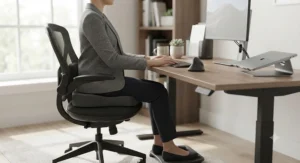
Frequently Asked Questions
❓ What is the best office chair seat cushion for tailbone pain?
❓ Are gel seat cushions better than memory foam for office chairs?
❓ How long do office chair seat cushions last?
❓ Can a seat cushion replace an ergonomic office chair?
❓ Do office chair seat cushions work for sciatica?
Conclusion
Seven cushions, three very different core technologies, and one consistent theme: the best office chair seat cushions aren’t a single product, they’re whichever one matches your actual problem. If slouching and a generally worn-out chair are your issue, the Xtreme Comforts Seat Cushion or Gorilla Grip Memory Foam Chair Cushion solve that without overspending. If you’ve got a diagnosed tailbone or sciatic issue, the Aylio Coccyx Orthopedic Seat Cushion and Cushion Lab Extra-Dense Seat Cushion are built around suspension and density specifically, not general comfort. And if heat, not pressure, has sabotaged every cushion you’ve tried before, the Purple Double Seat Cushion‘s foam-free GelFlex Grid is the one genuinely different mechanism in this entire lineup.
What ties all seven together, and what CBC’s coverage of sedentary work culture has been pointing out for years now, is that no cushion — however well engineered — replaces getting up and moving through the day. Treat these seven picks as harm reduction for the hours you’re genuinely stuck at a desk, not a licence to sit indefinitely. Pick the one that matches your actual pain pattern and your budget tier, give it the honest week-long break-in period it needs, and check current pricing on amazon.ca before you commit — prices on all seven shift often enough that today’s number won’t be next month’s.
Recommended for You
- Rollerblade Office Chair Wheels: 7 Picks That Won’t Wreck Floors 2026
- Rollerblade Style Office Chair Wheels: 7 Best Picks 2026
- Office Chair Casters for Hard Floors: 7 Best Quiet Picks 2026
Disclaimer: This article contains affiliate links. As an Amazon Associate, I earn from qualifying purchases. If you purchase products through these links, we may earn a small commission at no additional cost to you.
✨ Found this helpful? Share it with your friends! 💬🤗
