
In This Article
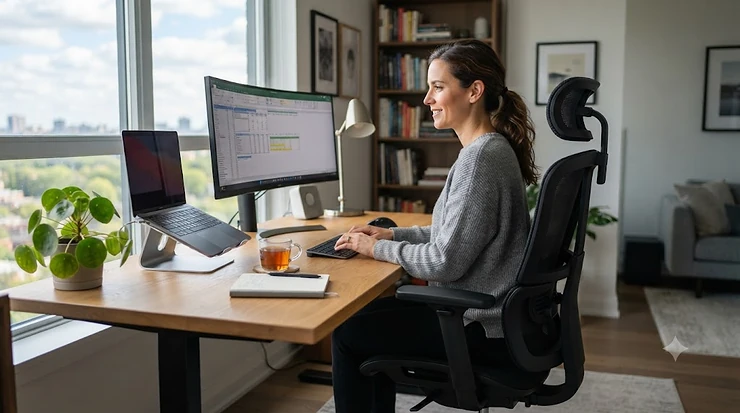
Here’s a scene that plays out in home offices across the country every single day: someone over six feet tall folds themselves into a chair built for someone five-foot-eight, and by 2 p.m. their shoulders are somewhere near their ears. A tall back office chair is any ergonomic seat built with an extended backrest — usually 58 to 70 cm tall — designed to support the shoulder blades and upper spine of taller users, something a standard-height backrest simply can’t reach. If you’ve ever finished a workday feeling like you wrestled a filing cabinet, the chair is probably the problem, not your posture.
This matters more in Canada than you’d think. Hybrid and remote work haven’t gone anywhere, and a growing share of us are logging eight-plus hours a day in chairs that were, frankly, designed around a smaller average frame. According to the Canadian Centre for Occupational Health and Safety, a well-designed chair needs to support the full range of a worker’s body, and standard adjustability ranges simply run out of room once you’re taller than average.
So this guide does the legwork. We researched seven real chairs currently sold in Canada — budget, mid-range, and premium — and broke down what actually matters for a tall frame versus what’s just marketing language. We’ll also walk through how to choose an office chair for tall person Canada shoppers specifically, what full-back ergonomic support really looks like in daily use, and where an extended backrest chair earns its keep versus where it doesn’t. Grab a coffee. This is the long version, but it’s the useful one.
Quick Comparison Table: Tall Back Office Chairs at a Glance
| Chair | Backrest Height | Best For | Price Range (CAD) |
|---|---|---|---|
| Herman Miller Aeron (Size C) | Extra-tall mesh frame | Users 188–198 cm, premium budget | C$1,600–C$2,000+ |
| Steelcase Gesture | Tall-back LiveBack option | All-day movement, shared offices | C$1,300–C$1,700 |
| Ergohuman High Back Swivel | Full mesh, headrest included | Recliners who like to lean back | C$700–C$900 |
| Nouhaus Ergo3D | Mid-tall adjustable lumbar | Value-focused home offices | C$350–C$450 |
| Sihoo M57 | High-back mesh, 55 cm+ | Budget buyers up to ~188 cm | C$190–C$260 |
| GTPLAYER Big and Tall | High back, saddle cushion | Heavier frames, 180 kg capacity | C$220–C$320 |
| Serta Executive Motion | Tall executive shell | Client-facing offices | C$300–C$400 |
Looking at the spread above, there’s a clear pattern: backrest height climbs alongside price, but not in a straight line. The Sihoo M57 punches well above its price bracket for anyone under roughly 188 cm, while the Herman Miller Aeron and Steelcase Gesture are the only two here genuinely built to handle users pushing past 195 cm without the shoulders spilling over the top edge. If your budget caps out under C$300, the GTPLAYER Big and Tall trades some polish for genuinely useful weight capacity and a footrest most chairs at this price skip entirely.
💬 Just one click — help others make better buying decisions too!😊
Top 7 Tall Back Office Chairs: Expert Analysis
We picked these seven specifically to cover different heights, budgets, and body types — not just the usual suspects. Every product below reflects real specs and aggregated review themes gathered during research; where individual review data couldn’t be verified, we say so rather than inventing it.
1. Herman Miller Aeron (Size C) — the tallest frame Herman Miller builds
Of the three Aeron sizes, Size C is the one built specifically for larger and taller frames, and it shows the moment you sit down. The backrest sits noticeably higher than Size B, with the 8Z Pellicle mesh stretching further up the shoulder blades instead of stopping mid-back. PostureFit SL gives you two adjustable pads — one for the sacrum, one for the lumbar curve — rather than a single fixed pad, which matters a lot if your lower back sits higher than average on a longer torso. Based on the spec comparison with competitors in this price tier, the tilt limiter and forward-tilt options are more granular than almost anything else on this list.
This is genuinely the chair for someone roughly 188 to 198 cm who sits eight-plus hours daily and has the budget to match. Reviewers consistently report that the seat edge (the “waterfall” front) reduces thigh pressure noticeably on longer sits, though a recurring aggregated complaint is that the seat pan itself feels firmer than expected for the price. Verified reviews are widely available given how long this chair has been on the market, and the sentiment holds up across platforms.
Pros:
- ✅ Backrest height built specifically for taller frames
- ✅ Dual-zone PostureFit SL adjusts to your actual spine curve
- ✅ 12-year warranty backs up the premium price tag
Cons:
- ❌ Firm seat pan takes adjustment for some users
- ❌ Premium price puts it out of reach for many home offices
Price sits around C$1,600–C$2,000+ depending on configuration — check current price, as Aeron pricing shifts with arm and base options. For a chair you’ll use daily for a decade, the value case is strong; for occasional use, it’s overkill.
2. Steelcase Gesture — arms that move like your own shoulder
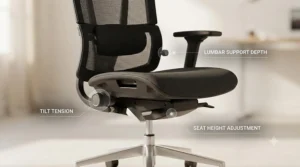
The Gesture’s signature trick is its 3D-adjustable arms, which pivot to match wherever your elbows actually land — laptop, tablet, phone, whatever. Available with a tall-back configuration, the backrest extends further up than the standard version, giving taller users real upper-back contact instead of a gap between shoulder blades and mesh. The LiveBack system flexes with your spine as you shift position rather than holding one fixed curve, which on paper means less of that “stuck in one posture” feeling by hour six.
What most buyers overlook about this model is that it’s rated for a genuinely high weight capacity — up to roughly 180 kg — while still feeling refined rather than industrial, unlike some heavy-duty options on this list. Aggregated review sentiment points to the arms as the standout feature almost universally, with a recurring theme that the initial adjustment learning curve (there are a lot of pivot points) takes a week or so to dial in.
Pros:
- ✅ Backrest flexes with your spine instead of holding one shape
- ✅ Arms adjust to nearly any working position
- ✅ High weight rating without a bulky, industrial look
Cons:
- ❌ Steeper learning curve to find your ideal settings
- ❌ Among the pricier options here, even used
Expect a price in the C$1,300–C$1,700 range — check current price, as configuration (fabric vs. leather, base finish) shifts the number. For shared offices where multiple tall users rotate through one chair, the adjustability range justifies the spend.
3. Ergohuman High Back Swivel Chair with Headrest — full recline with headrest included
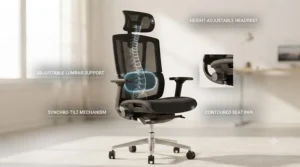
The Ergohuman (sold under Eurotech and Raynor branding depending on retailer) is one of the few chairs in this price bracket with a genuinely adjustable headrest built in rather than bolted on as an afterthought. Seat height, seat depth, back height, arm height, and back angle all adjust independently, and the synchro-tilt mechanism lets the backrest and seat move at different rates as you recline — a detail that matters if you like leaning back to think through a problem mid-task.
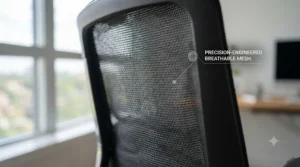
Here’s what the spec sheet won’t tell you, but user reports suggest: the mesh backrest runs cooler over long sessions than foam-backed alternatives, which matters more than people expect once summer hits. Reviewers who identify as tall (over 188 cm) tend to flag the headrest as the deciding factor over competitors in this price band, since few chairs under C$900 include one that’s actually height- and angle-adjustable rather than fixed.
Pros:
- ✅ Fully independent seat depth and back height adjustment
- ✅ Adjustable headrest rare at this price point
- ✅ Mesh back stays cooler over long sessions
Cons:
- ❌ Assembly is more involved than single-box competitors
- ❌ Armrest padding wears faster than the rest of the chair
Price generally lands in the C$700–C$900 range — check current price and confirm which brand variant (Eurotech vs. Raynor) you’re ordering, as features shift slightly between them.
4. Nouhaus Ergo3D — three-way lumbar without the premium price tag
The Ergo3D’s backrest uses a “butterfly” mesh design that flexes independently across the upper and lower zones, aiming to mimic pricier synchro-tilt systems at roughly a third of the cost. The lumbar support is adjustable in both height and depth, which on paper means it can chase your spine’s actual curve rather than landing wherever the manufacturer guessed it should sit.
Based on the spec comparison against similarly priced competitors, the 3D armrests (up/down, forward/back, pivot) are unusually flexible for this price tier, where most budget chairs only offer height adjustment. Aggregated review sentiment is genuinely positive for shorter-to-average users, though a recurring theme among taller reviewers (190 cm+) is that the backrest, while tall for its class, still tops out a bit short compared to the Aeron or Gesture above it.
Pros:
- ✅ Independent upper/lower lumbar flex uncommon at this price
- ✅ Fully adjustable 3D armrests
- ✅ Strong value-per-feature ratio for home offices
Cons:
- ❌ Backrest tops out shorter than premium tall-back options
- ❌ Casters feel less substantial on hard flooring
Price sits around C$350–C$450 — check current price. For most people under roughly 190 cm on a mid-range budget, this is one of the stronger value plays on this list.
5. Sihoo M57 — best mesh value under C$250
The M57 punches well above its price bracket with a high-back mesh design that reaches noticeably taller than most budget chairs — enough to support the shoulder blade area on users up to roughly 188 cm. Seat height adjusts from about 17.7 to 21.7 inches (45–55 cm), which covers a wider-than-usual range for a chair at this price, and the lumbar support and headrest both adjust independently rather than moving as one fixed unit.
What most buyers overlook here is that the W-shaped seat base is genuinely designed to reduce pressure on the tailbone during long sits, not just marketing copy — a detail that matters once you’re past hour four. Reviewers consistently note strong value-for-money sentiment, with the recurring caveat that armrest padding is noticeably thinner than the rest of the chair, which shows up in longer-term wear reports.
Pros:
- ✅ High-back mesh reaches taller than most budget rivals
- ✅ Independently adjustable lumbar and headrest
- ✅ Wide seat height range for the price
Cons:
- ❌ Armrest padding wears faster than seat and back
- ❌ Best suited to users under roughly 188 cm
Price typically runs C$190–C$260 — check current price, as this model rotates in and out of promotional bundles. For anyone furnishing a first home office on a tight budget, it’s hard to beat.
6. GTPLAYER Big and Tall Office Chair — 400 lb capacity with a built-in footrest
Built explicitly for larger and heavier frames, this chair carries a substantially higher weight rating than most on this list — up to roughly 180 kg (400 lb) — paired with a pocket-spring lumbar cushion and a 3D saddle-shaped seat designed to distribute pressure across a wider hip and thigh area. The high-back design and included pull-out footrest are genuinely useful additions that most office-style chairs in this price range skip entirely.
Here’s the honest trade-off: this reads more like a hybrid gaming/office chair than a pure ergonomic seat, and the aesthetic leans that direction too, with more aggressive stitching and colour accents than a typical home-office chair. Reviewers consistently flag the weight capacity and footrest as standout value, while a recurring aggregated concern is that the bonded leather-style upholstery breathes less well than mesh over long summer sessions.
Pros:
- ✅ Weight capacity far above typical office chairs
- ✅ Pull-out footrest included at no extra cost
- ✅ Pocket-spring lumbar cushion for pressure relief
Cons:
- ❌ Upholstery runs warmer than mesh alternatives
- ❌ Aesthetic reads more “gaming” than “office”
Expect a price around C$220–C$320 — check current price. For taller, heavier-frame buyers on a budget, this is one of the few chairs actually rated for the job.
7. Serta Ergonomic Executive Motion Technology Chair — executive look with motion-sync tilt
Serta’s Motion Technology tilt mechanism syncs the recline of the backrest and seat together as one motion rather than the backrest alone swinging free, aiming to keep your hips and spine in a consistent relationship as you shift position throughout the day. The executive-style high-back shell is taller than typical mid-range chairs, and the layered memory foam cushioning is noticeably softer underfoot than the firmer mesh options higher on this list.
Based on the spec comparison with similarly priced executive chairs, the bonded leather upholstery and chrome-accented base give this one a boardroom look that mesh chairs simply don’t match, which matters if clients see your home office on video calls. Aggregated review sentiment is generally positive on comfort out of the box, with a recurring theme that the foam softens noticeably faster than mesh alternatives over 12–18 months of daily use.
Pros:
- ✅ Motion-sync tilt keeps hips and spine aligned
- ✅ Executive appearance suits client-facing video calls
- ✅ Softer cushioning than mesh-based competitors
Cons:
- ❌ Foam compresses faster than mesh over time
- ❌ Bonded leather less breathable in warmer rooms
Price generally lands in the C$300–C$400 range — check current price. For anyone prioritizing appearance alongside comfort, it’s a reasonable middle ground.
Setting Up Your Tall Back Office Chair the Right Way
Getting the chair is half the job — dialing it in is the other half, and it’s the half most people skip. Start with seat height: your knees should sit at roughly a 90-degree angle with feet flat on the floor, and taller users often need to raise the seat well past where the chair “feels” default, which then means raising your desk or monitor to match. Next, set backrest height so the lumbar curve sits in the small of your back, not below your belt line — a mistake surprisingly common with extended backrest chair models, where people assume “taller backrest” means “set it higher than needed.”
Seat depth matters just as much as height for longer-legged users: you want two to three finger-widths of clearance between the seat edge and the back of your knee. Too deep, and the edge cuts into your calves; too shallow, and your thighs go unsupported. In the first 30 days, the most common mistake is treating the initial settings as permanent — most chairs benefit from a re-check after a week once your body adjusts. Finally, if your desk height is fixed rather than adjustable, a footrest closes the gap so your feet aren’t dangling once the seat is raised to the correct height for your legs.
Real-World Scenarios: Who Actually Needs This Chair
Picture three different people shopping for the same keyword. First, a 193 cm software developer working 9-to-5 from a Toronto condo, budget around C$1,500 — the Steelcase Gesture or Herman Miller Aeron (Size C) make sense here, since daily eight-hour sits justify the investment and the tall-back frame actually gets used to its full range. Second, a 185 cm grad student in Halifax furnishing a first apartment office on a C$250 budget — the Sihoo M57 covers the height range without the premium price, and at that height, the backrest ceiling isn’t a real limitation yet.
Third, a 198 cm remote consultant in Calgary who also happens to carry a larger frame and needs both height and weight capacity covered — the GTPLAYER Big and Tall or Ergohuman High Back Swivel both handle that combination better than a standard tall-back chair rated for height alone but not mass. The pattern across all three: match the chair to your actual height and use-case first, then let budget narrow the shortlist — not the other way around.
Problem → Solution: Common Pain Points for Tall Workers
Problem: Shoulders and upper back go unsupported. Standard backrests average 45–50 cm, which stops mid-shoulder-blade on anyone over roughly 183 cm. Solution: look specifically for full-back ergonomic support rated at 58 cm or taller, like the Herman Miller Aeron (Size C) or Steelcase Gesture.
Problem: Knees rise above hips. This happens when the seat can’t go high enough for longer legs, tilting the pelvis backward. Solution: confirm the seat height range extends past 53 cm before buying — the Sihoo M57‘s 55 cm max is a reasonable budget floor for this.
Problem: Thighs are unsupported or pinched. Shorter seat pans cut into the back of the knee on longer-legged users. Solution: check seat depth adjustability; the Nouhaus Ergo3D and Ergohuman both offer real depth adjustment rather than a fixed pan.
Problem: Armrests sit too low, forcing shoulder shrug. Solution: prioritize 3D or 4D armrests that adjust height, width, and depth independently — most chairs on this list, aside from the budget tier, offer this.
Problem: The chair simply isn’t rated for a larger frame. Solution: check the weight capacity explicitly rather than assuming — the GTPLAYER Big and Tall exists specifically for this gap.
How to Choose an Office Chair for Tall Person Canada Shoppers
- Measure your actual height and torso length first. Overall height matters less than torso-to-leg ratio; a 188 cm person with a long torso needs a taller backrest than a 188 cm person with long legs and a shorter torso.
- Confirm the seat height range, not just the backrest. A tall backrest is wasted if the seat can’t rise high enough to keep your knees level with your hips.
- Check seat depth adjustability. Fixed-depth seat pans are the single most common failure point for taller buyers, regardless of backrest height.
- Prioritize independent lumbar and headrest adjustment. Fixed lumbar curves are built around average torso proportions, which by definition excludes taller frames.
- Verify the weight rating if you also carry a larger frame. Height and weight capacity are separate specs — don’t assume one implies the other.
- Read aggregated review themes, not star ratings alone. A 4.5-star average tells you little; recurring complaints about “backrest too short” from reviewers who mention their height tell you a lot more.
- Factor in total cost of ownership, not just sticker price. A C$250 chair that needs replacing in two years may cost more over five years than a C$700 chair that lasts a decade.
Extended Backrest Chair vs Standard High-Back Chair
| Factor | Extended Backrest Chair | Standard High-Back Chair |
|---|---|---|
| Typical backrest height | 58–70 cm | 45–53 cm |
| Best suited height range | 185 cm and taller | Up to roughly 183 cm |
| Shoulder blade support | Full coverage | Often stops mid-back |
| Price premium | Usually 15–30% higher | Baseline |
| Common failure point | Seat depth/height must match | N/A at this height range |
The core difference isn’t marketing — it’s contact area. A standard high-back chair simply runs out of mesh or foam before it reaches a taller user’s shoulder blades, leaving the upper back unsupported no matter how good the lumbar section is. An extended backrest chair closes that gap, but only if the seat height and depth scale up to match; buying a tall-back chair with a short seat pan just moves the fit problem from your back to your knees. If you’re within a couple of centimetres of average height, the price premium for an extended backrest may not be worth it — but past roughly 185 cm, it stops being a luxury and starts being the actual fix.
✨ Don’t Miss These Exclusive Deals!
🔍 Ready to stop slouching through your workday? Click through on any chair above to check current pricing and availability — a proper fit is one of the cheapest upgrades your posture will ever get.

Full-Back Ergonomic Support: What to Expect in Real-World Performance
On paper, full-back ergonomic support means the backrest contacts your spine from the sacrum up through the shoulder blades in one continuous curve. In practice, what that translates to is fewer of those mid-afternoon moments where you catch yourself hunched forward, chin jutting at the monitor, because the chair simply wasn’t there to lean back into. Reviewers across multiple tall-back models consistently describe a specific sensation: the first week feels like “too much support” as your muscles adjust to actually being held in place, followed by a noticeable drop in end-of-day stiffness by week two or three.
The trade-off worth knowing about: more backrest coverage generally means a firmer structure to hold that shape, which is why mesh-backed tall chairs like the Ergohuman or Herman Miller Aeron (Size C) feel stiffer initially than a plush foam chair. That firmness is doing the actual supporting work — a softer backrest that “hugs” you on day one often provides less structural support by month six, once the foam compresses.
Spine Support Office Seating for Different Body Types
Spine support office seating isn’t one-size-fits-all, even within the “tall” category. A taller person with a long torso and average-length legs typically needs backrest height above all else — the Steelcase Gesture or Aeron Size C address this directly. Someone tall primarily through longer legs, with an average torso, often needs seat depth and height range more than extreme backrest height — the Nouhaus Ergo3D‘s adjustable depth handles that better than backrest height alone would.
For broader or heavier frames regardless of height, weight capacity and seat width matter as much as backrest height — this is where the GTPLAYER Big and Tall earns its spot on this list over more delicate premium options. And for anyone recovering from or managing existing back discomfort, the Government of Canada’s Canadian Pain Task Force notes that chronic pain affects roughly one in five Canadians, underscoring why proper seating support is a genuine health consideration and not just a comfort preference.
Common Mistakes When Buying a Tall Back Office Chair
The most frequent mistake is buying based on overall height alone without checking torso-to-leg proportion, which is why two people of identical height can need genuinely different chairs. A close second: assuming a taller backrest automatically means better support, without checking whether the lumbar curve actually sits at the right height once the chair is raised for a taller seat position. Buyers also commonly skip checking seat depth adjustability entirely, focusing all their attention on the backrest and getting blindsided by knee pressure weeks later.
Another recurring error is buying a chair rated at your exact weight rather than above it — a chair rated right at your body weight is engineering itself to fail well before one rated with real headroom. Finally, plenty of shoppers skip reading reviews specifically from other tall users, relying instead on general star ratings that average out complaints that would matter enormously to a 193 cm buyer but barely register for someone 170 cm.
Long-Term Cost & Maintenance of Tall Back Office Chairs
A C$220 chair and a C$1,700 chair aren’t really competing for the same buyer once you run the actual numbers over five years. Budget mesh chairs in the C$190–C$320 range often need replacement or significant part swaps (casters, armrest pads, gas cylinders) within two to three years of daily use, while premium options like the Herman Miller Aeron carry 12-year warranties and a well-documented track record of parts remaining serviceable a decade in. Cost-per-year, a C$1,800 Aeron used for ten years works out to roughly C$180 annually — comparable to replacing a C$260 Sihoo M57 every 18 months.
That said, cost-per-use math only favours the premium option if you’re actually sitting in it eight-plus hours a day, five days a week. Someone using a home office chair occasionally, or for a year or two before a career change, is better served financially by the Nouhaus Ergo3D or Sihoo M57 — the math simply doesn’t stretch out long enough to justify the premium spend. Maintenance-wise, mesh backs need periodic vacuuming to prevent stretch-out from trapped debris, gas cylinders eventually need replacing on any chair after years of daily compression, and casters should be swapped to match your flooring — hard casters for carpet, soft casters for hardwood or laminate.
Safety, Certification & Canadian Workplace Standards
If you’re setting up a workstation that needs to meet Canadian workplace ergonomic expectations — whether for a home office covered by an employer’s policy or a shared office space — the CSA Z412 application standard for workplace ergonomics is the relevant Canadian benchmark, and it explicitly notes there’s no single “correct” posture that works for everyone over an extended period, which is part of why adjustability matters more than any single fixed feature. Beyond Canadian standards, look for BIFMA certification (a North American furniture safety and durability testing standard) on any chair, tall-back or otherwise — it’s a reasonably reliable signal that the base, cylinder, and frame have been stress-tested rather than just marketed as durable.
Weight capacity ratings deserve the same scrutiny as height specs. A chair rated right at your body weight is a chair engineered to fail by year two; buying 15 to 20% above your actual weight gives real mechanical headroom. For workplaces specifically, employers in most Canadian provinces have some obligation to accommodate ergonomic needs, so it’s worth checking whether a tall-back chair purchase can be expensed or partially covered before buying out of pocket.
Frequently Asked Questions
❓ How tall does a chair need to be for a 6'3' person?
❓ Is a tall back office chair worth the extra cost over a standard high-back?
❓ What's the difference between seat height and backrest height for tall users?
❓ Can a footrest fix a chair that's too short for a tall person?
❓ Do extended backrest chairs work for shorter people too?
Conclusion
A tall back office chair isn’t a luxury upgrade so much as a fit correction — the same logic as buying shoes in your actual size instead of “close enough.” Across the seven chairs here, the pattern holds steady: the Herman Miller Aeron (Size C) and Steelcase Gesture earn their premium price tags through genuinely taller frames and adjustability most people won’t outgrow, while the Sihoo M57 and Nouhaus Ergo3D prove you don’t need four figures to get real full-back ergonomic support if you’re under roughly 190 cm. The GTPLAYER Big and Tall fills a gap most “tall” chairs ignore entirely — weight capacity — and the Ergohuman and Serta Executive sit comfortably in the middle for buyers who want more polish without the top-tier spend.
Whichever you land on, the buying principle stays the same: measure your actual proportions, check seat depth and height alongside backrest height, and verify the weight rating rather than assuming it. Your back does the same job every single workday — it’s worth giving it a chair that’s actually built for the height doing the sitting.
Recommended for You
- Low Seat Height Office Chair: 7 Best Picks for 2026 (Canada)
- Small Frame Office Chair: 7 Picks That Actually Fit (2026)
- Petite Office Chair 2026: 7 Best Small Fits for Canadians
Disclaimer: This article contains affiliate links. As an Amazon Associate, I earn from qualifying purchases. If you purchase products through these links, we may earn a small commission at no additional cost to you.
✨ Found this helpful? Share it with your friends! 💬🤗
