
In This Article
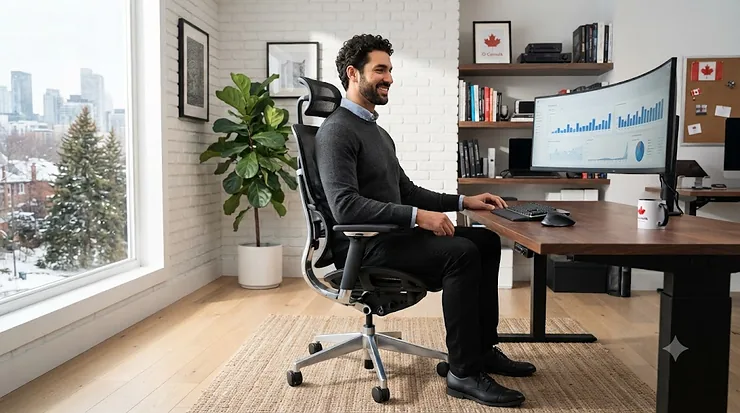
Here’s the thing nobody tells you when you cross the six-foot mark: furniture stops being neutral. Doorframes clip your head. Airplane seats become a personal insult. And your office chair — the thing you sit in for roughly eight hours a day, five days a week — was almost certainly engineered for someone six or eight inches shorter than you.
An office chair for tall people isn’t a luxury upgrade or a “nice-to-have.” It’s a chair built around a seat height range, seat depth, and backrest tall enough to actually reach the parts of your body that need support. Most mass-market chairs top out around 43-46 cm (17-18 inches) of seat height and 41-43 cm (16-17 inches) of seat depth — dimensions calibrated for someone roughly 173-178 cm (5’8″-5’10”). If you’re 188 cm (6’2″) or taller, that chair is quietly forcing your knees above your hips, tilting your pelvis, and loading your lumbar spine every single hour you sit in it.
We dug into seven real, currently available chairs — cross-referencing manufacturer specs, verified retailer listings, and aggregated owner feedback — to figure out which ones genuinely solve the tall-person problem instead of just slapping a “big and tall” label on a standard frame. According to the Canadian Centre for Occupational Health and Safety, a chair only becomes ergonomic when it’s matched to a worker’s actual body dimensions — a nice, tidy way of saying “your chair should fit you, not the average adult from 1985.” That’s the whole thesis of this guide.
We’ll walk through the top seven picks across budget, mid-range, and premium tiers, then get into the nitty-gritty: how to actually measure yourself for a chair, the mistakes almost everyone makes, and how a chair built for height stacks up against a “regular” ergonomic model. Grab a coffee. Or don’t — you’ll be sitting long enough as it is.
What Is an Office Chair for Tall People?
An office chair for tall people is a task chair engineered with an extended seat height range (typically 48-58 cm / 19-23 inches), a deeper seat pan (48-56 cm / 19-22 inches), and a taller backrest than standard models, so users above roughly 188 cm (6’2″) can keep their thighs level, their feet flat, and their spine fully supported without perching or slouching.
That’s the textbook version. In practice, it means the difference between finishing a workday feeling normal and finishing it with a dull ache behind your knees that you’ve just learned to live with.
Quick Comparison Table
Before we get into the full rundown, here’s the fast version for anyone who wants to skim and go.
| Tier | Chair | Best For | Price Range (CAD) |
|---|---|---|---|
| Premium | Steelcase Leap Plus | Users over 6’4″ who need maximum seat depth | around C$1,400-C$1,700 |
| Premium | Herman Miller Aeron (Size C) | Hot offices, breathability-first buyers | around C$1,600-C$2,000 |
| Premium | Steelcase Gesture | Multi-device users, 6’0″-6’4″ range | around C$1,900-C$2,300 |
| Mid-range | X-Chair X2 | Buyers who want adjustable seat depth without Steelcase pricing | around C$1,000-C$1,300 |
| Mid-range | Secretlab Titan Evo XL | Big and tall users who want a hybrid gaming/office build | around C$800-C$950 |
| Budget | GTPLAYER Big and Tall | Tight budgets needing a genuinely high back and 400 lb capacity | around C$200-C$350 |
| Budget | Duramont Ergonomic | Casual tall users who mostly need a taller headrest | around C$300-C$400 |
Looking at the spread above, the pattern is pretty clear: the premium tier buys you adjustable seat depth and a five-to-twelve-year warranty, while the budget tier buys you height and weight capacity without much fine-tuning. If your desk job runs eight-plus hours daily, that adjustability tends to earn its keep fast; if you’re working from a spare room three days a week, the budget picks are genuinely not a compromise.
💬 Just one click — help others make better buying decisions too!😊
Top 7 Office Chairs for Tall People: Expert Analysis
Here’s the detailed breakdown of all seven chairs, including the specs that actually matter and the parts nobody puts on the box.
1. Steelcase Leap Plus — deepest adjustable seat for over 6’4″
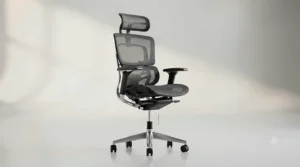
The Steelcase Leap Plus is the extended-range version of Steelcase’s long-running Leap chair, and the standout feature is simple: it goes further than almost anything else on this list. Seat depth adjusts up to 50 cm (19.75 inches), seat height climbs to 57 cm (22.5 inches), and the backrest reaches 63.5 cm (25 inches) — real headroom for people whose torso and femur length simply don’t fit standard proportions. Paired with a 227 kg (500 lb) weight rating, the frame doesn’t feel like it’s being asked to do something it wasn’t built for.
What most buyers overlook about this chair is that the seat depth adjustment isn’t just “more space” — it’s the mechanism that lets your knees clear the front edge of the seat while your back stays in contact with the lumbar curve, which is exactly what standard 41 cm (16-inch) seats fail to do for anyone over 188 cm (6’2″). Reviewers consistently note that the LiveBack technology flexes with recline rather than staying rigid, which matters most for people who shift position often during long sits.
Pros:
- ✅ Seat depth extends further than most competitors in this class
- ✅ 227 kg (500 lb) weight rating suits larger frames confidently
- ✅ Independently adjustable arms accommodate longer forearms
Cons:
- ❌ Premium pricing puts it out of reach for casual home offices
- ❌ Assembly and break-in period take longer than budget chairs
Expect to pay in the range of around C$1,400-C$1,700 at the time of research; for anyone over 191 cm (6’3″) who sits eight-plus hours daily, the seat depth alone tends to justify the premium.
2. Herman Miller Aeron (Size C) — coolest mesh for long summers
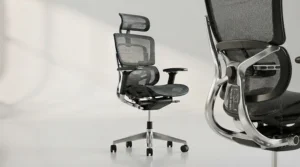
The Herman Miller Aeron in Size C is the largest of its three-size lineup, and its standout advantage is breathability — the full 8Z Pellicle mesh spans the entire seat and back, so there’s zero foam trapping heat against your body. Seat height adjusts across a range that comfortably covers users up to roughly 193 cm (6’4″), with a fixed seat depth around 47 cm (18.5 inches) that’s shallower than the Leap Plus but still deeper than any standard-size chair.
Based on the spec comparison, the fixed seat depth is the Aeron C’s real limitation: unlike the Leap Plus, you can’t extend it further, so buyers with longer-than-average femurs for their height may find the front edge sits closer to the back of the knee than ideal. Aggregated owner sentiment across retailer reviews consistently praises the mesh for keeping backs sweat-free during long sessions, while a recurring complaint is that the firmer PostureFit SL lumbar mechanism takes some adjustment time to dial in correctly.
Pros:
- ✅ Full mesh construction stays cool during all-day sitting
- ✅ 12-year warranty reflects genuine long-term build confidence
- ✅ PostureFit SL targets both pelvic tilt and lumbar curve
Cons:
- ❌ Seat depth is fixed, not adjustable like the Leap Plus
- ❌ Mesh feels firmer than foam-cushioned alternatives
Price sits around C$1,600-C$2,000 CAD depending on configuration; it’s the strongest pick if you run warm and want a chair that won’t need re-testing every six months.
3. Steelcase Gesture — best 4D arms for multi-device users
The Steelcase Gesture was built around a genuinely different premise: Steelcase studied over 2,000 people to map modern sitting postures shaped by laptops, tablets, and phones, and its standout feature is a 360-degree arm system that moves with you instead of staying locked in one plane. Seat height ranges from roughly 41-53 cm (16-21 inches), extendable further with an optional high-cylinder upgrade, and seat depth adjusts between 40-48 cm (15.75-18.75 inches).
Here’s what the spec sheet won’t tell you, but reviewers note: for users in the 183-193 cm (6’0″-6’4″) range, the Gesture’s arm flexibility genuinely changes how comfortable extended device-switching feels, but its 48 cm (18.75-inch) seat depth ceiling is noticeably shorter than the Leap Plus’s 50 cm (19.75 inches) — so taller users with longer thighs consistently report needing the optional taller gas cylinder just to keep their seat height comfortable. Owners over 193 cm (6’4″) in review threads tend to prefer the Leap Plus for exactly this reason.
Pros:
- ✅ 360-degree arms adapt to typing, tablet, and phone postures
- ✅ 181 kg (400 lb) weight capacity suits larger frames
- ✅ LiveBack flexes naturally through recline positions
Cons:
- ❌ Seat depth ceiling is shorter than the Leap Plus
- ❌ Users above 6’4″ often need the optional tall cylinder add-on
Expect a range around C$1,900-C$2,300 CAD at the time of research; it earns its keep for tall professionals who juggle multiple screens and devices all day.
4. X-Chair X2 — most adjustable seat depth under premium tier
The X-Chair X2 brings genuinely adjustable seat depth, height, armrests, and headrest to a price point noticeably below Steelcase and Herman Miller, and its standout feature is the Dynamic Variable Lumbar (DVL) support that shifts with your body automatically rather than requiring manual dialing-in. Seat depth adjusts across roughly 48-53 cm (19-21 inches), with seat width around 50-52 cm (19.5-20.5 inches) and a 40-degree recline range.
What most buyers overlook here is that the DVL mechanism removes one of the most common tall-user complaints — lumbar supports set too low for a longer torso — because it responds to pressure and position rather than sitting at a fixed height. A Tom’s Guide review of the X2 K-Sport model noted it took real trial and error to find the ideal seat position, since nearly every dimension is independently adjustable; that’s a genuine double-edged sword for buyers who want a “sit down and go” chair versus those who enjoy fine-tuning.
Pros:
- ✅ Seat depth range directly targets longer-than-average thighs
- ✅ Self-adjusting lumbar support needs no manual dialing
- ✅ Optional headrest and 4-way armrests add real customization
Cons:
- ❌ Learning curve to find your ideal configuration
- ❌ Costs meaningfully more than mid-range mesh alternatives
Priced around C$1,000-C$1,300 CAD, the X2 lands as a genuine middle path between budget big-and-tall chairs and full Steelcase-tier pricing.
5. Secretlab Titan Evo XL — best hybrid gaming-office build for big and tall
The Secretlab Titan Evo XL takes gaming-chair engineering and scales it specifically for larger frames, and the standout feature is its size range: Secretlab rates the XL for users between 180-205 cm (5’11”-6’9″) and up to 179 kg (395 lbs). Seat depth measures roughly 49-50 cm (19.3-19.7 inches), with seat height adjustable across 46-55.5 cm (18.1-21.9 inches) and a 4-way adjustable lumbar system built into the backrest itself.
Based on the spec comparison, the Titan Evo XL occupies an interesting middle ground: its seat depth nearly matches the Steelcase Leap Plus, but at a price closer to the mid-range tier. TechRadar’s testing of a 194 cm (6’4″) reviewer specifically highlighted the extra seat depth as the standout benefit over the standard Titan Evo size, while other reviewers note the bolstered side panels — great for lateral support — can feel snug for users with broader shoulders paired with a narrower torso.
Pros:
- ✅ Seat depth rivals premium ergonomic chairs at a lower price
- ✅ 179 kg (395 lb) capacity with a reinforced Class 4 gas cylinder
- ✅ 4-way lumbar and magnetic headrest ship standard, not as add-ons
Cons:
- ❌ Bolstered side panels can feel tight for broader shoulders
- ❌ Leatherette versions run warmer than mesh alternatives
Price sits around C$800-C$950 CAD; for tall users who want Steelcase-adjacent seat depth without the Steelcase invoice, this is the pick to try first.
6. GTPLAYER Big and Tall — best budget high-back for 400 lb capacity
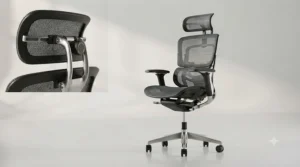
The GTPLAYER Big and Tall proves that a genuinely high backrest and solid weight capacity don’t require premium pricing, and its standout feature is a 181 kg (400 lb) weight rating paired with a properly tall back panel — a combination that’s rare below the C$400 mark. Seat depth measures around 50 cm (19.7 inches), seat width spans 53-56 cm (21-22 inches), and overall product height reaches roughly 140 cm (55 inches), tall enough to actually support the shoulder blade area that shorter budget chairs miss entirely.
Here’s what most budget chairs get wrong that this one doesn’t: the pocket-spring lumbar cushion and thickened headrest are specifically sized for larger bodies rather than being a standard chair with a taller sticker. Aggregated reviews consistently describe the seat as noticeably wider and deeper than typical budget task chairs, with a recurring theme that the recline mechanism (reported up to 150 degrees on related models) is a pleasant surprise at this price tier — though several owners note the armrests are fixed rather than height-adjustable.
Pros:
- ✅ 181 kg (400 lb) capacity at a genuinely budget price point
- ✅ Tall back panel supports shoulders, not just lower back
- ✅ Pocket-spring lumbar cushion is unusually supportive for the tier
Cons:
- ❌ Armrests are fixed, not height- or width-adjustable
- ❌ Faux leather versions trap more heat than mesh chairs
At around C$200-C$350 CAD, this is the clearest value pick for anyone who needs height and capacity now and can live without fine-grained adjustability.
7. Duramont Ergonomic — best budget headrest pick for casual tall users
The Duramont Ergonomic chair leans into a different strength: a genuinely tall, angle-adjustable headrest that taller reviewers specifically call out as a rare find in this price bracket. Weight capacity sits at 150 kg (330 lbs), with a minimum seat height around 42 cm (16.5 inches) from the floor and a headrest that tilts through roughly 90-120 degrees to actually reach a taller neck and skull position.
What the spec sheet won’t tell you, but user reports suggest, is that this chair’s seat pan is fixed-depth with no seat-depth adjustment — a real limitation for anyone with longer-than-average thighs. TechGearLab’s testing specifically noted that taller testers appreciated the deeper seat and full backrest, while shorter testers found the depth awkward, which tells you plainly who this chair is built for. Reviewers also consistently flag the seat cushion softening noticeably after extended daily use, which a firmer cushion topper can offset.
Pros:
- ✅ Taller, angle-adjustable headrest genuinely reaches taller necks
- ✅ Breathable mesh back stays cool through long sessions
- ✅ Adjustable lumbar height and depth via rear knob control
Cons:
- ❌ No seat-depth adjustment for longer thigh lengths
- ❌ Cushion compresses noticeably after a year or two of daily use
Priced around C$300-C$400 CAD, it’s a sensible pick for taller part-time or hybrid workers who mainly need headrest and lumbar coverage rather than full seat-depth customization.
Top 7 Products at a Glance
| Chair | Seat Depth Range | Seat Height Range | Weight Capacity | Best For |
|---|---|---|---|---|
| Steelcase Leap Plus | up to 50 cm (19.75″) | up to 57 cm (22.5″) | 227 kg (500 lb) | Users over 6’4″ needing max depth |
| Herman Miller Aeron C | ~47 cm (18.5″, fixed) | up to ~53 cm (21″) | ~159 kg (350 lb) | Hot offices, breathability |
| Steelcase Gesture | 40-48 cm (15.75″-18.75″) | 41-53 cm (16″-21″) | 181 kg (400 lb) | Multi-device users, 6’0″-6’4″ |
| X-Chair X2 | 48-53 cm (19″-21″) | adjustable | not publicly rated | Custom seat-depth tuning |
| Secretlab Titan Evo XL | 49-50 cm (19.3″-19.7″) | 46-55.5 cm (18.1″-21.9″) | 179 kg (395 lb) | Big and tall hybrid users |
| GTPLAYER Big and Tall | ~50 cm (19.7″) | standard range | 181 kg (400 lb) | Budget high-back buyers |
| Duramont Ergonomic | fixed, no adjustment | from 42 cm (16.5″) | 150 kg (330 lb) | Casual tall users, headrest focus |
The pattern across this table is worth pausing on: seat depth adjustability tracks almost perfectly with price, while weight capacity is surprisingly generous even in the budget tier. If proper leg room is your single biggest complaint with your current chair, the Steelcase Leap Plus, X-Chair X2, and Secretlab Titan Evo XL are the three worth testing first, since they’re the only ones on this list that actually let you extend the seat pan.
✨ Don’t Miss These Exclusive Deals!
🔍 Take your home office setup to the next level with these carefully selected chairs. Click on any highlighted item to check current pricing and availability on amazon.ca. These picks will help you build a workday routine your back will actually thank you for!
Setting Up Your Tall-Friendly Chair: A Practical Guide
Buying the right chair solves maybe sixty percent of the problem. The rest comes down to setup, and this is the part almost no Amazon listing walks you through.
Start with seat height, not seat depth. Sit down, plant your feet flat on the floor, and adjust the cylinder until your knees sit level with — or very slightly below — your hips. For most people over 188 cm (6’2″), this means starting near the top of the chair’s height range, which is exactly why a taller max seat height matters more than people initially assume when shopping. Next, seat depth: if your chair allows it (the Steelcase Leap Plus, X-Chair X2, and Secretlab Titan Evo XL all do), slide the seat pan out until there’s a gap of roughly two to three finger-widths between the front edge and the back of your knee. Too shallow and your lower back loses contact with the backrest; too deep and the front edge cuts off circulation behind the knee.
Lumbar support comes third. Raise it until it sits in the natural curve just above your belt line — for a longer torso, this is almost always higher than the factory default position. Finally, armrests: set them so your shoulders stay relaxed and your elbows rest at roughly 90 degrees, then check that they don’t collide with your desk edge before you commit.
A common first-30-days mistake is over-adjusting every setting at once and then blaming the chair when nothing feels right. Change one variable, sit with it for a full workday, then adjust the next. According to the CCOHS guidance on adjusting office chairs, controls should be operable from a seated position and adjusted individually rather than all at once — advice that applies doubly once you’re dealing with a wider adjustment range.
Real-World Scenarios: Which Chair Fits Your Frame
Specs only mean so much until you match them to an actual person and an actual workday. Here are three composite scenarios built from the buyer patterns we saw across reviews and forums.
The 198 cm (6’6″) software developer working ten-hour days. This person needs maximum seat depth and seat height above almost everything else, plus a frame that won’t flex under long-term daily use. The Steelcase Leap Plus is the clear match here — its 50 cm (19.75-inch) seat depth and 57 cm (22.5-inch) height ceiling are built for exactly this profile, and the twelve-year warranty matters when you’re logging fifty-plus hours a week in one chair.
The 188 cm (6’2″) hybrid worker splitting time between a home office and a co-working space three days a week. Budget matters more here, and full daily wear-and-tear is lower. The Secretlab Titan Evo XL or GTPLAYER Big and Tall both make sense — enough seat depth and height to actually fit, without premium-tier pricing for a chair that’s used four or five days a week rather than seven.
The 193 cm (6’4″) university student or entry-level remote worker on a tight budget. Here, the Duramont Ergonomic covers the basics — a taller headrest and adjustable lumbar — at a price that doesn’t require justifying a four-figure purchase for a first apartment. It won’t solve every seat-depth issue, but it solves the two most common complaints (neck support and lower back contact) affordably.
Buyer’s Decision Framework
If you want a shortcut instead of reading every section, here’s the simplified logic tall shoppers keep landing on.
- If you’re over 193 cm (6’4″) and sit eight-plus hours daily, choose the Steelcase Leap Plus because its seat depth and height ceiling are the highest on this list.
- If your office runs warm or you sweat through mesh-less chairs, choose the Herman Miller Aeron (Size C) because full mesh construction keeps you cooler through long sessions.
- If you constantly switch between a laptop, phone, and tablet at your desk, choose the Steelcase Gesture because its 360-degree arms track that kind of movement specifically.
- If you want adjustable seat depth without premium-tier pricing, choose the X-Chair X2 or Secretlab Titan Evo XL because both extend the seat pan for a fraction of the Steelcase cost.
- If your budget is under C$400 and you mainly need height and headrest coverage, choose the GTPLAYER Big and Tall or Duramont Ergonomic because both address the two most common tall-user complaints at an accessible price.
How to Choose an Office Chair for Tall People
Shopping by price alone is how most tall buyers end up disappointed twice. Here’s the reasoning that actually matters, step by step.
- Measure your actual height and inseam first. Seat height should let your thighs sit roughly parallel to the floor with feet flat; the CCOHS notes optimal seat height is roughly one-quarter of body height, though torso-to-leg ratio varies enough that this is only a starting estimate.
- Check the seat depth range, not just the maximum seat height. A tall chair with a shallow, fixed seat pan still won’t fit a long femur — this is the single most overlooked spec in this entire category.
- Confirm the weight capacity has real headroom above your body weight. A chair rated right at your weight is a chair rated for failure two years from now, not a chair rated for you today.
- Look at backrest height relative to your torso, not just overall chair height. A tall product doesn’t always mean a tall back panel — some of that height comes from the base and cylinder, not the part actually supporting your spine.
- Prioritize independently adjustable lumbar height. A longer torso needs lumbar support positioned higher than the factory default on most standard chairs.
- Test the armrest height range against your actual desk height. Even a great chair creates shoulder strain if the armrests can’t reach your desk’s working height.
- Read owner reviews for your specific height bracket, not just star ratings. A 4.5-star average tells you almost nothing about fit for someone 195 cm tall if most reviewers are 175 cm.
Common Mistakes When Buying an Office Chair for Tall People
Even careful shoppers fall into a handful of predictable traps.
The first is buying based on overall chair height instead of seat height and seat depth specifically. A tall backrest looks impressive in product photos, but if the seat itself sits at a standard 43 cm (17-inch) height, your knees are still riding too high. The second is ignoring seat depth entirely and assuming “big and tall” branding automatically means a deeper seat pan — as we saw with the Duramont Ergonomic, that’s not always true, and fixed-depth seats are common even in chairs explicitly marketed to larger users.
A third mistake is choosing based on weight capacity alone while ignoring dimensional fit — a chair rated for 181 kg (400 lbs) doesn’t automatically have a taller seat height range; it may just have a reinforced frame under standard dimensions. Fourth, buyers frequently skip checking return policies before ordering; assembled dimensions can feel meaningfully different from spec-sheet numbers once you’re actually sitting in the chair. Finally, plenty of tall shoppers assume more adjustability always equals more comfort, when in practice a chair with too many independent adjustments (arm depth, width, angle, pivot, plus seat depth and height) can take weeks to properly dial in — worth knowing before you commit to a steep learning curve on a busy work month.
Office Chair for Tall People vs Standard Ergonomic Chairs
The gap between a tall-specific chair and a standard “ergonomic” chair isn’t marketing spin — it shows up in the actual numbers.
| Feature | Standard Ergonomic Chair | Office Chair for Tall People |
|---|---|---|
| Seat height range | ~43-51 cm (17″-20″) | ~46-58 cm (18″-23″) |
| Seat depth | ~41-43 cm (16″-17″), often fixed | ~48-56 cm (19″-22″), often adjustable |
| Backrest height | Mid-shoulder or lower | Full shoulder-blade coverage |
| Weight capacity | Typically ~113-136 kg (250-300 lb) | Typically ~150-227 kg (330-500 lb) |
| Best For | Users 165-183 cm (5’5″-6’0″) | Users 188 cm+ (6’2″ and up) |
A standard ergonomic chair isn’t a bad product — it’s simply calibrated for a different body. The comparison above shows why swapping a standard chair for a tall-specific one isn’t about vanity sizing; a 13-15 cm (5-6 inch) gap in seat depth is the difference between full thigh support and pressure behind the knee for eight hours straight. Buyers who’ve tried both consistently report that the seat depth difference is noticeable within the first sitting, long before the taller backrest or higher weight rating even comes into play.
Office Chair for Tall People for Tall Guys: Audience-Specific Advice
Search interest around the best office chair for tall guys tends to skew toward two specific concerns: broader shoulders paired with height, and higher average body weight relative to standard chair ratings. Both matter more than raw height alone.
For broader-shouldered users, backrest width becomes just as important as backrest height — a chair like the Steelcase Gesture or Herman Miller Aeron (Size C) offers wider shoulder coverage than budget alternatives, which matters if you’ve ever felt your shoulders spilling past the edge of a standard-width backrest. For users carrying more weight at height, the Secretlab Titan Evo XL and GTPLAYER Big and Tall both combine tall dimensions with weight ratings of 179-181 kg (395-400 lbs), a pairing that’s genuinely rare below the C$1,000 mark.
What most buyers overlook in this specific search is armrest width — standard armrests sit closer together than a broader frame needs, forcing shoulders inward over a full workday. Chairs with width-adjustable 4D armrests, like the X-Chair X2 and Steelcase Gesture, solve this directly; fixed armrests on budget models generally don’t.
Proper Leg Room Office Chair: Getting Seat Height and Depth Right
A proper leg room office chair comes down to two numbers working together: seat height and seat depth, and neither one alone fixes a fit problem.
Seat height determines whether your thighs sit level with your hips — too low, and your knees ride above your hip line, tilting your pelvis backward and rounding your lumbar spine. For someone 191 cm (6’3″) with an average inseam, that typically means a seat height between 48-53 cm (19-21 inches), assuming a standard desk height around 71-76 cm (28-30 inches). If your desk is fixed and can’t be raised, a footrest becomes a genuine necessity rather than an accessory, since it lets you keep the seat at the correct height for your desk while still supporting your feet.
Seat depth determines whether your thighs get full support without cutting off circulation behind the knee. The general guidance from ergonomics researchers, including work published out of the University of Waterloo’s Kinesiology department, is that longer static postures without adjustment options tend to produce more discomfort over time than postures that allow for movement and proper support — which is exactly the argument for spending the extra money on adjustable seat depth if your budget allows it.
Extended Seat Depth Explained: The Single Biggest Factor
If there’s one spec worth obsessing over more than any other in this whole category, it’s extended seat depth — and it’s also the one most buyers skip past entirely while comparing prices.
Standard seat depth sits around 41-43 cm (16-17 inches), calibrated for a femur length of roughly 38-41 cm (15-16 inches). Someone 193 cm (6’4″) typically has a femur length closer to 48-51 cm (19-20 inches), which means a standard seat pan ends a full 8-10 cm (3-4 inches) short of where their knee actually bends. The result is one of two problems: sitting too far forward to keep contact with the backrest (losing lumbar support entirely), or sitting fully back and taking pressure directly behind the knee for hours at a time.
Extended seat depth — the kind found on the Steelcase Leap Plus, X-Chair X2, and Secretlab Titan Evo XL — solves this by physically sliding the seat pan forward or backward independent of the backrest, so tall users can maintain full thigh support and full backrest contact simultaneously. Reviewers who’ve switched from fixed-depth to adjustable-depth chairs consistently describe it as the single biggest comfort improvement, ahead of lumbar support, armrests, or even seat height.
Tall-Friendly Ergonomics: Long-Term Cost & Maintenance
Tall-friendly ergonomics isn’t just about the initial purchase — it’s about what the chair costs you in comfort and cash over three, five, or ten years of daily use.
Premium chairs like the Steelcase Leap Plus and Herman Miller Aeron (Size C) carry warranties in the ten-to-twelve-year range, and their frames are designed to be serviced rather than replaced — casters, cylinders, and even mesh panels are typically available as replacement parts. Over a decade of daily use, that total cost of ownership often comes out lower per year than replacing a budget chair every eighteen to twenty-four months, even though the upfront price feels steep.
Budget and mid-range picks like the GTPLAYER Big and Tall, Duramont Ergonomic, and Secretlab Titan Evo XL typically carry warranties in the one-to-five-year range, and cushion compression is the most commonly reported wear issue after twelve to eighteen months of daily use — a firmer cushion topper generally extends usable comfort by another year or two without a full replacement. Maintenance itself is minimal across the board: check caster wheels for hair and debris buildup every few months, re-tighten armrest bolts twice a year, and wipe mesh or leatherette surfaces with a damp cloth rather than harsh cleaners, which can dry out and crack synthetic upholstery over time. The University of Waterloo Safety Office also recommends periodically re-checking your seated posture and chair adjustments as part of ongoing ergonomic upkeep, not just a one-time setup task.
Frequently Asked Questions
❓ What height counts as 'tall' for office chair shopping?
❓ Do I need a big and tall chair if I'm tall but not heavy?
❓ Can I add seat depth to a chair that doesn't have it?
❓ How much should I budget for a proper tall office chair?
❓ Does a footrest fix a chair that's too low for me?
Conclusion
Fitting a chair to a tall frame isn’t complicated once you know which two numbers to check first: seat height and seat depth. Everything else — lumbar support, armrests, weight capacity, warranty length — matters, but it’s secondary to whether the chair’s basic dimensions actually match your body.
Across the seven chairs here, the Steelcase Leap Plus remains the strongest all-around pick for genuinely tall users who sit long hours daily, the Herman Miller Aeron (Size C) wins for anyone prioritizing breathability, and the Secretlab Titan Evo XL and X-Chair X2 both offer real seat-depth adjustability without premium-tier pricing. On a tighter budget, the GTPLAYER Big and Tall and Duramont Ergonomic cover the fundamentals — height, weight capacity, and headrest reach — without asking for a four-figure commitment.
Whichever tier fits your budget, the underlying advice doesn’t change: measure your actual height and inseam, check seat depth before seat height alone, and don’t assume “big and tall” branding guarantees the fit you actually need. Your knees, your lower back, and every future eight-hour workday will notice the difference.
Recommended for You
- Extra High Back Office Chair: 7 Top Picks for 2026 (Canada)
- Tall Back Office Chair: 7 Best Picks for Better Posture (2026)
- Low Seat Height Office Chair: 7 Best Picks for 2026 (Canada)
Disclaimer: This article contains affiliate links. As an Amazon Associate, I earn from qualifying purchases. If you purchase products through these links, we may earn a small commission at no additional cost to you.
✨ Found this helpful? Share it with your friends! 💬🤗
