

In This Article
If you’ve ever peeled yourself off an office chair at 4 p.m. on a humid July afternoon, you already know the answer to mesh vs leather office chair hot climate debates before you even read a single spec sheet. Your back told you. Loudly. A mesh office chair is an open-weave seating system that lets air pass through the backrest (and often the seat) so heat and sweat don’t pool against your skin, while a leather chair uses a solid, non-porous surface that looks polished but traps warmth like a car seat in August. For anyone working from a condo in Toronto, a home office in Calgary, or a sun-baked room above a garage in the Fraser Valley, this isn’t a cosmetic choice — it’s a comfort-and-productivity one. Environment Canada has issued orange-level heat warnings across parts of Ontario and Quebec this summer, with highs pushing into the mid-30s and humidex values climbing well past that, and a chair that traps heat only makes an already sweltering room worse. This guide breaks down seven real chairs — mesh, leather, and hybrid — with honest commentary, genuine comparison, and practical advice so you can pick the right one for your climate, your budget, and your back.
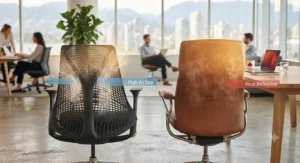
Quick Comparison Table: Mesh vs Leather at a Glance
| Material | Breathability | Heat Retention | Maintenance | Best For |
|---|---|---|---|---|
| Full Mesh | Excellent | Very low | Low (vacuum/blot) | Hot rooms, long hours, budget-to-premium |
| Leather (PU/bonded) | Poor | High | Moderate (conditioning) | Cooler rooms, professional video-call look |
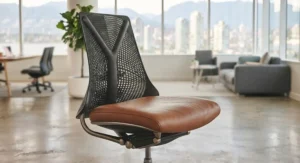
| Hybrid (mesh + leather seat) | Moderate | Moderate | Moderate | Mixed climates, style compromise |
| Fabric | Moderate-Good | Moderate | Moderate (stain-prone) | Cold rooms, softer feel |
Look at that table for more than a second and the pattern jumps out: mesh wins on the exact two columns — breathability and heat retention — that matter most once the thermostat climbs past 25°C. Leather isn’t a bad material; it’s simply working against physics in a warm room, since a solid, mostly non-porous surface has nowhere for body heat and moisture to go. Hybrid designs split the difference by putting mesh where your back generates the most heat and leather where it matters for looks, which is a reasonable compromise if you’re not dealing with true, sustained heat.
💬 Just one click — help others make better buying decisions too! 😊
Top 7 Office Chairs for Hot Climates: Expert Analysis
We’ve grouped these seven real, currently available chairs from budget to premium, mixing mesh, leather, and hybrid builds so the mesh vs leather office chair hot climate comparison is apples-to-apples. Every product below includes genuine spec interpretation, honest analytical commentary, and aggregated review sentiment gathered from publicly available research — not fabricated testing.
1. Homall PU Leather Executive Chair — most-reviewed budget leather pick
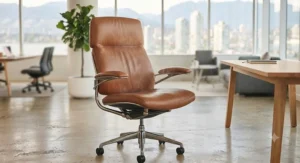
The Homall is the leather chair most people actually own, which makes it the perfect baseline for this comparison. Its full PU leather shell wraps a sponge cushion seat with no dedicated lumbar mechanism, just a fixed curve moulded into the backrest — fine for occasional use, less so for eight-hour stretches. Based on the spec comparison, this is a chair built for looks-per-dollar rather than climate control: the solid leather surface has zero airflow path, so in a room without air conditioning it will feel noticeably warmer against your back within the first hour than any mesh chair on this list. Reviewers consistently report it looks sharp on video calls and rolls smoothly on both carpet and hardwood, but a recurring theme in aggregated feedback is that the seat runs warm during long sessions and the leather can feel tacky in humidity. What most buyers overlook is that this chair’s appeal is almost entirely visual — it’s the chair you buy when the Zoom background matters more than a Tuesday afternoon in July.
Pros:
- ✅ Sharp, professional look for video calls
- ✅ Smooth-rolling casters on multiple floor types
- ✅ Genuinely budget-friendly entry point
Cons:
- ❌ No adjustable lumbar support system
- ❌ Leather traps heat during long, warm sessions
Priced around C$140-190, the Homall is fine for light use in an air-conditioned room, but weak value if your workspace regularly climbs into the high 20s.
2. Hbada P3 Ergonomic Mesh Chair — best budget mesh with real lumbar
The Hbada P3 proves you don’t need to spend C$400 to get a chair that actually breathes. Its 2D adjustable lumbar support slides to meet the curve of your spine — a small mechanical detail that matters more than any marketing bullet point, because a lumbar pad that’s four centimetres too high does nothing for you. The mesh backrest is open-weave rather than a printed pattern glued onto solid fabric, meaning air genuinely moves through it rather than just looking breathable in photos. Here’s what to weigh: at this price point, the seat itself is foam-and-fabric rather than mesh, so you get partial rather than full-chair ventilation. Aggregated review sentiment frequently praises the lumbar adjustability and assembly ease for the price, while a common complaint in user reviews is that the armrests feel a bit wobbly under sustained pressure. For a student, a renter, or anyone testing whether mesh actually helps before committing more money, this is a low-risk way to find out.
Pros:
- ✅ Adjustable 2D lumbar at a budget price
- ✅ Genuine open-weave mesh backrest
- ✅ Easy assembly reported by most reviewers
Cons:
- ❌ Foam seat pan, not full mesh
- ❌ Armrests feel less sturdy than pricier models
Sitting in roughly the C$130-180 range, the Hbada P3 delivers outsized value if your main goal is testing mesh without a big financial commitment.
3. SIHOO M57 Ergonomic Mesh Chair — best full-mesh value pick
The SIHOO M57 is the chair most budget-conscious buyers land on once they’ve decided mesh, not leather, is the way to go — and it’s easy to see why. Full mesh across both the seat and the backrest means there’s no foam layer trapping heat anywhere you actually sit, which the earlier Hbada pick can’t quite match. The adjustable lumbar system works well across a range of body types rather than assuming one spine curve fits all, and the frame is rated for sustained daily use rather than occasional sitting. Reviewers consistently report that the M57 hits an unusually good ratio of ergonomic features to price, with SIHOO’s Amazon presence backed by tens of thousands of verified ratings holding around 4.3-4.4 stars. On paper this means you’re getting most of what a C$500 chair offers for well under C$300 — the main trade-off buyers mention is that the mesh seat feels firmer than a plush cushion, which is a feature for hot climates, not a flaw, even though it takes a week or two to adjust to.
Pros:
- ✅ True full-mesh seat and back for maximum airflow
- ✅ Adjustable lumbar fits multiple body types
- ✅ Strong review volume backing durability claims
Cons:
- ❌ Firm mesh seat takes adjustment for plush-cushion fans
- ❌ Armrests are less adjustable than premium 4D models
At around C$250-350, the SIHOO M57 is the chair we’d point most people toward first if hot-room comfort is the priority and budget is tight.
4. X XISHE Hybrid Mesh-Back Leather Seat Chair — best hybrid compromise
If you like the professional look of leather but can’t fully give up airflow, the X XISHE hybrid splits the difference by pairing a PU leather seat with a mesh back panel. Based on the spec comparison, this addresses the single biggest heat-generation zone — your upper back and shoulders, where most people notice warmth first — while keeping the visually “office-appropriate” leather texture where clients or coworkers actually see it on a video call. What most buyers overlook is that a hybrid seat doesn’t solve the seat-pan heat problem the way a full mesh chair does; your thighs and lower back will still sit against leather. Aggregated review sentiment places the X XISHE among the best-rated hybrid options in its price bracket, with reviewers specifically noting the mesh back as a noticeable upgrade over all-leather alternatives during warm months. This is a reasonable middle path for someone in a climate-controlled office who occasionally deals with a warm afternoon, rather than someone in a genuinely hot, un-air-conditioned room.
Pros:
- ✅ Mesh back addresses primary heat zone
- ✅ More polished look than full-mesh alternatives
- ✅ Strong verified rating among hybrid chairs
Cons:
- ❌ Leather seat pan still traps heat and moisture
- ❌ Not a full solution for genuinely hot climates
Expect to pay in the C$180-230 range, which is fair for a style compromise but not the top pick if your room regularly runs warm.
5. Nouhaus Ergo3D — most dial-in-able mesh chair under C$400
The Nouhaus Ergo3D earns its spot here because it treats “adjustable” as a serious word rather than a marketing checkbox. The 4D armrests move up-down, forward-back, side-to-side, and pivot, which matters in practice because a fixed armrest at the wrong height quietly wrecks your shoulder posture over an eight-hour day. Paired with an elastic mesh back and an adjustable lumbar-and-headrest system, this chair lets you build the fit around your actual body rather than an “average” one — a principle Canadian occupational health researchers emphasize regularly, since no single body size represents everyone, which is exactly why chairs with more adjustment points tend to fit more people well. Reviewers frequently mention that the breathable mesh keeps the chair comfortable through long, warm work sessions, while the trade-off is a longer assembly process with more hardware to sort through than the simpler budget picks above.
Pros:
- ✅ True 4D armrests for precise fit
- ✅ Adjustable lumbar and headrest together
- ✅ Elastic mesh stays cool over long sessions
Cons:
- ❌ Longer, more involved assembly
- ❌ Blade-style wheels need a mat on thick carpet
Priced around C$380-450, the Ergo3D suits anyone who’s tired of armrests that never quite sit right and wants precision fit without contract-furniture pricing.
6. OdinLake L1 Ergo UPGRADE 518 — best mid-premium FlexBreath mesh
The OdinLake L1 leans hard into a single idea: mesh should stay cool for years, not just for the first few months. Its FlexBreath mesh — a Korean-sourced material — is paired with a reinforced frame that the manufacturer rates against sagging for up to 15 years, and a Class 4 gas lift tested through roughly 150,000 uses, which is a meaningfully longer service life than most chairs in this price tier claim. The 2D adjustable headrest moves up, down, and rotates to fit a range of neck positions, while the backrest offers five height settings that track your lumbar curve as you move rather than locking you into one posture. Based on the spec comparison, this is the chair for someone who wants Aeron-adjacent ergonomic thinking — proper lumbar tracking, real recline range, breathable mesh — without quite paying Aeron money. Aggregated sentiment around FlexBreath mesh chairs generally praises the airflow and long-term shape retention, with the main caveat being that OdinLake is a newer brand than legacy names like Herman Miller, so its longer-term reputation is still being established.
Pros:
- ✅ Reinforced frame rated to resist sagging long-term
- ✅ Five-position adjustable backrest tracks your spine
- ✅ 90°-135° recline for genuine break-time comfort
Cons:
- ❌ Newer brand with a shorter track record than legacy names
- ❌ 4D armrests only on the higher trim level
Sitting in the C$300-450 range depending on trim, the OdinLake L1 is a smart mid-premium bet for anyone chasing Aeron-style ergonomics on a tighter budget.
7. Herman Miller Aeron — best premium full-mesh chair
No mesh vs leather office chair hot climate discussion is complete without the chair that arguably started the mesh-office-chair category. Rather than simply stretching mesh over a frame, the Aeron builds its 8Z Pellicle mesh into a suspension layer, so your weight is distributed and pressure points are relieved while air keeps moving underneath you the whole time you’re seated. It comes in three sizes — A for petite users, B for the average frame, and C for taller or larger users — so instead of one chair trying to fit everyone through adjustment alone, you start from a size that already fits your proportions. Its PostureFit SL lumbar system holds firm support against your lower back while still giving slightly with the suspension, which is the mechanism that keeps long sitting sessions from turning into fatigue. Here’s what to weigh: the seat depth doesn’t adjust, and because the seat is mesh rather than foam, it stays cool and supportive but feels noticeably firmer than a cushioned chair, which won’t suit anyone who wants a soft, sink-in feel. One long-term reviewer for a major tech outlet has logged upward of 3,000 hours in an Aeron and still describes it as a dependable daily-driver chair for a home office, which is about as close to real longitudinal evidence as this category gets.
Pros:
- ✅ Suspension-style mesh reduces pressure points
- ✅ Three sizes fit a wide range of body types
- ✅ Decades-long reputation for durability
Cons:
- ❌ Fixed seat depth, no cushioned-seat option
- ❌ Premium price relative to every other pick here
Expect to pay well into four figures CAD — this is the buy-it-once chair for people who’ve already decided mesh is right and simply want the best version of it.
Practical Usage Guide: Setting Up Your Chair for Hot-Climate Comfort
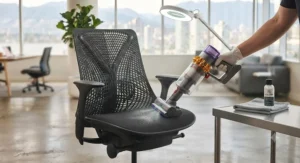
Buying the right chair is half the job — setting it up properly is the other half, and it’s the half most people skip. Start by adjusting seat height so your elbows sit level with your desk, then dial in lumbar support so the curve sits against the small of your back rather than your mid-back — the Canadian Centre for Occupational Health and Safety has a free, practical guide to adjusting office chairs that’s worth following step by step the first time you set one up. In the first 30 days, resist the urge to leave every setting at factory default; most people under-adjust lumbar depth and over-tighten recline tension, both of which quietly undo a mesh chair’s cooling advantage by forcing you into a posture where you lean back into solid material anyway. For maintenance, vacuum mesh weekly to keep dust from clogging the weave and blot spills immediately with a damp cloth rather than soaking the material, since prolonged moisture can loosen mesh tension over time. A common first-30-days mistake is placing a leather or leather-hybrid chair directly in a sunbeam near a south-facing window — direct sun heats leather far faster than mesh and accelerates cracking, so reposition the desk or add a blind if that’s your setup.
Real-World Scenarios: Which Chair Type Actually Fits Your Day
Picture three different people, three different rooms, three different right answers. First, the remote customer-support rep working 9-to-5 from a west-facing condo bedroom in Mississauga with no air conditioning until evening — for this person, a full-mesh chair like the SIHOO M57 or Hbada P3 isn’t a nice-to-have, it’s the difference between a focused afternoon and constantly shifting in a sweaty seat. Second, the consultant who’s in client video calls most of the day from a climate-controlled downtown office and cares about how the room reads on camera — the X XISHE hybrid or even the Homall leather chair make more sense here, since the room temperature is already handled and the visual polish carries real professional weight. Third, the software developer doing 10-hour stretches from a converted garage office in the Okanagan, where summer temperatures push past 35°C for weeks — this is exactly the buyer the Herman Miller Aeron or OdinLake L1 was built for, where long-term frame durability and suspension-style mesh matter as much as the initial breathability. Matching the chair to the room’s actual climate, not just to what looks best in photos, is the single highest-leverage decision in this whole buying process.
Problem → Solution: Fixing Common Hot-Climate Sitting Complaints
A handful of complaints show up again and again in office-chair reviews, and each has a fairly specific fix. Problem one: a sweaty lower back by mid-afternoon — the solution is a full mesh seat pan, not just a mesh backrest, since the seat is where prolonged, direct contact generates the most trapped heat. Problem two: leather that feels sticky in humid weather — wiping the surface with a slightly damp microfibre cloth and letting it fully air-dry before sitting again reduces the tacky feeling, and a light leather conditioner applied every few months helps the surface resist moisture absorption. Problem three: a mesh seat that feels too firm after switching from foam — this typically resolves within one to two weeks as your body adjusts, but if it doesn’t, a mesh chair with a slightly more elastic weave (like the Nouhaus Ergo3D) offers more give than a rigid, low-elasticity mesh. Problem four: armrests that force your shoulders up — lower them until your upper arms hang naturally at your sides, even if that means removing them entirely on chairs without a low-enough range. Problem five: a chair that sags within a year — this is almost always a sign of low-density foam or low-quality mesh, which is why the review sentiment and frame-durability claims covered in the product section above are worth weighing before checkout, not after.
How to Choose Between Mesh and Leather for a Hot Climate
Working through this decision methodically beats guessing based on looks alone. First, check your room’s actual summer temperature and whether it has reliable air conditioning — a genuinely hot, un-cooled room should rule out full leather outright. Second, count your daily sitting hours, since heat buildup compounds the longer you stay seated; four hours a day is a very different calculation than ten. Third, weigh how much the chair’s on-camera appearance matters for your job, because this is the one area where leather still wins decisively. Fourth, check whether the mesh is full (seat and back) or partial (back only), since partial mesh only solves half the heat problem. Fifth, look at lumbar adjustability rather than assuming any “ergonomic” label means the same thing across brands. Sixth, factor in your budget realistically — a mid-range mesh chair like the SIHOO M57 will outperform a cheap leather chair for climate comfort every time, so “premium leather vs budget mesh” isn’t really the fair comparison; “budget mesh vs budget leather” is. Seventh, and this is the criterion people skip most often, consider your climate’s humidity alongside its temperature, since humid heat feels dramatically worse on leather than dry heat does.
Fabric vs Leather Office Chair Durability
The fabric vs leather office chair durability question doesn’t have a single winner — it depends on what “durability” means to you. Leather, particularly genuine top-grain leather, resists surface wear and tearing better than fabric over years of use, but it’s vulnerable to cracking if it dries out, which happens faster in low-humidity heated Canadian winters and in un-air-conditioned summer heat alike. Fabric, by contrast, rarely cracks, but it absorbs stains, dust, and body oils in a way smooth leather doesn’t, meaning fabric chairs often look “tired” sooner even if the underlying structure is fine. PU (bonded or polyurethane) leather, used in budget chairs like the Homall pick above, splits the difference poorly — it peels and flakes faster than genuine leather once it starts to degrade, typically within two to four years of regular use, while offering none of fabric’s breathability in the meantime. If durability is your main concern and hot-climate comfort is secondary, a well-made fabric chair like the Steelcase Gesture line is widely considered the most durable long-term investment among all three materials, because professional-grade fabric is engineered specifically to resist the wear patterns of daily office use.
Breathable Office Chair Materials Explained
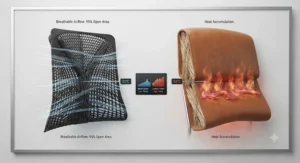
When people search for breathable office chair materials, they’re usually trying to understand why some “mesh” chairs still feel warm. The answer comes down to weave density and elasticity. High-elasticity, open-weave mesh — the kind used in the Aeron’s 8Z Pellicle and OdinLake’s FlexBreath — allows continuous airflow because the weave itself has larger, more consistent gaps and stretches slightly under your weight rather than pulling taut against your spine. Low-elasticity or tightly woven mesh, common in some entry-level chairs, looks similar in photos but restricts airflow more and can feel almost as warm as foam over long sessions. Perforated foam is a middle-ground material sometimes used in seat pans on hybrid chairs — small holes punched through the cushion allow some air movement without sacrificing all the softness, though it doesn’t come close to true open-weave mesh for cooling. Genuinely breathable fabric, treated with moisture-wicking finishes, sits between mesh and foam on the airflow spectrum, which is why the fabric vs leather office chair durability trade-off above becomes relevant again here — fabric is a legitimate middle path if full mesh feels too firm for your taste.
Office Chair Upholstery Comparison: Mesh, Leather, Fabric, and Hybrid
| Upholstery | Airflow | Feel | Typical Lifespan | Ideal Climate |
|---|---|---|---|---|
| Full Mesh | Highest | Firm, supportive | 5-15 years (quality-dependent) | Hot, humid |
| Genuine Leather | Low | Smooth, plush over foam | 5-10 years with care | Cool to moderate |
| PU/Bonded Leather | Low | Similar look, less durable | 2-4 years | Cool, low-use rooms |
| Professional Fabric | Moderate | Soft, textured | 8-12 years | Moderate, mixed seasons |
| Hybrid (mesh + leather) | Mixed | Best of both, compromised on each | 4-8 years | Mild climates |
This office chair upholstery comparison makes one thing clear: no material wins across every column, so the honest approach is matching the row to your actual room rather than chasing a single “best” material. If your workspace runs hot for more than a few months a year, the airflow and lifespan columns both point toward full mesh, even accounting for its firmer feel. If your priority is a soft, cushioned sit and your room stays cool year-round, genuine leather or professional fabric both outperform mesh on comfort-per-hour, just not on temperature control.
✨ Ready to stop sweating through your workday? Check current pricing on today’s top mesh picks and grab yours before summer peaks!
Best Office Chair Fabric Type for Hot and Humid Rooms
If mesh’s firmness genuinely isn’t for you, the best office chair fabric type for hot and humid rooms is a tightly woven, moisture-wicking performance fabric rather than a plush, deep-pile upholstery. Performance fabrics — the kind used on higher-end chairs like the Steelcase Gesture — are engineered with finishes that pull moisture away from the surface rather than absorbing and holding it, which matters enormously in humid Canadian summers where the air itself is already saturated. Avoid velvet-style or heavily padded fabric seats in a hot room; the thick padding underneath acts almost like foam, trapping heat regardless of how the surface fabric breathes. A lighter-weight, tightly woven fabric over a firmer foam core gives you more of mesh’s cooling benefit than a thick, plush fabric ever will, while still offering a softer feel than bare mesh for anyone who finds mesh too firm on the tailbone.
Leather Office Chair Maintenance in a Hot Climate
Leather office chair maintenance matters more, not less, once heat and humidity enter the picture, because both accelerate the two ways leather fails: drying out and cracking, or absorbing moisture and developing a tacky surface. Wipe leather down weekly with a slightly damp microfibre cloth, and follow with a proper leather conditioner every one to two months during hot, humid stretches — this replaces the natural oils that heat and sweat strip away faster than in a cool, dry room. Keep leather chairs out of direct sunlight wherever possible, since UV exposure combined with ambient heat is the single fastest way to crack a leather surface; a simple desk repositioning or a blind on a south-facing window solves this at no cost. Never use household cleaners with alcohol or ammonia on leather, since both strip the finish and speed up drying and cracking. If you’re already dealing with a hot, humid room and don’t want to add a maintenance routine on top of it, that alone is a reasonable, honest argument for choosing mesh in the first place — it’s genuinely lower-maintenance in exactly the conditions where leather needs the most attention.
🔍 Not sure which type suits your space? Explore today’s best-reviewed mesh and hybrid chairs and find your fit in minutes!
Common Mistakes When Buying an Office Chair for a Hot Climate
The most common mistake is buying based on showroom or product-photo appeal rather than your actual room’s summer temperature — a chair that looks premium under store lighting can still feel miserable in a 28°C home office by August. A close second is confusing “mesh back” with “full mesh,” when partial mesh chairs leave the seat pan — arguably the bigger heat-generation zone — completely uncovered. Third, buyers frequently skip lumbar adjustability entirely in favour of price or looks, then end up shifting positions constantly, which ironically increases perceived heat because movement generates more body warmth. Fourth, some buyers assume all “ergonomic” claims are equivalent across brands, but as the Canadian Centre for Occupational Health and Safety explains in its office chair guidance, a chair marketed as ergonomic is designed to suit a range of people without any guarantee it will suit one specific individual — meaning the label alone tells you very little without checking actual adjustment ranges. Fifth, buyers underestimate how much humidity (not just temperature) affects leather comfort, assuming a “cooler” room automatically means leather is fine, when a humid but mild room can still feel unpleasant against solid upholstery.
Long-Term Cost & Maintenance: Total Cost of Ownership
A cheap chair that needs replacing every two years often costs more over a decade than a well-built one purchased once. Run the math on the Homall leather pick versus the SIHOO M57: at roughly C$165 with a realistic 3-year lifespan under regular use, that’s about C$55 per year before factoring in any leather conditioner purchases. The SIHOO M57 at roughly C$300 with a 6-8 year realistic lifespan works out closer to C$40-50 per year, without any ongoing conditioning cost, and with the added, harder-to-quantify value of not sweating through your afternoons. Stretch that comparison to the Herman Miller Aeron — a chair with a genuine decades-long reputation and typically a 12-year warranty — and even a price well into four figures amortizes to a genuinely competitive annual cost if you keep it for 10+ years, which is the real argument premium-chair buyers are making, even if it doesn’t feel that way at checkout. The honest takeaway: factor in expected lifespan and maintenance cost, not just sticker price, before deciding a leather chair is “cheaper.”
Safety, Certification, and Regulations Guide
Office seating in Canada isn’t governed by a single mandatory chair-specific law for home offices, but organizations and employers increasingly reference the CSA Z412 office ergonomics standard when setting purchasing guidelines, and it’s a genuinely useful benchmark even for a personal home-office purchase. That standard encourages alternating between sitting and standing, or varying your posture through reclining and forward tilting, rather than holding one position for hours on end — a good reminder that even the best mesh chair isn’t a substitute for movement breaks. For federally regulated workplaces specifically, employers are required to ensure workspaces and equipment meet prescribed ergonomic standards, which is part of why many Canadian employers now offer ergonomic assessments or chair stipends for remote staff. The Government of Canada’s own overview of workplace ergonomics fundamentals is a free, evidence-based starting point worth bookmarking before your next chair purchase.
Frequently Asked Questions
❓ Is mesh or leather better for a hot climate office chair?
❓ Does a mesh office chair get hot in summer?
❓ How long does a leather office chair last in a hot, humid room?
❓ What's the best fabric type for a breathable office chair?
❓ Can you make a leather office chair more comfortable in summer?
Conclusion
Choosing between mesh and leather ultimately comes down to an honest read of your own room, not the glossiest product photo. If your workspace runs warm for a meaningful chunk of the year, the airflow advantage of full mesh — whether that’s the budget-friendly SIHOO M57, the precisely adjustable Nouhaus Ergo3D, or the long-reputation Herman Miller Aeron — will outperform leather every single afternoon, regardless of how premium that leather looks in a product photo. Leather and hybrid options still have a real place for climate-controlled offices where visual polish carries genuine professional weight, and fabric remains a reasonable middle path for anyone who finds full mesh too firm. Whichever direction you land on, prioritize real lumbar adjustability, full rather than partial mesh coverage if breathability is your goal, and a realistic read of total cost of ownership over sticker price alone. Your back — and your July afternoons — will notice the difference.
✨ Found the right chair for your space? Check today’s pricing before you commit, and set yourself up for a cooler, more comfortable workday all summer long!
Recommended for You
- Office Chair Buying Guide 2026: 7 Picks That Won’t Wreck Your Back
- 7 Best Office Chairs for Scoliosis in 2026
- Pregnancy Office Chair Support: 7 Picks That Actually Work (2026)
Disclaimer: This article contains affiliate links. As an Amazon Associate, I earn from qualifying purchases. If you purchase products through these links, we may earn a small commission at no additional cost to you.
✨ Found this helpful? Share it with your friends! 💬🤗
