
In This Article
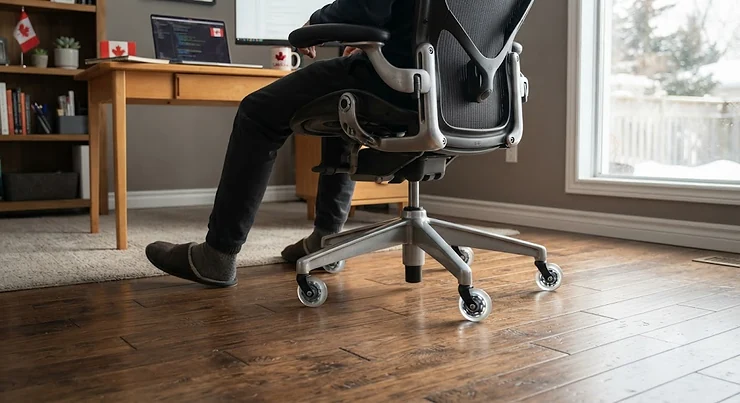
There’s a very specific kind of dread that comes from leaning back in your chair, pushing off with your feet, and hearing… nothing. No roll. Just a dull scrape, like your chair has suddenly decided it’s a sled on gravel. If that’s you right now, you don’t need a new chair — you need replacement office chair wheels, and probably sooner than you think.
Here’s the thing nobody tells you when you buy an office chair: the wheels are almost always the first part to fail. The seat cushion, the tilt mechanism, even the armrests usually outlast the little plastic casters holding the whole thing up. Cheap stock wheels are typically made from hard, brittle plastic that cracks after a couple of years of daily rolling, especially on hardwood or laminate floors where every bit of grit acts like sandpaper. The good news is that replacement office chair wheels are one of the cheapest, fastest upgrades you can make to a home or work office — often under thirty dollars and a five-minute install, no tools required.
This guide walks through seven real, currently available options — from budget rubber sets to IKEA-specific casters most people don’t know exist — with honest analysis based on real specifications and aggregated review patterns, not fabricated hands-on testing. We’ll also cover caster compatibility, how replacement chair wheels stack up against your chair’s original casters, and the practical side of chair mobility on different floor types across a Canadian home office.
Quick Comparison Table
Before diving into the full lineup, here’s a fast snapshot for anyone who just wants the short version.
| Product | Wheel Size | Stem Type | Best For |
|---|---|---|---|
| MaxGear Replacement Caster Wheels | 2″ | 11mm universal | Budget hardwood upgrade |
| RidRed Rollerblade Casters | 3″ | 11mm universal | Heavier users, carpet |
| Omyoffice Heavy-Duty Casters | 2″ | 11mm universal | High weight capacity |
| The Office Oasis Rollerblade Wheels | 2.5″ | 11mm universal | Premium hardwood protection |
| HOLKIE IKEA-Compatible Casters | 2″-3″ | 10mm IKEA-only | IKEA chair owners |
| Lifelong Original Chair Wheels | 2″ | 11mm universal | All-around reliability |
| TESUMI Rollerblade Casters | 3″ | 11mm universal | Gaming chairs, mixed flooring |
At a glance, the split comes down to stem size and wheel diameter more than brand. Anyone with a standard office chair bought from a big-box retailer will almost certainly need the common 11mm universal stem, while IKEA owners are the notable exception that trips people up constantly (more on that below). Bigger 3-inch rollerblade-style wheels roll more smoothly over carpet transitions and cables, but they’ll lift your seat height slightly, which matters if you’re already at the top of your desk’s comfortable range.
💬 Just one click — help others make better buying decisions too!😊
Top 7 Replacement Office Chair Wheels: Expert Analysis
1. MaxGear Replacement Caster Wheels — best budget upgrade for hardwood
The MaxGear Replacement Caster Wheels are the caster equivalent of a reliable used car: nothing flashy, everything you actually need. These are 2-inch rubber-coated wheels built around the industry-standard 11mm x 22mm grip-ring stem, which is the same stem size used on roughly 95-99% of office chairs sold in Canada — the major exception being IKEA models, which use a 10mm stem instead. That distinction matters more than most buyers realize, since it’s the single biggest reason replacement wheels get returned.
Based on the spec comparison with pricier competitors, what stands out here is the ball-bearing swivel mechanism, which is often skipped entirely on the cheapest generic casters and is usually what separates a smooth-rolling wheel from one that judders. Reviewers consistently note that the rubber housing is noticeably quieter on laminate and engineered hardwood than the stock plastic wheels it replaces, though a recurring theme in feedback is that the softer rubber compound shows visible wear faster under very heavy daily use than harder-wearing alternatives.
Pros:
- ✅ Standard 11mm stem fits the vast majority of office chairs
- ✅ Ball-bearing swivel rolls smoother than stock plastic casters
- ✅ Genuinely quiet on hardwood and laminate flooring
Cons:
- ❌ Not compatible with IKEA’s 10mm stem chairs
- ❌ Rubber tread wears faster than premium polyurethane options
At around C$15-C$25 for a set of five (check current price, as prices may vary), this is the wheel to grab if your only complaint is noise and scratching, not weight capacity.
2. RidRed Rollerblade Casters — best for heavier users and carpet
The RidRed Rollerblade Casters ditch the traditional single hard wheel for a dual-wheel, rollerblade-style design — think inline skate wheels instead of a shopping cart caster. That construction spreads the load across two smaller wheels per caster instead of one, which is a meaningful engineering difference: it’s why this set claims a combined support rating in the neighbourhood of 2,000 pounds across a set of five, well above what a typical single-wheel budget caster is rated for.
What most buyers overlook about this style is that it isn’t just about weight — the dual-wheel design also handles the transition between hardwood and area rugs, or across carpet seams, more gracefully than a single hard wheel, which tends to catch and jolt. Aggregated review sentiment points to strong satisfaction on carpet specifically, with users noting far less “stuck” resistance than their old stock casters, though a smaller subset of reviewers mention that the 3-inch diameter raises the chair noticeably, which can throw off desk height for shorter users.
Pros:
- ✅ Dual-wheel rollerblade design handles carpet transitions well
- ✅ High combined weight rating for heavier users
- ✅ Smoother ride over cords, rug edges, and seams
Cons:
- ❌ Adds roughly 1-1.5 inches of chair height
- ❌ Larger footprint may not suit compact chair bases
Expect a price in the C$20-C$30 range, positioning it as a mid-tier pick that punches above its weight class — literally.
3. Omyoffice Heavy-Duty Casters — best for high weight capacity
The Omyoffice Heavy-Duty Casters lean hard into the “heavy-duty” label, with manufacturer weight ratings that run as high as 2,200 pounds across a five-wheel set — a figure aimed squarely at bigger frames, chairs loaded with extra cushions, or shared office chairs that see rotating users of different sizes. The 11mm x 22mm universal stem keeps compatibility broad, and the rubber compound is specifically formulated to stay quiet during 360-degree rotation rather than just rolling forward.
Here’s what the spec sheet won’t tell you outright: a high weight rating on the wheel doesn’t automatically mean your chair’s overall frame or gas cylinder can handle that load too, so this caster is genuinely most useful as a targeted upgrade rather than a magic fix for an undersized chair. Reviewers who mention heavier daily use tend to report that these hold up better over time than thinner-rimmed budget casters, and floor protection performance on hardwood is a frequently repeated positive, with fewer complaints about scuffing than typical stock wheels.
Pros:
- ✅ High rated capacity suits larger or shared chairs
- ✅ Universal 11mm stem covers most standard chairs
- ✅ Quiet full-rotation rolling, not just straight-line rolling
Cons:
- ❌ Weight rating on the wheel doesn’t override chair frame limits
- ❌ Standard 2-inch size, so no added ground clearance
Pricing typically sits in the C$18-C$28 range, making it a reasonable step up from entry-level sets without hitting premium territory.
4. The Office Oasis Rollerblade Wheels — best premium pick for hardwood protection
The Office Oasis Rollerblade Wheels have built genuine market visibility through media features, which — to be honest and transparent about it — is a marketing achievement, not a substitute for spec-sheet scrutiny. That said, the underlying product holds up: a 2.5-inch rollerblade-style wheel using the standard universal stem, engineered specifically around minimizing point pressure on hardwood and engineered flooring.
Based on the spec comparison with simpler single-wheel casters, the wider rollerblade tread distributes weight across a broader contact patch, which is the actual mechanism behind reduced hardwood marking — not just marketing language about “floor safety.” What reviewers consistently flag as the standout is how quiet the ride is compared to their prior stock wheels, particularly in open-concept homes where a squeaky chair becomes a background irritant during video calls. The trade-off, honestly, is price: this sits above most of the field here, and the improvement over the mid-tier options like Omyoffice is real but incremental rather than dramatic.
Pros:
- ✅ Wide rollerblade tread reduces hardwood floor marking
- ✅ Notably quiet rolling, even on open subfloors
- ✅ Simple universal stem install, no tools needed
Cons:
- ❌ Priced at the top of this category
- ❌ Improvement over mid-range picks is incremental, not dramatic
Budget around C$30-C$40 for a set (prices may vary at the time of purchase), best justified if hardwood preservation is genuinely your top priority.
5. HOLKIE IKEA-Compatible Casters — best for IKEA chair owners
This is the one entry on this list solving a completely different problem than the other six, and it’s arguably the most important listing here simply because so many people don’t know it exists. HOLKIE IKEA-Compatible Casters are built on a 10mm stem — not the 11mm standard covered above — because IKEA uses a proprietary stem diameter across most of its office chair lines, including popular models sold across Canadian IKEA stores.
What most buyers overlook, and what genuinely costs people money, is ordering a universal-fit caster set advertised as fitting “98% of chairs” without checking stem diameter first, only to find it simply won’t seat into an IKEA chair base at all. Caster compatibility here isn’t a preference issue, it’s a hard mechanical constraint: a 10mm stem physically will not lock into an 11mm socket, and vice versa. Aggregated reviews on IKEA-specific caster listings repeatedly emphasize this exact frustration from buyers who purchased the wrong size the first time around, which is precisely why this category exists as its own product line rather than a footnote.
Pros:
- ✅ Purpose-built for IKEA’s 10mm stem, no adapter needed
- ✅ Rollerblade-style tread for quieter rolling
- ✅ Solves the single most common wrong-order mistake
Cons:
- ❌ Will not fit standard 11mm chairs at all
- ❌ Fewer size/style variants than universal-fit competitors
Expect roughly C$18-C$28, and always measure your existing stem before ordering — a habit that saves a return shipment nine times out of ten.
6. Lifelong Original Chair Wheels — best all-around reliability pick
Lifelong Original Chair Wheels have earned a reputation as one of the more consistently well-reviewed sets in this category, and the reason isn’t a single standout feature — it’s the absence of obvious weak points across the whole spec sheet. Standard 11mm universal stem, rubber tread, floor-safe design for both hardwood and carpet, and a straightforward five-wheel set that fits the overwhelming majority of standard office and task chairs.
Here’s the honest analytical read: in a category full of near-identical rubber caster sets from lesser-known brands, a track record of sustained positive aggregated sentiment over time is itself meaningful data, since it suggests fewer early-failure complaints months into ownership rather than just glowing unboxing reviews. Reviewers frequently mention smooth, consistent rolling across mixed flooring in the same home — a common real-world scenario where a chair rolls between a hardwood office and a carpeted hallway multiple times a day. The main complaint that surfaces periodically is inconsistent stem tightness out of the box, meaning a small percentage of units need a firmer push to seat properly.
Pros:
- ✅ Long track record of consistent aggregated review sentiment
- ✅ Performs well across mixed hardwood-to-carpet transitions
- ✅ Standard universal fit covers most chair brands
Cons:
- ❌ Occasional reports of a looser stem fit on some units
- ❌ No IKEA-compatible (10mm) version available
Pricing generally runs C$20-C$30, a fair middle-of-the-road number for a caster set with this much of a proven history behind it.
7. TESUMI Rollerblade Casters — best for gaming chairs and mixed flooring
Rounding out the list, TESUMI Rollerblade Casters target a slightly different buyer: gaming chairs and larger task chairs that see heavier, more frequent movement — think someone rolling back from a desk dozens of times a day rather than sitting mostly still. The 3-inch rollerblade wheel uses the standard 11mm universal stem (not IKEA-compatible, worth repeating given how common that mix-up is) and is explicitly marketed around no-scratch performance on hardwood floors.
On paper, this means the same core engineering as the RidRed and Office Oasis picks above — a wider, dual-contact rollerblade wheel instead of a single hard caster — but positioned at a slightly lower price point than the premium hardwood-focused option. What reviewers consistently note is durability under high-frequency use, specifically from gaming and streaming setups where the chair moves constantly for hours at a stretch, rather than the more occasional movement of a typical desk job. A smaller number of reviews mention that the larger wheel size doesn’t suit chairs with very low ground clearance.
Pros:
- ✅ Built for high-frequency movement, not just occasional rolling
- ✅ Genuinely no-scratch performance on hardwood in reviews
- ✅ Mid-range price for rollerblade-style construction
Cons:
- ❌ Not compatible with IKEA’s 10mm stem chairs
- ❌ Larger wheel size unsuitable for low-clearance chair bases
Typical pricing sits around C$20-C$30, making it one of the better value plays if you specifically need rollerblade durability without paying premium-brand pricing.
Top 7 Products: Full Spec Comparison
| Product | Weight Rating (set) | Wheel Size | Price Range | Best For |
|---|---|---|---|---|
| MaxGear Replacement Caster Wheels | ~300-700 lbs | 2″ | C$15-C$25 | Quiet hardwood upgrade |
| RidRed Rollerblade Casters | ~2,000 lbs | 3″ | C$20-C$30 | Carpet, heavier users |
| Omyoffice Heavy-Duty Casters | ~2,200 lbs | 2″ | C$18-C$28 | Big frames, shared chairs |
| The Office Oasis Rollerblade Wheels | Standard | 2.5″ | C$30-C$40 | Premium floor protection |
| HOLKIE IKEA-Compatible Casters | Standard | 2″-3″ | C$18-C$28 | IKEA-only chairs |
| Lifelong Original Chair Wheels | Standard | 2″ | C$20-C$30 | Reliable all-around use |
| TESUMI Rollerblade Casters | Standard | 3″ | C$20-C$30 | Gaming/high-frequency use |
Looking at the numbers side by side, weight rating varies far more than price does — the RidRed Rollerblade Casters and Omyoffice Heavy-Duty Casters both claim dramatically higher combined capacity than the others despite sitting in a similar price bracket, which makes them the logical pick for anyone above an average frame size. Price, on the other hand, tracks more closely with wheel construction complexity than with brand name: rollerblade-style dual wheels consistently cost a few dollars more per set than single hard-wheel casters, reflecting the added manufacturing steps. The HOLKIE IKEA-Compatible Casters are priced comparably to universal options despite serving a smaller, more specific market, which suggests IKEA-compatible parts aren’t the pricing outlier some buyers assume they’ll be.
How to Replace Office Chair Wheels: A Practical Usage Guide
Replacing chair wheels is one of the least intimidating “furniture repair parts” jobs you’ll ever do, but a few small habits make the difference between a five-minute fix and a frustrating half hour on the floor.
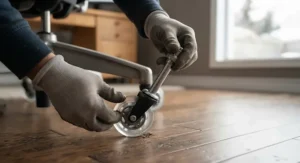
First, flip the chair. Tip it onto its seat or backrest so the base points up, then grip each caster near the wheel housing (not the stem) and pull straight out with firm, even pressure — twisting slightly if it resists. Old wheels seized by years of dust and hair sometimes need a firmer tug than expected; resist the urge to yank at an angle, which can bend the socket.
Second, measure before you buy, every time. The single most common first-30-days mistake is guessing at stem size instead of measuring the old caster’s stem diameter with a tape measure or calipers — this is what separates a five-minute swap from a return-and-reorder cycle. If you own an IKEA chair, assume 10mm until proven otherwise.
Third, seat new wheels fully. Push each new caster straight into the socket until you feel and hear a distinct click; a wheel that wobbles side to side after installation almost always means it isn’t fully seated, not that the product is defective.
Maintenance-wise, an occasional wipe-down of the wheel housing every few months prevents hair and dust buildup that eventually stiffens rotation — the same buildup that made your old wheels sluggish in the first place.
✨ Ready to Stop the Squeak?
🔍 Browse the picks above and check current pricing and availability before your next work call turns into a percussion session.
Real-World Scenarios: Matching Wheels to Your Workspace
The apartment renter with hardwood throughout: if you’re in a Toronto or Vancouver condo with engineered hardwood and a landlord who cares about the floors, the The Office Oasis Rollerblade Wheels or MaxGear Replacement Caster Wheels make the most sense — both prioritize quiet, low-marking rolling over raw weight capacity, and neither requires a chair mat that eats into your limited square footage.
The remote worker on a shared family desk: if your chair gets used by multiple people of different sizes throughout the day — a common setup in households with a single home office — the Omyoffice Heavy-Duty Casters offer headroom for whoever sits down next without needing separate wheel sets for different family members.
The gamer or streamer with a high-back chair: frequent, fast rolling movement wears standard casters out quickly, which is exactly the scenario the TESUMI Rollerblade Casters and RidRed Rollerblade Casters were built around, thanks to their dual-wheel rollerblade construction handling repeated high-speed rolling better than a single hard wheel.
The IKEA chair owner who’s been quietly annoyed for months: if you’ve already tried a “universal fit” set that wouldn’t seat into your chair, the HOLKIE IKEA-Compatible Casters are almost certainly the fix, since the compatibility issue was mechanical, not a defect in the product you bought.
Your Replacement Chair Wheels Decision Framework
If you’re short on time, use this simple priority checklist:
- If your chair is from IKEA, choose the HOLKIE IKEA-Compatible Casters because standard 11mm sets physically cannot seat into a 10mm stem.
- If floor protection on hardwood is your top concern, choose a rollerblade-style wheel like The Office Oasis Rollerblade Wheels, because the wider contact patch reduces point-pressure marking.
- If you or a household member is above average weight, choose the Omyoffice Heavy-Duty Casters or RidRed Rollerblade Casters, because their combined weight ratings sit meaningfully above budget alternatives.
- If your chair sees heavy, frequent movement (gaming, streaming, active job), choose the TESUMI Rollerblade Casters, because dual-wheel construction handles repeated fast rolling with less wear.
- If you just want a reliable, no-drama upgrade, choose the Lifelong Original Chair Wheels or MaxGear Replacement Caster Wheels, because both post consistent aggregated satisfaction without a specific niche requirement.
Caster Compatibility: How to Choose Universal Fit Replacement Chair Wheels
Universal fit replacement chair wheels are called “universal” because they cover the single most common stem size in the industry — not because every chair on Earth uses it. Here’s how to choose correctly:
- Remove one existing wheel and measure the stem diameter directly with calipers or a tape measure, rather than guessing from the chair brand alone.
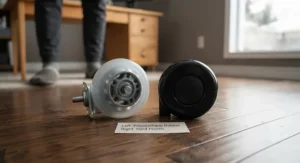
- Check for 11mm vs 10mm. The 11mm x 22mm grip-ring stem is the industry default; the 10mm stem is essentially an IKEA-specific standard.
- Confirm the stem style, not just the size — most modern chairs use a grip-ring stem, but older or specialty chairs occasionally use a threaded or bolt-on mount instead.
- Match wheel size to floor type, since a 2-inch wheel keeps your original chair height closer to stock, while a 3-inch rollerblade wheel raises it slightly but rolls more smoothly over carpet and cable transitions.
- Factor in combined weight rating against your actual body weight plus any extras on the chair (cushions, back supports), not just the chair’s own listed capacity.
- Read the fine print on “fits 98-99% of chairs” claims — that remaining 1-2% is almost always the IKEA 10mm crowd, and occasionally older European-import chairs with metric-odd stem sizes.
- Buy from a listing with clear stem measurements in millimetres, not just “universal,” since vague listings are the leading cause of returns in this category.
Replacement Chair Wheels vs Original Casters
It’s worth asking honestly: why not just keep the original casters that came with the chair? The short answer is that most stock casters are a cost-cutting afterthought, not a genuine engineering choice, and the comparison below shows why that matters in daily use.
| Factor | Original Stock Casters | Replacement Chair Wheels |
|---|---|---|
| Material | Hard plastic, prone to cracking | Rubber or polyurethane, more flexible |
| Noise level | Often squeaky after 1-2 years | Consistently quieter across brands here |
| Floor marking | Higher risk on hardwood | Lower risk with soft-tread designs |
| Weight capacity | Rarely specified clearly | Often explicitly rated, up to 2,200 lbs |
| Customization | None — fixed at purchase | Choose size, stem, and floor-type fit |
The core difference isn’t really about durability alone, it’s about intent: manufacturers building an entire chair are optimizing for total cost across dozens of components, while a company making only caster wheels can afford to optimize that one part more carefully. That’s why even a mid-tier pick like the Lifelong Original Chair Wheels frequently outperforms the original casters that shipped with far more expensive chairs — the wheel was never the chair manufacturer’s priority to begin with. The trade-off is minor: you’re adding a small upfront cost and a five-minute install to correct a compromise that was baked in from the factory.
Common Mistakes When Buying Replacement Office Chair Wheels
Mistake one: skipping the stem measurement. As covered above, this single oversight causes more returns than every other factor combined — always measure before ordering, especially with IKEA furniture.
Mistake two: assuming bigger wheels are always better. A 3-inch rollerblade wheel rolls beautifully on carpet but raises your seated height, which can throw off your desk ergonomics if you were already dialled in at the correct elbow height, a detail CCOHS’s ergonomic chair guidance flags as a real factor in workstation comfort.
Mistake three: ignoring floor type entirely. Hard rubber or plastic wheels marketed for carpet can scratch hardwood, while very soft wheels designed for hardwood can feel sluggish and resistant on thick carpet pile.
Mistake four: chasing the cheapest option regardless of weight capacity. Undersized casters under a heavier frame wear out fast and can crack unexpectedly, which is a false economy compared to paying a few extra dollars upfront.
Mistake five: not checking whether the set includes exactly five wheels. Most standard chair bases use five casters; buying a mismatched set count leaves you short or with awkward spares.
What to Expect: Real-World Performance on Hardwood, Carpet & Tile
Specs only tell part of the story — here’s what the transition between floor types actually feels like day to day. On hardwood and laminate, soft rubber or rollerblade-style wheels roll with a satisfying near-silent glide, and the difference from cracked stock plastic is immediately obvious the first time you push back from the desk. On mid-pile carpet, wheel diameter starts to matter more than material: a 2-inch wheel can feel like it’s constantly fighting the carpet fibres, while a 3-inch rollerblade wheel rides up and over more easily, which is why several products above lean into that larger size specifically for carpeted home offices.
Tile and polished concrete sit somewhere in between — hard enough that soft rubber performs well, but smooth enough that any wheel with a slight manufacturing imperfection can develop an audible click during rotation, something a small number of reviewers across nearly every brand in this category occasionally mention. The practical takeaway is that floor type should weigh as heavily in your decision as price or brand reputation, since the same wheel that performs beautifully in one Canadian home office can feel noticeably different in another.
Office Chair Wheels for Different Users and Rooms
For home offices doubling as guest rooms, quieter rollerblade-style options like The Office Oasis Rollerblade Wheels matter more, since noise carries differently in smaller, softer-furnished rooms than in an open commercial office.
For shared or multi-person households, weight-flexible picks like the Omyoffice Heavy-Duty Casters avoid the awkward scenario of one family member’s chair rolling smoothly while another’s drags.
For students and budget-conscious buyers, the MaxGear Replacement Caster Wheels deliver most of the noise and floor-protection benefit at the lowest entry price in this lineup, which matters when a dorm or first-apartment budget is tight.
For small business or shared office settings, standardizing on one universal-fit product across multiple desks — such as the Lifelong Original Chair Wheels — simplifies future reordering and keeps a consistent look across a fleet of chairs.
Long-Term Cost, Maintenance & Furniture Repair Parts
A set of replacement office chair wheels typically lasts two to three years under regular daily use before wear becomes noticeable again, according to general guidance repeated across furniture-repair resources — though heavier daily rolling, gritty flooring, or higher body weight can shorten that window. Treated as a furniture repair part rather than a full chair replacement, the economics are hard to beat: a chair that might otherwise get discarded for roughly C$150-C$400 in replacement cost can often be restored to full comfort for under C$40 in parts.
| Scenario | Approx. Cost | Approx. Lifespan |
|---|---|---|
| Budget rubber caster set | C$15-C$25 | 1.5-2.5 years |
| Mid-range rollerblade set | C$20-C$30 | 2-3 years |
| Premium hardwood-focused set | C$30-C$40 | 2.5-3.5 years |
| Full chair replacement | C$150-C$400+ | Varies widely |
Looking at the numbers, even the priciest option in this article’s lineup pays for itself many times over compared to replacing the whole chair, and the analysis gets even more favourable once you factor in the environmental cost of sending a mostly-functional chair to landfill over a C$5-C$10 pair of wheels. The realistic maintenance routine — an occasional wipe of dust and hair from the housing — costs nothing but a minute of attention every few months, yet it’s the step most people skip entirely.
Features That Actually Matter (And Those That Don’t)
What actually matters: stem diameter compatibility, weight rating relative to your actual body weight and chair use, and floor-appropriate material (soft for hardwood, harder or larger-diameter for thick carpet). These three factors determine whether the purchase solves your actual problem.
What doesn’t matter nearly as much as marketing suggests: wheel colour, “designer” branding on generic rubber casters, and vague claims like “premium quality” without a specific spec attached. A transparent or coloured wheel rolls exactly the same as a black one of identical construction — the colour is aesthetic, not functional.
A genuinely underrated factor: installation design, specifically how positively the caster clicks into place. A wheel that seats with a distinct, audible click is far less likely to work loose over months of use than one that simply slides in with friction alone, yet almost no product listing highlights this detail directly — it only shows up in aggregated long-term reviews.

Frequently Asked Questions
❓ How do I know what size replacement caster wheels I need?
❓ Can I use regular replacement office chair wheels on an IKEA chair?
❓ How often should I replace office chair wheels?
❓ Do soft rubber caster wheels really protect hardwood floors better?
❓ Are universal fit replacement chair wheels actually universal?
Conclusion
A chair that scrapes, squeaks, or drags across the floor isn’t a sign you need an entirely new chair — it’s almost always a five-dollar-per-wheel problem wearing a much bigger disguise. Across the seven options here, the real decision points are simpler than they first appear: figure out your stem size, be honest about your floor type and body weight, and pick accordingly. Budget buyers do well with the MaxGear Replacement Caster Wheels, heavier users or carpet-heavy homes lean toward the RidRed Rollerblade Casters or Omyoffice Heavy-Duty Casters, hardwood purists get real value from The Office Oasis Rollerblade Wheels, IKEA owners have a dedicated fix in the HOLKIE IKEA-Compatible Casters, and anyone who just wants a dependable middle-ground pick can look to the Lifelong Original Chair Wheels or TESUMI Rollerblade Casters.
Chair mobility is one of those small comforts you don’t notice until it’s gone — and getting it back rarely takes more than a few minutes and a modest budget. For broader context on how chair setup fits into overall workstation comfort, Natural Resources Canada’s home ergonomics guide is a useful companion resource worth bookmarking alongside this one.
✨ Don’t Miss These Exclusive Deals!
🔍 Take your home office comfort to the next level with the picks above. Click through to check current pricing and availability, and roll into your workday without the squeak.
Recommended for You
- Office Chair Bases and Wheels: 7 Best Picks for 2026
- 7 Best Breathable Office Chairs 2026: Stay Cool, Sit Smarter
- 7 Affordable Leather Office Chairs in 2026 That Won’t Wreck Your Back
Disclaimer: This article contains affiliate links. As an Amazon Associate, I earn from qualifying purchases. If you purchase products through these links, we may earn a small commission at no additional cost to you.
✨ Found this helpful? Share it with your friends! 💬🤗
