
In This Article
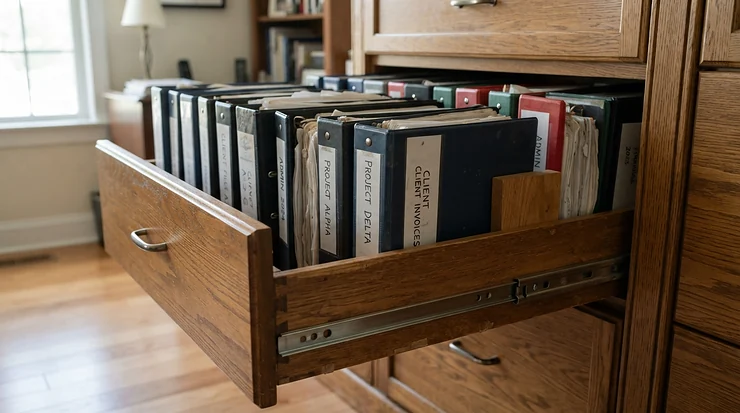
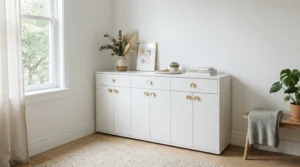
A wooden filing cabinet that looks like furniture is a document-storage cabinet built from wood or wood-based materials, finished in a furniture-grade colour such as walnut, oak or white, and styled with legs, panels or hardware so it belongs in a living room or home office rather than looking like institutional office equipment.
Think of the difference between a hospital corridor and a reading nook. Same job, wildly different mood. Your tax slips, warranties and insurance papers still need a home. They just don’t need a home that looks like a government basement.
Office filing cabinets have traditionally been made of sheet metal or wood, and metal won for decades because it was cheap and tough. Then the office moved into the spare room, the dining nook and the corner of the living room. Suddenly the cabinet had to survive being looked at. That shift is why a wooden filing cabinet that looks like furniture has gone from a niche splurge to a mainstream buy for Canadian homes.
Here’s the catch most listings won’t volunteer: nearly every “wood” cabinet at an accessible price is laminate or melamine over engineered wood, not solid timber. That isn’t a scandal. It’s a trade-off worth understanding, and we’ll unpack it.
This guide covers seven real models, how to pick a stylish filing cabinet with wood finish, how weight capacity of wood file drawers really works, and what Health Canada’s rules mean for your purchase. One honest note: everything below comes from manufacturer specs, retailer listings and published review data, not hands-on testing. Treat the commentary as analysis, not a lab report.
Quick Comparison: 7 Wooden Filing Cabinets at a Glance
| Product | Style & Finish | Size (W × D × H) | Best For |
|---|---|---|---|
| Bush Furniture Key West | Modern farmhouse, X-pattern fronts | 76 × 50 × 76 cm | Farmhouse home offices |
| Sauder Palladia | Traditional, oak and cherry finishes | 93 × 56 × 75 cm | Statement piece with a big top surface |
| Sauder Ambleside | Fluted fronts, walnut with black accents | 75 × 47 × 76 cm | Living-room console look |
| HOMCOM 2-Drawer Lateral File Cabinet | Rustic farmhouse, several colours | 79 × 40 × 72 cm | Budget buyers who want a lock |
| OKD 35.3″ Farmhouse File Cabinet | Reclaimed barnwood look, on legs | 90 × 56 × 76 cm | Wide, rustic living-room storage |
| DEVAISE 3-Drawer Wood Mobile File Cabinet | Oak, black, white, rustic brown | 41 × 40 × 66 cm | Under-desk storage on a tight budget |
| Sauder Heritage Hill | Classic cherry, lockable | Check listing | Traditional rooms that need a lock |
Look at the table and one pattern jumps out: the cabinets that look most like furniture (Sauder Ambleside, OKD 35.3″ Farmhouse File Cabinet, Bush Furniture Key West) are lateral designs. Their wide, low profile reads as a console or sideboard. The only compact, under-desk option here is the DEVAISE 3-Drawer Wood Mobile File Cabinet, which earns its place on price, not looks.
💬 Just one click — help others make better buying decisions too!😊
Top 7 Wooden Filing Cabinets That Look Like Furniture: Expert Analysis
Each pick below pairs real specs with an honest read on who it suits. Review sentiment is aggregated from the listings I could verify, and where I couldn’t verify something, I say so.
1. Bush Furniture Key West 2-Drawer Lateral File Cabinet — best farmhouse all-rounder
The X-pattern on the drawer fronts does the heavy lifting: it makes Key West read as a console table first and a file cabinet second.
It measures about 76 cm wide, 50 cm deep and 76 cm tall (30 × 19.88 × 30 in) and weighs roughly 29–31 kg (64–69 lb), depending on finish. That height matches Bush’s Key West desks, so parked beside one it extends your work surface, a handy trick when you’re building a farmhouse filing cabinet corner. Full-extension ball-bearing glides reach the back of each drawer, and a retailer spec sheet lists about 20 kg (44 lb) per drawer, plenty for household paperwork. Construction is laminate over engineered wood, so “wooden” means wood-based, not solid timber.
On paper, this is the safe choice for anyone who wants a stylish filing cabinet with wood finish without premium pricing. The manufacturer says it’s tested to ANSI/SOHO standards, though that’s a US benchmark, not a Canadian certification. The warranty is only one year, and retailer specs list no locking storage.
On the US Amazon listing, a deal-tracking site recorded roughly 4.3 stars across more than 4,000 ratings, and a Walmart listing shows about 4.2 stars from 113 reviews. I couldn’t verify one dominant complaint theme, so skim recent reviews for assembly notes before you commit.
Pros:
- ✅ Farmhouse X-pattern reads as real furniture
- ✅ Height matches matching desks for extended workspace
- ✅ Full-extension ball-bearing glides on both drawers
Cons:
- ❌ No lock on listed specs
- ❌ Only a one-year manufacturer warranty
Expect around C$250–C$450; check current price. Strong value for the look.
2. Sauder Palladia 2-Drawer Lateral File Cabinet — widest tabletop for printers and lamps
Where Palladia wins is sheer presence: at roughly 93 cm wide, it’s the biggest cabinet in this round-up, and the top surface is generous enough for a printer and a lamp without crowding.
It’s about 56 cm deep and 75 cm tall (36.81 × 22 × 29.6 in), and it weighs a hefty 49–54 kg (107–118 lb). That weight is a feature and a warning. It sits planted like a sideboard, but you’ll want a helper for assembly and for any future move. Each drawer is rated for about 18 kg (40 lb) and uses full-extension slides, and an interlocking mechanism lets only one drawer open at a time, a quiet safety win. Retailer listings describe a particleboard frame with paper laminate, in finishes such as Select Cherry, Wind Oak and Vintage Oak.
My read: this is the pick when the cabinet is the room’s anchor piece and you’ll rarely move it. A T-slot drawer system is meant to speed assembly, but buyers on retailer listings I found describe the build as time-consuming even while calling it well made and good-looking. Palladia is also listed as not lockable and not fire resistant at one Canadian retailer.
Pros:
- ✅ Largest top surface in this guide
- ✅ Interlock allows one open drawer at a time
- ✅ Multiple oak and cherry finishes
Cons:
- ❌ Very heavy at roughly 49–54 kg
- ❌ Assembly described as time-consuming
Plan on roughly C$450–C$700, with wide retailer variation; check current price. Worth it if the look is the priority.
3. Sauder Ambleside 2-Drawer Lateral File Cabinet — fluted walnut that passes as a console
Fluted drawer fronts in a warm Serene Walnut finish with black accents give Ambleside the most “designed” look of the group.
It measures about 75 cm wide, 47 cm deep and 76 cm tall (29.5 × 18.5 × 29.88 in), making it a tidy footprint for a hallway or living-room wall. The engineered-wood body is finished on all sides, which matters if the cabinet floats in a room rather than hugging a wall. Full-extension slides hold letter and legal hanging files, and an interlock lets one drawer open at a time. Capacity is rated at about 16 kg (35 lb) per drawer, the lowest here.
For a wood file cabinet for living room duty, this is where the spec sheet and the styling meet. The honest caveat: that 16 kg ceiling means you shouldn’t treat it as a decade-long archive for heavy binders. It suits current-year paperwork, household records and printer paper.
A deal-site writeup cited a 4.6-star rating for it, though I couldn’t confirm the review count. Availability looks patchy at some retailers, so confirm stock before you fall in love with the finish.
Pros:
- ✅ Fluted fronts give a genuine furniture look
- ✅ Finished on all sides for floating placement
- ✅ Compact footprint for hallways
Cons:
- ❌ Lowest per-drawer rating in this guide
- ❌ Stock can be inconsistent at retailers
Prices swing widely; think roughly C$300–C$600 and check current price. Good value for the style.
4. HOMCOM 2-Drawer Lateral File Cabinet — best budget pick with a lock
Under C$250 and still lockable? That’s HOMCOM‘s whole pitch.
The cabinet measures about 79 cm wide, 40 cm deep and 72 cm tall (31.1 × 15.7 × 28.3 in) and weighs roughly 26–27 kg (57–60 lb). Retailer specs list 60 kg (132 lb) overall capacity, with 20 kg (44 lb) per drawer and on the tabletop. The top drawer locks with two included keys, and adjustable hanging bars take letter, A4 and legal folders. A gap of about 8 cm under the base helps it feel like furniture on legs rather than a box on the floor. Material is particleboard with melamine, so it’s light and affordable, but it’s wood-based rather than wooden in the traditional sense.
Here’s the analytical take: a lock matters more than people admit, especially if you keep passport copies and SIN-adjacent documents in a shared home. A cabinet that locks and looks rustic for this price is rare. The weak spots are likely finish depth and long-term edge durability, typical for melamine at this tier.
The review base is thin: one retailer listing for a white lockable version shows about 3.9 stars from only 14 reviews. Read those carefully rather than trusting the average.
Pros:
- ✅ Lockable top drawer with two keys
- ✅ Lowest price among lateral options here
- ✅ Hanging bars fit letter, A4 and legal
Cons:
- ❌ Thin review base on listings I found
- ❌ Melamine edges may wear faster over time
Roughly C$175–C$250; check current price. Excellent value if you need the lock.
5. OKD 35.3″ Farmhouse File Cabinet — wide reclaimed-barnwood look on legs
This is the farmhouse filing cabinet for people who want rustic and roomy: the OKD 35.3″ Farmhouse File Cabinet pairs a faux reclaimed-barnwood finish with black metal handles and raised legs.
It measures about 90 cm wide, 56 cm deep and 76 cm tall (35.3 × 22 × 30 in), and one listing puts the weight at around 49 kg (107 lb). Drawers interlock, so only one opens at a time. The listing markets it for both the home office and the living room, and the base type is legs, which gives the visual lift that makes a cabinet feel like a sideboard. The material is engineered wood with a printed grain texture.
So what do you actually get? A wide top for a printer or plants, and a look that fits a cottage or cabin. What you don’t get, from what I could verify, is a published per-drawer weight rating, so ask the seller or check the Q&A before loading it with heavy binders.
A retailer feed for its Amazon listing showed about 4.2 stars from 45 reviews, a small base. It’s a newer listing, so the long-term durability picture is still forming.
Pros:
- ✅ Wide, roomy top surface
- ✅ Raised legs lift the look toward furniture
- ✅ Interlocking drawers add safety
Cons:
- ❌ Per-drawer capacity not verified in listings
- ❌ Small review base for a newer listing
Think mid-C$300s; check current price. Fair value for the width and style.
6. DEVAISE 3-Drawer Wood Mobile File Cabinet — best budget under-desk pedestal
Let’s be straight: DEVAISE looks like furniture only when it’s tucked under a desk. What it does brilliantly is cost little and hide neatly.
It measures about 41 cm wide, 40 cm deep and 66 cm tall including casters (16.2 × 15.7 × 25.8 in) and is built from 1.5 cm (0.59 in) MDF with melamine facing. Listings quote its weight between 16 and 21 kg (36–47 lb), so check the specific listing. Two small drawers sit above one file drawer for letter or A4 hanging folders. One reviewer praised a caster that stops the loaded file drawer from tipping the cabinet forward, a thoughtful touch.
My take: choose this if the cabinet lives under a desk and your priority is price, not a farmhouse filing cabinet look. The finish range (oak, black, white, rustic brown) helps it blend, but it won’t stand in for a console.
The listing carries about 4.0 stars across roughly 2,300 ratings. Reviewers report assembly that’s harder than expected, drawer bottoms that feel thin and cardboard-like, and a colour that can run darker than the product photos.
Pros:
- ✅ Very low price for wood-look storage
- ✅ Caster helps prevent forward tipping
- ✅ Four finish options including oak and white
Cons:
- ❌ Drawer bottoms described as thin
- ❌ Colour can run darker than photos
Expect under C$150; check current price. Solid value for under-desk use.
7. Sauder Heritage Hill 2-Drawer Lateral File Cabinet — classic cherry with a lock
Heritage Hill is the traditionalist’s pick: a cherry finish, a two-drawer lateral layout and a lock for people who want privacy without moving to steel.
Retailer descriptions say it fits letter, legal and European hanging files. I couldn’t verify full dimensions and capacity for the model across sources, so confirm both on the listing you’re buying. Cherry sits in the warm-red end of the wood spectrum, so it pairs well with traditional or transitional rooms and fights with cool grey flooring.
The analytical angle: lockable wood-look lateral files at this tier are uncommon, and that’s the reason to shortlist it. If your priority is a cabinet that suits a den with dark trim and a lockable drawer for sensitive papers, it competes well against the HOMCOM 2-Drawer Lateral File Cabinet on looks and the Sauder Palladia on price.
I couldn’t verify an average rating, but one buyer review described it as well built and sturdy for its price category. That’s a single data point, so treat it as encouraging rather than conclusive.
Pros:
- ✅ Lockable lateral design
- ✅ Classic cherry finish suits traditional rooms
- ✅ Fits letter, legal and European hanging files
Cons:
- ❌ Dimensions and capacity need verifying per listing
- ❌ Cherry can clash with cool grey floors
Roughly C$300–C$450; check current price. Reasonable value for a lockable cherry cabinet.
How the Top 7 Compare on Capacity, Locks and Value
| Product | Frame Material | Capacity | Lock | Price Range (CAD) | Rating Signal | Best For |
|---|---|---|---|---|---|---|
| Bush Furniture Key West | Laminate over engineered wood | ~20 kg per drawer | No | C$250–C$450 | ~4.2–4.3★ | Farmhouse look |
| Sauder Palladia | Particleboard, paper laminate | 18 kg per drawer | No | C$450–C$700 | Positive; average unverified | Statement piece |
| Sauder Ambleside | Engineered wood | 16 kg per drawer | Interlock only | C$300–C$600 | ~4.6★ (deal site) | Living-room console |
| HOMCOM | Particleboard, melamine | 20 kg per drawer; 60 kg total | Yes | C$175–C$250 | 3.9★ (14 reviews) | Budget with lock |
| OKD 35.3″ Farmhouse File Cabinet | Engineered wood | Not verified | Interlock | C$300–C$400 | 4.2★ (45 reviews) | Rustic, wide storage |
| DEVAISE 3-Drawer Wood Mobile File Cabinet | MDF, melamine | Not stated in listing | Varies by version | Under C$150 | 4.0★ (~2,300) | Under-desk budget |
| Sauder Heritage Hill | Engineered wood | Not verified | Yes | C$300–C$450 | Not verified | Traditional rooms |
If the choice were purely about stated capacity and a lock together, HOMCOM has the most complete spec story at the lowest cost. If looks drive everything, Sauder Ambleside and Bush Furniture Key West are the two most furniture-like options with clear numbers behind them. And if you want the Sauder Palladia or the OKD 35.3″ Farmhouse File Cabinet, accept that you’re paying for width and presence, not a higher published load rating.
How to Choose a Stylish Filing Cabinet with Wood Finish
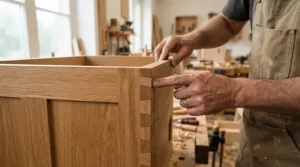
Picking a stylish filing cabinet with wood finish comes down to six checks. Run through them in order and you’ll avoid most regrets.
- Pick lateral or vertical first. Lateral cabinets are wide and shallow (typically 76–107 cm wide) and double as consoles; vertical ones are narrow and deep. Lateral wins for living rooms, vertical for tight corners.
- Measure drawer clearance. A lateral drawer typically projects about 45–60 cm (18–24 in) when open. Leave that space or the cabinet becomes a shin hazard.
- Check capacity, not just size. Published per-drawer ratings in this guide run from 16 to 20 kg. If you keep heavy binders, steel may serve you better.
- Inspect the finish and edges. If the cabinet floats in a room, look for “finished on all sides.” Edge-banding quality tells you how it ages.
- Confirm safety features. An interlock (one drawer open at a time) reduces tip risk, and anti-tip hardware should be in the box.
- Decide whether you need a lock. If privacy matters, shortlist the HOMCOM 2-Drawer Lateral File Cabinet or Sauder Heritage Hill.
A quick decision framework: if the cabinet will be seen daily, choose Sauder Ambleside or Bush Furniture Key West; if you need a lock on a budget, choose HOMCOM; if it lives under a desk, choose DEVAISE 3-Drawer Wood Mobile File Cabinet. Finish matters just as much, which brings us to the material question.
Engineered Wood vs Solid Wood: What You Really Get
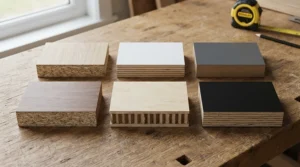
The engineered wood vs solid wood debate is less dramatic than furniture marketing suggests. Solid wood is lumber cut straight from the tree. Engineered wood is a composite, such as plywood, MDF or particleboard, usually wrapped in laminate or a thin veneer so it looks like the real thing.
Solid wood generally costs more and lasts longer; a commonly cited furniture-industry rule of thumb is 15–20 years for solid versus 5–10 for engineered. Treat those as rough guidance, not guarantees. Engineered wood resists warping better but dislikes standing water, because swollen edges rarely recover.
One thing most buyers overlook: solid wood isn’t automatically better for weight capacity of wood file drawers. Drawer glides, joinery and bottom panels set the real limit, not the species. A well-built engineered cabinet with ball-bearing slides can outperform a poorly built solid one.
The Canadian-specific angle is formaldehyde. Health Canada reports that formaldehyde is released from more than 90% of select composite wood products tested, and emissions rise with heat and humidity. Regulations now limit those emissions for products sold in Canada, so the practical move is to let a new cabinet air out in a ventilated room and keep it away from radiators.
If you want true solid wood, expect to look beyond the mainstream online range, toward independent furniture makers and Amish-style builders, at a noticeably higher price.
Weight Capacity of Wood File Drawers: What the Numbers Actually Mean
Published weight capacity of wood file drawers in this round-up runs from about 16 kg (Sauder Ambleside) to 18 kg (Sauder Palladia) to 20 kg (Bush Furniture Key West and HOMCOM). Translate that: a ream of standard letter paper weighs roughly 2.3 kg (5 lb), so 18 kg is about eight reams, or around 4,000 sheets, before you count the hanging folders themselves.
For most households that’s generous. A year of bills, a decade of tax returns and a folder per appliance warranty will fit with room to spare. Where you run into trouble is archives: old binders, textbooks and receipts-by-the-shoebox add up fast.
Three habits keep wood drawers healthy. Load the bottom drawer first, because lighter loads up top keep the cabinet stable. Spread weight evenly across the drawer instead of piling it at the back. And never use the tabletop as a shelf for heavy equipment unless the listing gives a top rating, as HOMCOM does at about 20 kg.
For contrast, steel pedestals from the same brand as DEVAISE list total capacities up to 330 lb (about 150 kg). If your files are heavy, that’s the honest alternative, and we compare the two materials shortly.
Finishes Such as Walnut, Oak and White: Choosing the Right Look
Finishes such as walnut, oak and white drive 80% of the “does this look like furniture?” question, so choose them deliberately.
Walnut (the Sauder Ambleside in Serene Walnut) is dark and warm, with a mid-century feel. It anchors a room and hides scuffs, but it can swallow light in a small space. Black hardware, as on Ambleside, sharpens the modern read.
Oak is the chameleon. Light oak, like Bush Furniture Key West in white oak or Sauder Palladia in Wind Oak, reads coastal or Scandinavian. Mid-tone oak, as in Vintage Oak, reads classic. If your floors are oak, match the undertone rather than the exact shade; near-misses look accidental.
White (available on HOMCOM and DEVAISE 3-Drawer Wood Mobile File Cabinet) brightens a small room and plays nicely with farmhouse style. The downside is visibility: scuffs and fingerprints show, and gloss finishes show more than matte.
Two practical cautions. First, laminate wood grain repeats; on a large surface you may spot the pattern. Second, photos lie. One DEVAISE reviewer reported the colour running darker than the listing, so order a sample or read recent customer photos before committing.
✨ Don’t Miss These Exclusive Deals!
🔍 Take your home office to the next level with these carefully selected cabinets. Click on any highlighted product name to check current pricing and availability. These picks will help you create a calm, organized space your whole household will love!
Farmhouse Filing Cabinet: Style, Strengths and Trade-Offs
A farmhouse filing cabinet is the easiest way to make storage look intentional. Barn-door panels, X-pattern fronts and distressed finishes soften the clinical feel of paperwork.
Three of this round-up’s picks lean farmhouse. Bush Furniture Key West uses restrained X-pattern fronts; HOMCOM offers distressed finishes and barn-style options in its range; and the OKD 35.3″ Farmhouse File Cabinet commits fully with a reclaimed-barnwood look.
The strengths are real. Textured, distressed finishes hide scratches better than glossy ones, and the style is forgiving in mixed rooms. The trade-offs are real too: busy details can collect dust, and faux distressing is a printed pattern, not real age.
To keep it looking modern rather than themed, choose black hardware, one accent pattern (not three) and a matte lamp on top. Limit the rustic cues to the cabinet itself and let the rest of the room stay quiet.
Wood File Cabinet for Living Room: Making It Work in a Shared Space
A wood file cabinet for living room use has to pass two tests: it must look good from the sofa, and it must be safe around kids and pets.
On looks, the best candidates are lateral designs about 76 cm tall, the same height as a console table. Sauder Ambleside is finished on all sides, so it can float away from the wall. OKD 35.3″ Farmhouse File Cabinet adds raised legs for a lighter feel.
On safety, Health Canada’s tip-over guidance recommends furniture with wide, stable bases, notes that pieces with legs or wheels are more likely to tip, and advises anchoring with angle braces or straps. That advice targets clothing storage units, not file cabinets specifically, but the physics is identical. A lateral cabinet with a drawer fully extended and a curious toddler is a tip hazard.
So pick interlocking drawers, anchor the cabinet to the wall if the room is shared with small children, and don’t set a heavy TV on top unless the listing gives a top rating. Use the cabinet’s lower drawer for the heaviest files and the top for lighter household papers.

Wood vs Metal Filing Cabinets: Which Wins for Your Home?
| Factor | Wood-Look Cabinet | Steel Cabinet |
|---|---|---|
| Living-room look | Blends with furniture | Utilitarian |
| Typical stated capacity | 16–20 kg per drawer (Sauder Palladia, Sauder Ambleside, Bush Furniture Key West) | Totals up to ~150 kg on DEVAISE steel mobile models |
| Moisture tolerance | Edges swell if soaked | Better, but can rust if damp |
| Assembly | Usually flat-pack and heavy | Some ship assembled except casters |
| Best for | Shared living areas | Heavy archives, garages, workshops |
Steel wins on raw strength and moisture tolerance, and some steel pedestals arrive nearly assembled. Wood wins the moment visitors can see the cabinet. If your paperwork is moderate and your room is public, wood is the more livable choice; if you’re archiving binders in a basement, don’t fight physics.
A hybrid answer works for many Canadian homes: a wood-look lateral in the living room for current papers, and a steel pedestal in the basement for long-term archives. Each cabinet plays to its strengths.
Safety and Regulations: What Canadian Buyers Should Know
Two things matter in Canada: formaldehyde rules and tip-over safety.
Formaldehyde first. Canada’s regulations on composite wood products came into force on January 7, 2023, prohibiting the sale or import of composite wood products that emit above set limits, and amendments were published in December 2024. Per Health Canada’s guidance document on the regulations, manufacturer certification is required before composite wood panels or laminated products can be imported or sold. Finished goods made with those materials may also emit formaldehyde. In practice: buy from reputable sellers, ask for compliance information when a listing is silent, and ventilate new furniture.
Second, tip-over. Health Canada’s mandatory standard focuses on clothing storage units, but it’s wise to apply the same discipline to lateral files: anchor them, avoid opening multiple drawers at once, and choose interlock designs.
Finally, a reality check on protection. Several cabinets in this guide, including Sauder Palladia and the HOMCOM line at some retailers, are listed as not fire resistant. Keep irreplaceable originals (passports, birth certificates) in a fireproof box or safety deposit box, not just a wooden drawer.
Long-Term Cost and Maintenance
Cheap isn’t always inexpensive. Consider a hypothetical: a C$300 cabinet lasting eight years costs about C$38 a year; a C$150 cabinet lasting four years costs the same. Those numbers are illustrative, not measured lifespans, but they show why a slightly better build can be the cheaper buy.
Maintenance is simple. Wipe with a lightly damp cloth, never soak the surface, and keep cabinets off radiators and out of damp basements, since heat and humidity both stress engineered wood. Tighten fasteners after the first week and again at 30 days, because cam-lock hardware loosens as boards settle. Replace a worn drawer bottom early rather than waiting for a collapse.
When it’s time to move house, plan the lift: cabinets like Sauder Palladia at roughly 49–54 kg are two-person jobs, and flat-pack engineered furniture handles reassembly poorly. Budget for that before deciding to move one rather than replace it.
Set It Up Right: A First-30-Days Guide
A cabinet can look fantastic and still disappoint if the setup is sloppy. Here’s the practical sequence.
Day 1: Assemble in the room it will live in. Lay a blanket down to protect panels. For heavier models like Sauder Palladia or the OKD 35.3″ Farmhouse File Cabinet, recruit a second pair of hands. Do not over-tighten cam locks; they strip easily in particleboard.
Day 1: Level it and anchor it. Shim the feet until drawers stay put when released, then install the anti-tip hardware.
Day 1: Load bottom-up. Heavy files go low. Start with hanging folders in the lower drawer.
Day 7 and Day 30: Re-tighten. Fasteners settle. A quick pass with a screwdriver prevents wobble.
Build a simple file system. Try four zones: Tax and Income, Home and Insurance, Health and Government, and Warranties and Manuals. In Canada, the CRA generally expects you to keep tax records for six years after the relevant tax year, so label that zone with the year to purge.
Common mistake in the first month: overstuffing the drawer. Leave a hand’s width of slack so hanging folders can move.
Real-World Scenarios: Which Cabinet Fits Which Home
The Toronto condo renter. Budget around C$300–C$600, living-room wall, light daily use. Sauder Ambleside fits the footprint and finish, and it’s finished on all sides. The 16 kg per-drawer limit is fine for current records.
The remote worker with a printer. Budget up to about C$250, daily use, shared home. The HOMCOM 2-Drawer Lateral File Cabinet gives a lockable drawer and a 20 kg top rating, which suits a printer plus a locked drawer for client documents. If you want more presence, step up to Bush Furniture Key West.
The cottage or farmhouse family. Budget mid-C$300s, high traffic, kids around. The OKD 35.3″ Farmhouse File Cabinet gives wide storage and a rustic look; pair it with a wall anchor and read the seller’s capacity details before loading it.
The student on a tight budget. Under C$150, small room, desk-based. DEVAISE 3-Drawer Wood Mobile File Cabinet tucks under the desk and offers a finish that blends in.
FAQ
❓ Do wooden filing cabinets need to be anchored to the wall?
❓ Are wood file cabinets fire resistant?
❓ Does a home filing cabinet really need a lock?
❓ What size cabinet fits under a standard desk?
❓ Where can I buy a wooden filing cabinet in Canada?
Conclusion
A wooden filing cabinet that looks like furniture isn’t a luxury; it’s a small design decision that stops your paperwork from dominating the room. The best choice depends on what you’re optimizing.
For farmhouse charm and clear specs, Bush Furniture Key West is the dependable all-rounder. For a living-room statement, Sauder Ambleside and Sauder Palladia lead on looks. For budget with a lock, HOMCOM is hard to beat. For rustic width, the OKD 35.3″ Farmhouse File Cabinet delivers. For under-desk use, DEVAISE 3-Drawer Wood Mobile File Cabinet keeps costs down. And for a classic cherry look with a lock, Sauder Heritage Hill is worth a closer look.
Whichever you choose, remember the fundamentals: the weight capacity of wood file drawers sits around 16–20 kg, engineered wood vs solid wood is a trade-off between price and longevity, and anchoring the cabinet matters more than most buyers think. Check finishes such as walnut, oak and white against your floors and walls, and always check current price before you buy.
✨ Ready to finally organize those papers in style?
Click on any highlighted cabinet name above to check current pricing and availability, and choose the piece that makes your room feel finished!
Recommended for You
- Lockable Filing Cabinet For Confidential Documents: 7 Safe Picks 2026
- Lateral Vs Vertical Filing Cabinet: 7 Proven Picks For 2026
- 4 Drawer Filing Cabinet For Heavy-Duty Office Use: 7 Top 2026 Picks
Disclaimer: This article contains affiliate links. As an Amazon Associate, I earn from qualifying purchases. If you purchase products through these links, we may earn a small commission at no additional cost to you.
✨ Found this helpful? Share it with your friends! 💬🤗
