
In This Article
Here’s a sentence nobody wants to say out loud: my butt hurts. Not in a gym-soreness way. In a sharp, sit-down-and-wince way that turns a two-hour Teams call into an endurance sport.
If that’s you, good news — coccyx cushions under $40 CAD can take a surprising amount of pressure off that tiny triangle of bone at the base of your spine, and you don’t need to spend premium-cushion money to get real relief. The trick is knowing which budget cushions are built right and which are just foam-shaped disappointment.
What are coccyx cushions under $40 CAD? They’re U-shaped or wedge-shaped seat cushions, usually made of memory foam or high-resilience polyurethane, with a cut-out at the back that lets your tailbone “float” instead of pressing into the chair. At this price, they deliver the core orthopedic design without premium extras like gel grids or patented contours.
That tailbone pain has a name, by the way: coccydynia, a condition commonly linked to falls, childbirth, and — you guessed it — long stretches of sitting on hard or poorly designed seats. A cushion won’t cure an injury, but it can remove the daily pressure that keeps flaring it up.
In this guide, I’ve pulled together seven real products available to Canadian shoppers, compared their actual specs, and sifted through aggregated review sentiment to separate the dependable from the disposable. No invented testing stories, no fake stars — just honest analysis of what each spec means for your backside, plus setup tips, problem fixes, and a decision framework. Let’s find the cushion that makes sitting feel normal again.
Quick Comparison Table: Coccyx Cushions Under $40 CAD at a Glance
| Cushion | Foam Type | Approx. Size (cm) | Typical Price Range | Best For |
|---|---|---|---|---|
| ComfiLife Premium Comfort Seat Cushion | 100% memory foam | 45 × 35 × 7 | C$30–C$40 | ComfiLife Premium Comfort Seat Cushion: all-round desk use |
| Kieba Coccyx Seat Cushion (Cool Gel) | Gel-infused memory foam | Large, U-cut | C$35–C$45 | Kieba Coccyx Seat Cushion (Cool Gel): warm offices, deep offload |
| TushGuard Seat Cushion (Large) | Memory foam | Large / X-Large sizes | C$25–C$35 | TushGuard Seat Cushion (Large): tightest budgets, travel |
| Aylio Coccyx Seat Cushion | Firm HR polyurethane | 46 × 36 × 6.4 | C$30–C$40 | Aylio Coccyx Seat Cushion: people who hate “sinking” |
| Carex Memory Foam Coccyx Cushion | Memory foam | 46 × 41 × 7.6 | C$30–C$40 | Carex Memory Foam Coccyx Cushion: wider seats, pharmacy-brand trust |
| Xtreme Comforts Coccyx Cushion | Memory foam | 46 × 36 × 7.6 | C$30–C$40 | Xtreme Comforts Coccyx Cushion: breathable mesh cover fans |
| FOMI Extra Thick Coccyx Cushion | Firm memory foam | 46 × 41 × 8.9 | C$38–C$50 | FOMI Extra Thick Coccyx Cushion: heavier users who bottom out |
Prices are approximate ranges at the time of research — prices may vary, so check current price on amazon.ca.
Reading the table as a whole, the real split isn’t price — it’s foam behaviour. The ComfiLife Premium Comfort Seat Cushion, Carex Memory Foam Coccyx Cushion and Xtreme Comforts Coccyx Cushion all sit in the same 7–7.6 cm memory foam band, while the Aylio Coccyx Seat Cushion deliberately skips memory foam for a firmer, springier feel. If you’re heavier or sit longer than eight hours, the extra thickness of the FOMI Extra Thick Coccyx Cushion matters more than any cover material ever will.
💬 Just one click — help others make better buying decisions too!😊
Top 7 Coccyx Cushions Under $40 CAD: Expert Analysis
Every pick below was chosen for three reasons: a genuine tailbone cut-out (not just a decorative dent), a real review history, and a price that typically lands at or near the C$40 line on amazon.ca. Here’s how they stack up.
1. ComfiLife Premium Comfort Seat Cushion — best all-rounder for everyday desk sitting
The ComfiLife Premium Comfort Seat Cushion earns the top spot because it nails the fundamentals without asking you to compromise on anything important.
It measures about 45 × 35 × 7 cm (17.7 × 13.7 × 2.8 in) and weighs roughly 0.6 kg, built from 100% memory foam with a zippered, machine-washable velour cover, a non-slip rubber base, and a carry handle. That 7 cm height is the sweet spot: thick enough that your sit bones don’t hit the chair, thin enough that you won’t feel like you’re perched on a booster seat.
Here’s the detail most buyers overlook: ComfiLife itself says the cushion gives less support as body weight increases and recommends it for people up to about 102 kg (225 lb). That’s refreshingly honest, and it tells you exactly who this is for — average-build desk workers, students, and commuters. The maker also notes the foam feels firmer when cold and softer when warm, which matters in a chilly Canadian basement office in January.
Reviewers consistently praise the tailbone relief and the cover quality; the most common complaint is gradual softening after long, heavy daily use.
Pros:
- ✅ Balanced 7 cm thickness suits most office chairs
- ✅ Washable velour cover with zipper and handle
- ✅ Maker publishes an honest weight guideline
Cons:
- ❌ Less supportive for users above about 102 kg
- ❌ Feels noticeably firm in cold rooms
Typically found in the C$30–C$40 range — strong value if you fall inside its weight guideline.
2. Kieba Coccyx Seat Cushion (Cool Gel) — deepest cut-out for sharp tailbone pain
The Kieba Coccyx Seat Cushion (Cool Gel) is the pick when your pain is pinpoint-sharp and you need the tailbone completely off the seat.
It pairs memory foam with a cooling gel layer, a removable machine-washable velour cover, and a non-slip bottom. In practice, the gel matters most if your chair has a solid seat pan or you sit near a heat vent — plain memory foam traps body heat, and a warmer cushion softens faster, so a cooler surface helps the foam hold its shape through a long afternoon.
The real selling point is geometry. Independent roundups single out Kieba’s U-channel as one of the deepest and most fully open among well-reviewed budget options, which is why it’s often recommended for post-injury or post-partum tailbone pain. The trade-off? A compact footprint that can feel small on wide executive chairs.
Aggregated review sentiment leans heavily positive, with sciatica and lower-back sufferers frequently crediting the deep channel; the recurring criticisms are the snug size and a firm initial feel.
Pros:
- ✅ Deep, open U-channel fully suspends the tailbone
- ✅ Gel layer reduces heat build-up
- ✅ Washable velour cover and grippy base
Cons:
- ❌ Compact size can feel small on wide seats
- ❌ Firm feel may bother some sciatica sufferers
Usually hovers around the C$40 line (roughly C$35–C$45), so check current price — when it dips under, it’s the best value for acute pain.
3. TushGuard Seat Cushion (Large) — best coccyx seat cushion under $30 CAD
The TushGuard Seat Cushion (Large) proves you can get a real U-shaped cut-out without spending even thirty bucks — most of the time.
It uses memory foam with a zippered, breathable washable cover, a non-slip rubber base, and a built-in handle, and it comes in Large and X-Large sizes. The Large version is lighter and more compact than most of this list, which makes it the easiest to shuttle from home office to car to hockey-arena bleachers.
Here’s what to weigh: third-party roundups describe the foam as less dense than pricier options. Less density means it contours quickly and feels plush out of the box — but it also means a shorter lifespan under all-day, every-day use. Think of it as a great second cushion, a travel cushion, or a “does a coccyx cushion even help me?” experiment.
Across its large review pool, reviewers most often praise the portability and immediate comfort; mixed firmness feedback and faster flattening are the common gripes.
Pros:
- ✅ Often priced under C$30 on amazon.ca
- ✅ Lightweight and easy to carry between seats
- ✅ Two sizes for different chair widths
Cons:
- ❌ Lower-density foam wears faster with daily use
- ❌ Firmness feedback is inconsistent between buyers
Commonly in the C$25–C$35 range — the smartest low-risk entry point if you’re unsure a cushion will help.
4. Aylio Coccyx Seat Cushion — firmest feel that won’t swallow you
The Aylio Coccyx Seat Cushion is the contrarian pick: no memory foam at all, and that’s precisely the point.
It’s made from molded high-resilience polyurethane, measuring about 46 × 36 × 6.4 cm (18 × 14 × 2.5 in) and weighing roughly 0.45 kg, with a soft washable velvet cover and non-slip base. The design includes a raised centre ridge between the thighs and a tapered front edge to avoid pressing on the backs of your legs. Unlike memory foam, HR polyurethane springs back instantly rather than slowly sinking — great if you shift around a lot or hate the “stuck in quicksand” feeling.
Aylio launched this design in 2013 and states it has accumulated more than 14,000 Amazon ratings; it also offers a 100-day trial on its own store. The 6.4 cm height is the lowest here, which makes it a smart choice for car seats where extra height eats into headroom.
Reviewers like the portability and soft cover, while some report the foam gradually loses shape and can feel warm.
Pros:
- ✅ Springy HR foam — no slow “sinking” sensation
- ✅ Lowest profile, ideal for car seats
- ✅ Very light at roughly 0.45 kg
Cons:
- ❌ Firmness won’t suit people wanting plush comfort
- ❌ Some reports of shape loss over time
Generally in the C$30–C$40 range — excellent if you want firm, responsive support over plushness.
5. Carex Memory Foam Coccyx Cushion — widest footprint from a trusted health brand
The Carex Memory Foam Coccyx Cushion is the one you’d recognize from a pharmacy home-health aisle, and its biggest advantage is simply size.
At about 46 × 41 × 7.6 cm (18 × 16 × 3 in), it’s noticeably deeper front-to-back than the ComfiLife or Aylio. That extra depth supports more of your thigh, spreading your weight over a larger area — which is exactly what reduces pressure on the tailbone. It uses memory foam with a removable, machine-washable cover and is marketed as hypo-allergenic.
On paper, this makes the Carex Memory Foam Coccyx Cushion a strong match for wide office chairs, recliners, and taller users whose thighs hang off the front of smaller cushions. It’s also a reassuring pick for older relatives who prefer an established health-care brand over an unfamiliar online label.
On Walmart’s U.S. site, reviews at the time of research averaged about 4.2 out of 5 across roughly 240 ratings. Reviewers praise the thickness and affordability; the critical minority says it runs too firm for sciatica and that some units flatten quickly.
Pros:
- ✅ Deep 41 cm footprint supports more thigh
- ✅ Established home-health brand
- ✅ Removable, machine-washable cover
Cons:
- ❌ Some units reported to flatten early
- ❌ Firmness can aggravate sciatica for some
Typically in the C$30–C$40 range — best value for wide chairs and bigger frames on a budget.
6. Xtreme Comforts Coccyx Cushion — breathable mesh cover for warm sitters
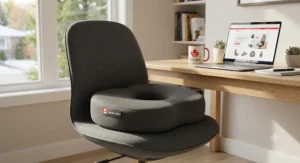
The Xtreme Comforts Coccyx Cushion swaps the usual velour for a mesh cover, and that single change defines who should buy it.
It measures about 46 × 36 × 7.6 cm (18 × 14 × 3 in) and weighs around 0.9 kg, with a memory foam core, a U-shaped cut-out, a non-slip base, and a carry handle. The black mesh cover is machine-washable and lets air move more freely than plush fabric — a real plus if you run hot, wear shorts in summer, or sit in a vehicle that bakes in July sun.
What the spec sheet won’t tell you, but reviewers note: mesh isn’t as soft to the touch as velour, and some people find the cushion firmer than expected. Firm isn’t bad — a firmer memory foam is less likely to bottom out — but if you’re used to a sofa-soft seat, there’s an adjustment period.
Independent roundups have singled out its cut-out as one of the deeper ones in the category, and aggregated review sentiment is generally favourable for coccyx pain, with cover texture and firmness as the main complaints.
Pros:
- ✅ Breathable mesh cover reduces sweat and heat
- ✅ Full 7.6 cm memory foam thickness
- ✅ Deep U-cut-out for tailbone clearance
Cons:
- ❌ Mesh feels less soft than velour
- ❌ Firmer than some buyers expect
Usually in the C$30–C$40 range — a smart buy if heat, not softness, is your main complaint.
7. FOMI Extra Thick Coccyx Cushion — thickest option for heavier users
The FOMI Extra Thick Coccyx Cushion is the stretch pick of this list — it sometimes sits right at, or a little above, the C$40 line — but it solves a problem the others can’t.
It measures about 46 × 41 × 8.9 cm (18 × 16 × 3.5 in), making it the thickest cushion here, built from firm high-density memory foam with a washable cover, handles, and a non-slip base. Why does 1.3 cm of extra height matter? Because “bottoming out” — sinking through the foam until your sit bones touch the chair — is the most common failure for heavier users on thinner cushions. More foam, and firmer foam, means more runway before that happens.
Based on the spec comparison, this is the one I’d point anyone above roughly 100 kg toward, as well as anyone whose previous cushion went pancake-flat within months. Just note that FOMI doesn’t publish a formal weight rating, and the standard 46 cm width won’t solve a wide-hip fit issue.
Reviewers dealing with heavier builds and long drives tend to rate it well; firmness during the first week and the lack of an official weight limit are the recurring notes.
Pros:
- ✅ Thickest foam in this list at 8.9 cm
- ✅ Firm density resists bottoming out
- ✅ Deep 41 cm footprint for thigh support
Cons:
- ❌ Often sits at or above C$40
- ❌ No published maximum weight rating
Typically in the C$38–C$50 range — worth the stretch if thinner cushions keep failing you.
Setting Up a Memory Foam Coccyx Cushion for Desk Chair Use
Buying a memory foam coccyx cushion for desk chair use is step one. Setting it up properly is where the relief actually happens — and it’s the part Amazon listings never explain.
Step 1: Orientation (yes, people get this wrong)
The open cut-out faces backward, toward the chair back. Your tailbone sits over the gap. If the U opens toward your knees, you’ve just built yourself a very comfortable torture device.
Step 2: Re-adjust your chair height
A 7 cm cushion raises you 7 cm. That throws off everything. According to the Canadian Centre for Occupational Health and Safety’s office chair guidance, your feet should rest flat on the floor (or a footrest) with thighs roughly horizontal. So after adding the cushion:
- Lower the seat until your feet are flat again
- If you can’t lower it enough, add a footrest
- Re-check that your elbows still line up with your desk or keyboard tray
Step 3: Sit all the way back
Slide your hips back so the cut-out actually works. Perching on the front edge puts your weight on your thighs and defeats the purpose.
Step 4: Give memory foam a week
Memory foam is temperature-sensitive. In a cool Canadian office, it’ll feel stiff at 8 a.m. and soften by lunch. Most firmness complaints fade after 5–7 days of break-in.
Step 5: Maintenance schedule
- Weekly: Flip the cover’s position or fluff the foam by pressing it back into shape
- Monthly: Machine-wash the cover on cold, air-dry (never put foam in the dryer)
- Every 6 months: Check for a permanent dent where your sit bones rest
Memory foam support only works when the foam isn’t fighting your chair, your posture, or the calendar. Get these five steps right, and even a budget cushion performs like a far pricier one.
Real-World Scenarios: Matching the Cushion to Your Day
Specs are abstract. Your day isn’t. Here are three profiles to show how these cushions play out in practice.
Profile 1: The remote analyst in Ottawa
Situation: Sits 8–9 hours daily in a mid-range mesh office chair, basement home office that’s chilly in winter, average build, dull tailbone ache after long meetings.
Best match: The ComfiLife Premium Comfort Seat Cushion. Its 7 cm height suits a standard office chair, it fits within the published weight guideline, and the washable velour cover adds warmth on a mesh seat in January. Budget: roughly C$30–C$40.
Profile 2: The long-haul commuter in the Greater Toronto Area
Situation: Drives 90 minutes a day on the 401, plus a desk job. Car headroom is tight, runs warm in summer.
Best match: The Aylio Coccyx Seat Cushion for the car (lowest 6.4 cm profile protects headroom) and — if the budget stretches — the Xtreme Comforts Coccyx Cushion for the office, where its mesh cover keeps things cooler. Two budget cushions often beat one expensive cushion you keep carrying back and forth.
Profile 3: The recovering new parent in Calgary
Situation: Post-partum tailbone pain, sharp rather than dull, sitting on kitchen chairs and a sofa during feeds.
Best match: The Kieba Coccyx Seat Cushion (Cool Gel). Its deep, fully open channel is the priority when even light contact hurts, and the compact size actually suits kitchen chairs. Pair it with a check-in from a family doctor or pelvic-floor physiotherapist if pain lasts beyond several weeks.
The pattern here: match the cushion to your worst sitting situation, not your average one.
Problem → Solution: Fixing Common Coccyx Cushion Complaints
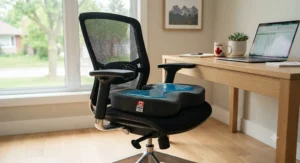
Even a good cushion can feel wrong at first. Here are the five problems buyers mention most often in reviews — and the fixes.
Problem 1: “It’s rock hard.” ✅ Solution: Memory foam firms up in the cold. Give it a week of break-in, and keep it off cold floors or car seats overnight in winter. If it stays too firm after two weeks, a softer, lower-density option like the TushGuard Seat Cushion (Large) may suit you better.
Problem 2: “My tailbone still touches the chair.” ✅ Solution: You’re either sitting too far forward or the cut-out is too shallow for your anatomy. Scoot back; if that fails, the Kieba Coccyx Seat Cushion (Cool Gel) offers one of the most open channels in this price range.
Problem 3: “It went flat in three months.” ✅ Solution: You’ve likely outgrown its density. Heavier users should move to the FOMI Extra Thick Coccyx Cushion, whose 8.9 cm firm foam gives far more runway before bottoming out.
Problem 4: “It slides around on my chair.” ✅ Solution: Wipe the non-slip base with a damp cloth — dust kills grip. On leather or vinyl seats, a thin rubber shelf liner underneath works wonders.
Problem 5: “My back of thighs goes numb.” ✅ Solution: The front edge is too high relative to your seat height. Lower the chair or add a footrest, or choose the Aylio Coccyx Seat Cushion, whose tapered front edge is designed to reduce that pressure.
Most “bad cushion” experiences are actually setup problems in disguise.
How to Choose Coccyx Cushions Under $40 CAD
Shopping in this price band is less about finding the “best” cushion and more about eliminating the wrong ones. Follow these seven steps in order.
- Confirm a true open cut-out. A shallow dimple doesn’t offload anything. Look for a U-channel that runs clear through the back edge so your tailbone genuinely floats.
- Match thickness to body weight. Around 6–7 cm suits most average builds; above roughly 100 kg, look for 8–9 cm firm foam to avoid bottoming out.
- Measure your seat before you buy. A 46 × 41 cm cushion on a 40 cm seat pan hangs off the edge and tips forward. Measure width and depth first.
- Pick foam by how you sit. Memory foam contours slowly and feels hugging; HR polyurethane springs back instantly for fidgeters and frequent standers.
- Consider your climate. Gel layers and mesh covers help warm sitters; velour feels cozier on cold mesh chairs in a Canadian winter.
- Insist on a washable cover. You’ll sit on this for hundreds of hours. A zippered, machine-washable cover is non-negotiable.
- Check the return window. Comfort is personal. Buy from sellers with clear returns so a mismatch isn’t money wasted.
Here’s the reasoning behind the order: the cut-out and thickness decide whether the cushion works; everything after decides whether you’ll enjoy using it. Skipping step 2 is the single biggest reason budget cushions get blamed for failing — the foam wasn’t bad, it was simply outmatched by the load. Nail the first three steps and nearly any of the seven cushions above will deliver genuine relief.
Finding a Coccyx Seat Cushion Under $30 CAD: Is Cheaper Still Worth It?
Let’s be blunt about the bargain bin. A coccyx seat cushion under $30 CAD absolutely exists — the TushGuard Seat Cushion (Large) regularly lands there on amazon.ca, and Walmart Canada lists several no-name memory foam cushions in the mid-C$20s. The question is what you give up.
What you keep
- The U-shaped cut-out (the part that actually relieves the tailbone)
- A non-slip base and removable cover on most reputable listings
- Enough cushioning for occasional or moderate daily use
What you usually lose
- Foam density. Cheaper foam is lighter and less dense, so it compresses faster and recovers slower. That’s fine for 2–3 hours a day, less fine for 9.
- Consistency. Budget listings from unknown brands often show wide variation in firmness between batches.
- Accountability. A brand with a long review history and a stated return policy is easier to deal with if something goes wrong.
The honest verdict
A coccyx seat cushion under $30 CAD makes sense in three cases: you’re testing whether a cushion helps at all, you want a second cushion for the car or bleachers, or your sitting time is modest. For daily desk use of six hours or more, the extra C$5–C$10 for a denser option like the ComfiLife Premium Comfort Seat Cushion or Carex Memory Foam Coccyx Cushion typically buys you months of additional lifespan — which makes the cheaper cushion the more expensive choice over a year.

Coccyx Cushion for Long Sitting Hours: What to Expect in Real-World Use
Marketing copy promises “all-day comfort.” Real life is more nuanced. Here’s what realistic expectations look like when you use a coccyx cushion for long sitting hours.
Hours 0–2: Immediate relief (usually)
The cut-out takes direct pressure off the tailbone almost instantly. Most reviewers with coccyx pain report noticing the difference on day one — it’s the most consistent positive theme across all seven products.
Hours 2–5: The foam warms up
Memory foam softens with body heat. A cushion that felt firm at 9 a.m. will feel noticeably softer by noon. That’s normal, and it’s why firmer foams such as the Xtreme Comforts Coccyx Cushion and FOMI Extra Thick Coccyx Cushion tend to hold up better during marathon sessions.
Hours 5+: Where cheap foam shows its limits
This is where density separates the cushions. Lower-density foam can compress enough that your sit bones start to feel the chair underneath. If you notice that “bottoming out” sensation late in the day, you need a thicker or firmer cushion — not a softer one.
Weeks 1–4: Break-in and posture adjustment
Your body adapts too. Sitting with your tailbone suspended subtly shifts weight onto your sit bones and thighs. Some people feel mild thigh fatigue for the first week or two.
Months 6–18: Gradual decline
Every foam cushion eventually softens. Third-party roundups commonly flag noticeable flattening in heavy daily use somewhere around 12–18 months for even popular models. Plan on replacing a budget cushion roughly once a year if you sit full-time.
The takeaway: the right coccyx cushion for long sitting hours isn’t the softest one — it’s the one that stays supportive at hour seven.
Memory Foam Support vs HR Foam vs Gel: Features That Actually Matter
Every listing shouts about materials. Here’s how to separate genuine memory foam support from marketing noise.
Features that actually matter
- Foam density and thickness. These decide durability and whether you bottom out. Nothing else comes close in importance.
- Cut-out depth and openness. A cushion with superb foam but a shallow channel still presses on the tailbone.
- Footprint size. Depth (front-to-back) determines how much thigh supports your weight.
- Washable cover. Hygiene over hundreds of hours is a practical, not cosmetic, issue.
Features that matter a little
- Gel infusion. It helps with heat, as in the Kieba Coccyx Seat Cushion (Cool Gel), but it won’t fix a thin or low-density core.
- Cover fabric. Mesh breathes better; velour feels cozier. Pick based on your climate and chair.
Features that barely matter
- “Doctor recommended” badges. Without a named clinician or study, it’s a slogan.
- Colour options. Nice, but zero effect on your tailbone.
- Vague “orthopedic grade” claims. There’s no standard definition behind this phrase.
Memory foam vs HR polyurethane in plain terms
Memory foam support is slow and hugging: it moulds around your shape and distributes pressure evenly, but it retains heat and reacts to temperature. HR polyurethane — used in the Aylio Coccyx Seat Cushion — is springy and temperature-stable, better for people who shift position often. Neither is “better”; they suit different sitters.
Coccyx Cushions vs Traditional Alternatives
Before you buy, it’s worth asking: could a pillow, donut ring, or generic seat pad do the job? Here’s how coccyx cushions compare.
| Option | Tailbone Offload | Durability | Typical Cost | Best For |
|---|---|---|---|---|
| U-cut coccyx cushion (e.g., ComfiLife Premium Comfort Seat Cushion) | Excellent — tailbone floats | Good (about 1 year of daily use) | C$25–C$45 | Tailbone pain, long desk days |
| Donut / ring cushion | Moderate — centre hole, not rear | Fair | C$15–C$30 | Hemorrhoids, perineal pain |
| Flat memory foam seat pad | Poor — still presses tailbone | Good | C$20–C$40 | General comfort, no specific pain |
| Folded pillow or blanket | Poor | Poor (flattens in minutes) | Free | Emergency only |
| Premium gel-grid cushion | Good (pressure spread, less offload) | Excellent | C$100+ | Heat-sensitive long sitters with bigger budgets |
The table makes one point clearly: only a U-cut cushion actually removes contact from the tailbone — donuts centre the hole under the perineum, and flat pads simply soften the same pressure. Premium gel grids last longer but cost roughly three times more and don’t necessarily offer a dedicated cut-out. For targeted coccyx relief on a budget, the U-cut design is the right tool for the job.
Long-Term Cost & Value: Why a Budget Orthopedic Aid Is Smart Money
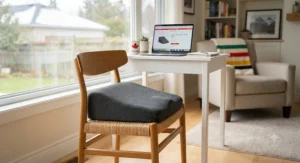
Let’s run the numbers, because a budget orthopedic aid can be one of the best cost-per-use purchases you’ll make this year.
Cost-per-hour math
Say you pay about C$35 for a mid-range pick like the Carex Memory Foam Coccyx Cushion, sit on it 7 hours a day, 5 days a week, and replace it after 12 months. That’s roughly 1,800 hours of use — about two cents per hour. Even a C$25 cushion that lasts only eight months works out to a couple of cents an hour.
| Cushion Tier | Example | Approx. Price | Realistic Lifespan (daily use) | Best For |
|---|---|---|---|---|
| Entry | TushGuard Seat Cushion (Large) | C$25–C$35 | 6–10 months | Testing, travel, second cushion |
| Core | ComfiLife Premium Comfort Seat Cushion | C$30–C$40 | 12–18 months | Full-time desk workers, average build |
| Heavy-duty | FOMI Extra Thick Coccyx Cushion | C$38–C$50 | 12–18+ months | Heavier users, long drives |
The value story isn’t about the cheapest sticker — it’s about matching density to load. An entry cushion used by a heavy full-time sitter may need replacing twice a year, which quietly costs more than one heavy-duty cushion. Lifespans here are realistic estimates drawn from aggregated review patterns, not manufacturer guarantees.
Maintenance that extends lifespan
- Rotate the cushion 180° occasionally (if symmetrical at the front) to spread wear
- Wash covers, not foam; spot-clean foam only with a damp cloth
- Keep it out of hot cars in summer — heat accelerates foam breakdown
Treat a budget orthopedic aid like running shoes: inexpensive, essential, and meant to be replaced before it’s dead.
✨ Don’t Miss These Exclusive Picks! 🔍
Take your long-sitting comfort to the next level with these carefully selected cushions. Click on any highlighted item to check current pricing and availability on amazon.ca. The right cushion will help you get through your workday without that familiar tailbone ache!
Long-Sitting Comfort Beyond the Cushion: Canadian Health Guidance
Here’s the uncomfortable truth: no cushion can fully compensate for sitting too long without a break. Long-sitting comfort is a system, and the cushion is only one part of it.
What Canadian guidelines say
The Canadian 24-Hour Movement Guidelines for Adults recommend limiting sedentary time to 8 hours or less per day and breaking up long periods of sitting as often as possible. If your cushion is logging ten-hour days, the smartest upgrade may be a timer, not a thicker foam.
Practical habits that multiply cushion benefits
- Stand every 30–45 minutes. Even 60 seconds of standing relieves sustained tailbone load.
- Walk your phone calls. Easy movement minutes that don’t cost productivity.
- Alternate positions. A sit-stand desk plus a coccyx cushion is a genuinely powerful combo.
- Watch your slouch. Slumping rolls your pelvis back and presses the tailbone down — right into the gap the cushion is trying to protect.
When to see a professional
Cushions ease pressure; they don’t diagnose. If tailbone pain follows a fall, lasts longer than a few weeks, worsens despite a cushion, or comes with numbness, fever or unexplained symptoms, see your family doctor or a registered physiotherapist. This article is general information, not medical advice.
Think of the cushion as a seatbelt for your tailbone: essential protection, but you still need to drive sensibly.
Common Mistakes When Buying Coccyx Cushions
A few avoidable errors account for most disappointed reviews. Here’s what to watch for.
Mistake 1: Buying a donut when you need a U-cut
Donut rings put the hole under the centre of your pelvis, not your tailbone. For coccyx pain specifically, you want a U-shaped cut-out opening toward the back.
Mistake 2: Ignoring your weight
Most budget cushions are optimized for average builds. ComfiLife openly states its cushion gives less support as weight increases. Heavier users should prioritize thickness and firmness over plushness.
Mistake 3: Forgetting the chair adjustment
A new 7–9 cm layer changes your whole ergonomic setup. Skip the chair-height adjustment and you’ll swap tailbone pain for numb thighs or shoulder strain.
Mistake 4: Judging after one day
Memory foam needs a break-in period, and your posture needs time to adapt. Give any cushion at least a week before deciding it doesn’t work — unless it’s clearly the wrong size.
Mistake 5: Chasing the lowest price for full-time use
A C$20 cushion that flattens in four months costs more per hour than a C$35 one that lasts a year. Price should follow usage.
Mistake 6: Trusting badges over specs
“Doctor recommended” and “orthopedic grade” tell you nothing measurable. Dimensions, density clues, cut-out shape and return policies tell you everything.
Avoid these six mistakes and coccyx cushions under $40 CAD will perform far closer to their premium cousins than the price gap suggests.
FAQ
❓ Do coccyx cushions under $40 CAD actually work for tailbone pain?
❓ Which is better for a car seat, memory foam or HR foam?
❓ Can I use a coccyx cushion on a wheelchair?
❓ How thick should a coccyx cushion be for someone over 100 kg?
❓ Is it safe to wash a memory foam coccyx cushion?
Conclusion
Here’s the bottom line: coccyx cushions under $40 CAD can deliver the same core relief as far pricier models, as long as you pick the right design for your body and your day.
For most desk workers, the ComfiLife Premium Comfort Seat Cushion is the safest starting point — balanced thickness, a washable cover and an honest weight guideline. If your pain is sharp and pinpoint, the Kieba Coccyx Seat Cushion (Cool Gel) and its deep channel deserve a look. Testing the waters? The TushGuard Seat Cushion (Large) is the go-to coccyx seat cushion under $30 CAD. Drivers should favour the low-profile Aylio Coccyx Seat Cushion, wide chairs pair well with the Carex Memory Foam Coccyx Cushion, warm sitters will appreciate the mesh cover on the Xtreme Comforts Coccyx Cushion, and heavier users should stretch for the FOMI Extra Thick Coccyx Cushion.
Whichever you choose, remember the system around it: adjust your chair, give the foam a week, stand up often, and replace the cushion before it quietly gives up. Memory foam support and smart habits together make long-sitting comfort realistic — even on a budget.
And if the pain lingers, a cushion is a companion to professional care, not a substitute.
🪑 Ready to sit pain-free? 👉
Pick the cushion that matches your sitting style, click any highlighted product to check current price and availability on amazon.ca, and give your tailbone the break it’s been begging for!
Recommended for You
- Coccyx Cushion vs Regular Seat Cushion: 7 Picks Tested (2026)
- 7 Best Lumbar Support Cushions In Canada 2026
- 7 Best Office Chair Cushions In Canada For 2026
Disclaimer: This article contains affiliate links. As an Amazon Associate, I earn from qualifying purchases. If you purchase products through these links, we may earn a small commission at no additional cost to you.
✨ Found this helpful? Share it with your friends! 💬🤗
