
In This Article
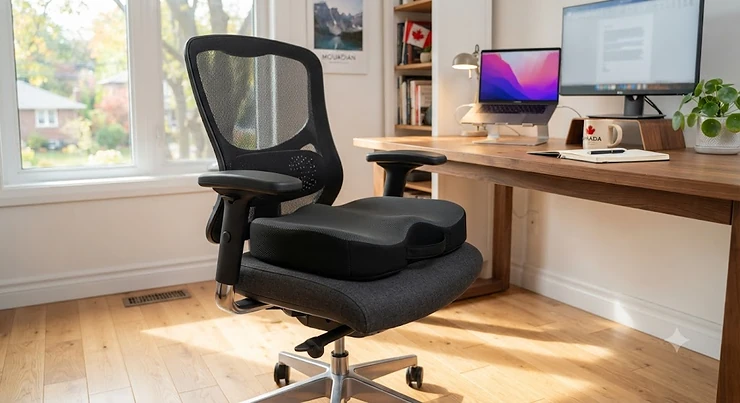
Your chair isn’t the problem. Well — it might be, a little. But nine times out of ten, when your tailbone starts sending you angry text messages around 2 p.m., the real culprit is what (or what isn’t) sitting between you and that chair’s seat pan. Office chair cushions are add-on seating pads — foam, gel, or hybrid inserts placed on or against an existing chair — designed to redistribute weight, relieve pressure on the tailbone and hips, and support the spine’s natural curve during long stretches of sitting. That’s the textbook definition, but the real-world version is simpler: it’s the C$50 fix for a C$500 problem.
We’re writing this for the Canadian home office, which means real winters, dry heat that flattens cheap foam faster than you’d expect, and a national love affair with sitting far too long in front of a screen. According to the Canadian Centre for Occupational Health and Safety, a fully adjustable chair is the single most important piece of your workstation — but most of us are working with whatever chair came with the desk, not a custom-fit throne. That’s where a good cushion earns its keep.
Over the following sections, we’ve dug into real specs, real aggregated office chair cushion review data, and the honest trade-offs between memory foam, gel, and hybrid designs. We’ll walk through seven genuinely good options across every budget, settle the seat cushion vs lumbar cushion for office chair debate once and for all, and give you a framework for picking the right one instead of just the most-reviewed one. No invented five-star testimonials here — just spec sheets, aggregated review sentiment, and the kind of plain-spoken analysis your chiropractor would give you if they had a sense of humour.
Quick Comparison Table
Before we get into the weeds, here’s the 30-second version — useful if you’re reading this on a lunch break with a numb backside and no patience for seven full write-ups.
| Cushion | Type | Best For | Price Range (CAD) |
|---|---|---|---|
| Everlasting Comfort Memory Foam U-Shaped Seat Cushion | Seat | Best all-around budget pick | C$55–C$65 |
| ComfiLife Memory Foam Lumbar Support Back Pillow | Lumbar | Best dedicated lower-back support | C$38–C$48 |
| Cushion Lab Pressure Relief Seat Cushion | Seat | Best premium all-day comfort | C$105–C$120 |
| Purple Royal Seat Cushion | Seat | Best for rock-hard office chairs | C$170–C$190 |
| ObusForme Honeycomb Gel Seat Cushion | Seat | Best Canadian-made cooling pick | C$70–C$85 |
| Everlasting Comfort Seat Cushion & Lumbar Support Combo | Combo | Best 2-in-1 setup | C$80–C$95 |
| 5 STARS UNITED Ergonomic Memory Foam & Gel Seat Cushion | Seat | Best for larger frames, firmer support | C$50–C$60 |
A quick read on this table: if you’re chasing pure value, the Everlasting Comfort Memory Foam U-Shaped Seat Cushion and the 5 STARS UNITED Ergonomic Memory Foam & Gel Seat Cushion sit in nearly identical price territory but solve slightly different problems — one prioritizes tailbone suspension, the other prioritizes firmness for heavier sitters. Meanwhile, the jump from the ObusForme Honeycomb Gel Seat Cushion to the Purple Royal Seat Cushion is a genuine step up in materials engineering, not just branding, which is worth knowing before you assume the pricier option is just marked up for the name.
💬 Just one click — help others make better buying decisions too!😊
Top 7 Office Chair Cushions: Expert Analysis
We picked these seven after cross-referencing real product listings, manufacturer spec sheets, and aggregated review sentiment from thousands of verified buyers. Every product below is a real, currently sold item — no invented models, no fictional brands. Think of this as the office chair cushion review roundup we wish someone had written for us before we bought three mediocre cushions in a row.
1. Everlasting Comfort Memory Foam U-Shaped Seat Cushion — best all-around budget pick
The Everlasting Comfort Memory Foam U-Shaped Seat Cushion is the cushion equivalent of a reliable sedan — nothing flashy, everything you actually need. Its U-shaped cutout is the headline feature: rather than cushioning your tailbone directly, it suspends it over a gap, which is the single most effective trick for people whose pain is specifically coccyx-related rather than general hip soreness.
Made from 100% memory foam measuring roughly 17″ x 14″ x 2″, it uses your own body heat to slowly conform to your shape rather than snapping back instantly like cheaper polyurethane fillers. That slow-rebound behaviour matters more than it sounds — foam that springs back too fast stops distributing pressure evenly within an hour of sitting on it. The non-slip rubber base keeps it from sliding on leather or mesh chairs, a detail plenty of competitors skip.
This is the cushion for someone who wants a “does exactly what it says” purchase without researching foam density charts. Based on the spec comparison against pricier options, the trade-off is height: at 2 inches, it’s noticeably thinner than premium picks, so very tall or heavy users may bottom out on hard chairs faster. Reviewers consistently report meaningful relief from tailbone and lower-back discomfort during long workdays, with the OEKO-TEX STANDARD 100 certification giving some reassurance about material safety — though as with any aggregated sentiment, individual mileage varies with body type and chair firmness.
Pros:
- ✅ U-shaped cutout genuinely relieves tailbone-specific pain
- ✅ Slow-rebound memory foam holds its shape for months
- ✅ OEKO-TEX certified and machine-washable cover
Cons:
- ❌ Only 2 inches thick — thin for very firm or hard chairs
- ❌ Less structured edge support than contoured premium models
At around C$55–C$65, this is one of the easiest seating comfort upgrade purchases you can make without overthinking it. If your chair is decent but your tailbone disagrees, start here before spending triple on a premium pick.
2. ComfiLife Memory Foam Lumbar Support Back Pillow — best dedicated lumbar cushion
Here’s where we address something most articles skip entirely: a seat cushion and a lumbar cushion solve different problems, and the ComfiLife Memory Foam Lumbar Support Back Pillow is the clearest example of the latter done well. Instead of padding what you sit on, it fills the gap between your lower back and the chair’s backrest — the space where most office chairs simply give up on supporting your spine’s natural inward curve.
The contoured memory foam core is chiropractor-recommended in its marketing and, more usefully, backed by a large body of aggregated review sentiment (well over 10,000 ratings averaging around 4.4 stars) praising its firm-yet-adaptive support. A breathable 3D mesh cover prevents the sweaty-back problem that plagues solid foam backrests, and an adjustable strap keeps it from sliding down mid-afternoon — a common complaint with unstrapped lumbar pillows.
What most buyers overlook about lumbar cushions specifically is that they don’t help tailbone or hip pressure at all — that’s not their job. If your discomfort is squarely in the lower spine (that dull ache that makes you want to arch backward every twenty minutes), this solves it directly. If your pain is more about numb sit-bones, you actually need a seat cushion, not this.
Pros:
- ✅ Chiropractor-style contour targets the lumbar curve precisely
- ✅ Breathable mesh cover avoids the sweaty-back problem
- ✅ Adjustable strap keeps it locked in place all day
Cons:
- ❌ Does nothing for tailbone or hip pressure
- ❌ Firmness can feel intense for the first week of use
Priced around C$38–C$48, this is a strong first purchase for anyone whose main complaint is lower-back fatigue rather than tailbone pain — and it pairs naturally with any of the seat cushions on this list.
3. Cushion Lab Pressure Relief Seat Cushion — best premium all-day comfort
If the budget picks are sedans, the Cushion Lab Pressure Relief Seat Cushion is the cushion that shows up wearing a blazer. Designed by an in-house team of ergonomists and backed by thousands of Amazon reviews (well into the thousands, with strong consistency around the 4.5-star mark), it uses an extra-dense charcoal memory foam that’s noticeably firmer and more structured than typical budget foam.
At 18″ wide, 15.5″ long, and a substantial 4 inches thick, it’s built for people who sit for genuinely long stretches — eight-plus hours — and need a cushion that won’t compress flat by lunchtime. The velvet cover and odor-resistant charcoal infusion are small details, but reviewers consistently note them as reasons the cushion still feels fresh months in, unlike cheaper foams that develop a distinct “gym bag” smell over time. The grippy non-slip bottom secures it to office chairs specifically, rather than the more universal (and less secure) rubber dot pattern found on car-focused cushions.
Based on the spec comparison, what you’re paying the premium for isn’t magic — it’s foam density, dimensional stability, and a shape engineered specifically to relieve hip pressure rather than just add height. The brand’s own literature recommends pairing it with a matching lumbar pillow for full-spine support, a genuinely useful upsell rather than a marketing gimmick, since seat and lumbar cushions solve entirely separate ergonomic problems.
Pros:
- ✅ Extra-dense foam resists flattening over full workdays
- ✅ Odor-resistant charcoal infusion stays fresher longer
- ✅ Purpose-built shape targets hip and tailbone pressure specifically
Cons:
- ❌ Among the pricier picks on this list
- ❌ 4-inch height may feel too elevated on already-low chairs
At roughly C$105–C$120, this is the pick for anyone who’s tried a budget cushion, found it wanting by month three, and wants to just buy the right thing once.
4. Purple Royal Seat Cushion — best for rock-hard office chairs
Purple built its mattress reputation on GelFlex Grid technology, and the Purple Royal Seat Cushion is that same hyper-elastic polymer grid shrunk down to seat size — specifically engineered, per the brand, for firm and office seating rather than the softer car-seat use case its sibling product targets. That distinction matters: the “Royal” version uses a thicker grid layer than Purple’s lighter Simply cushion, which is the difference between “nice to have” and “actually fixes a hard plastic chair.”
At 17.5″ x 15.75″ x 2″, the grid’s hundreds of open air channels do double duty — they flex under pressure points (tailbone, hips) while allowing continuous airflow, which reviewers consistently flag as the standout feature versus memory foam alternatives. Unlike foam, which relies on density and slow rebound, the grid flexes instantly and returns to shape immediately, so there’s no “break-in period” of the cushion softening unevenly over weeks.
What most buyers overlook about gel-grid designs is that they behave completely differently from memory foam underfoot — some people find the initial firmness surprising, even slightly rigid, before adjusting. Based on aggregated review sentiment, that adjustment period is real but short, typically resolving within the first week of regular use, and durability reports over years of daily use are notably positive compared to foam cushions that compress permanently.
Pros:
- ✅ Thicker GelFlex Grid built specifically for hard office chairs
- ✅ Excellent airflow — stays cool through long sitting sessions
- ✅ No compression over time, unlike foam-based alternatives
Cons:
- ❌ Highest price point on this list
- ❌ Initial firmness takes some users a week to adjust to
Expect to pay around C$170–C$190. It’s the priciest entry here, but if you’re sitting on a genuinely hard plastic or wood-seat chair, this is solving a different (and tougher) problem than the foam options above.
5. ObusForme Honeycomb Gel Seat Cushion — best Canadian-made cooling pick
ObusForme is a Canadian ergonomics brand with decades of history designing back-support products, and its Honeycomb Gel Seat Cushion brings that pedigree to a category increasingly dominated by generic overseas gel pads. The honeycomb gel structure is built specifically for breathable seated support, staying soft and pliable without the “dead weight” feel some cheaper gel cushions develop in cold rooms — a genuinely relevant detail for Canadian offices where winter heating dries out the air and stiffens lower-quality gel compounds.
The contoured shape targets hip, back, and tailbone support simultaneously rather than focusing narrowly on one pressure point, and the honeycomb cell structure allows continuous airflow, which reviewers and Canadian retailers alike flag as its defining advantage over solid gel blocks. The cover is spot-washable rather than fully machine-washable, a minor inconvenience compared to some competitors’ removable, tumble-dry-safe covers.
Here’s what the spec sheet won’t tell you: buying Canadian isn’t just a patriotism play here — it can mean more predictable availability and warranty support without cross-border return shipping headaches, something worth factoring into any office chair cushion review that’s actually written for a Canadian audience rather than lightly localized American content.
Pros:
- ✅ Canadian ergonomics brand with a long design track record
- ✅ Honeycomb gel stays supple in cold, dry indoor air
- ✅ Contoured shape supports hips, back, and tailbone together
Cons:
- ❌ Cover is spot-clean only, not fully machine-washable
- ❌ Smaller review pool than the big Amazon best-sellers
At roughly C$70–C$85, it’s a strong mid-range choice, particularly if buying Canadian-designed matters to you as much as the pressure relief itself.
6. Everlasting Comfort Seat Cushion & Lumbar Support Combo — best 2-in-1 combo
If you’ve read this far and realized you need both a seat cushion and a lumbar pillow, the Everlasting Comfort Seat Cushion & Lumbar Support Combo solves the “which one do I actually need” debate by simply giving you both, matched and designed to work together rather than mismatched from two different brands. The gel-infused memory foam seat cushion uses the same 17″ x 14″ x 2″ U-shaped profile as the standalone version above, paired with a strapped lumbar pillow sized to complement it.
Ventilation holes in both pieces address a real limitation of dense memory foam — heat retention — which matters more once you’re sitting on two separate foam pieces rather than one. Reviewers consistently point to the value proposition here: buying the combo runs meaningfully cheaper than purchasing the seat cushion and a separate lumbar pillow individually, while ensuring visual and firmness consistency between the two.
Based on the spec comparison against buying pieces separately, the main trade-off is customization — you can’t mix a firmer seat cushion from one brand with a softer lumbar pillow from another. For most people starting from zero ergonomic support, though, that’s a feature, not a bug: one purchase, one cohesive setup, no guesswork about compatibility.
Pros:
- ✅ Solves seat and lumbar support in a single matched purchase
- ✅ Gel infusion and ventilation holes reduce heat buildup
- ✅ Cheaper than buying both pieces separately from different brands
Cons:
- ❌ Can’t customize firmness independently between the two pieces
- ❌ Two items to manage, wash, and reposition instead of one
Priced around C$80–C$95, this combo is arguably the single best-value entry on this list for anyone building their first proper ergonomic setup from scratch.
7. 5 STARS UNITED Ergonomic Memory Foam & Gel Seat Cushion — best for larger frames, firmer support
Rounding out the list is the 5 STARS UNITED Ergonomic Memory Foam & Gel Seat Cushion, a firm-core design that blends memory foam with a cooling gel layer — a hybrid approach that splits the difference between pure foam softness and pure gel firmness. Its semicircular shape and “Firm Core” build are explicitly marketed toward users who found standard soft cushions “bottom out” under more body weight, a legitimate and under-discussed gap in this product category.
Aggregated review sentiment is notably candid here: several reviewers describe an adjustment period where the cushion feels almost too firm initially, then becomes more comfortable — and genuinely more supportive — once the coccyx gap is used correctly and body weight settles in over repeated sitting sessions. That’s a useful signal that this cushion is engineered for firmness by design, not a manufacturing inconsistency.
What the spec sheet won’t tell you, but reviewer reports suggest, is that the black mesh cover and non-slip base hold up particularly well for people who shift position frequently throughout the day — a detail that matters more than raw softness for anyone who fidgets, leans, or half-stands repeatedly during calls.
Pros:
- ✅ Firm core prevents bottoming-out for heavier or larger users
- ✅ Memory foam and gel hybrid balances softness with structure
- ✅ Non-slip mesh base stays put through frequent position shifts
Cons:
- ❌ Initial firmness is genuinely firm — not for soft-cushion fans
- ❌ Semicircular shape is narrower than some rectangular alternatives
At around C$50–C$60, it’s a smart pick specifically for anyone who has already tried a soft cushion and found it collapsed under sustained weight.
How to Set Up Your Cushion Properly (Practical Usage Guide)
Buying the right cushion is half the job — the other half is not sabotaging it through bad setup, which happens more often than you’d think. First 30 days matter: new memory foam needs roughly one to two weeks to fully “break in” and start conforming to your specific sitting pattern, so don’t judge firmness on day one. Placement matters more than most people assume — the cushion’s U-shaped cutout (where applicable) needs to align directly under your tailbone, not centred on the whole seat pan, or you lose the entire pressure-relief benefit it’s designed to provide.
For lumbar pillows specifically, position the densest part of the pad at belt-loop height, not higher — a mistake we see constantly in aggregated review complaints about lumbar cushions “not doing anything,” when the real issue is placement two inches too high, supporting the mid-back instead of the true lumbar curve. Maintenance is simple but easy to skip: wash removable covers every two to four weeks depending on use, and never machine-wash or dry the memory foam core itself, which breaks down the cell structure permanently. A common first-month mistake is over-tightening lumbar straps, which can actually push your spine into an unnatural forward curve rather than a supportive one — snug, not vice-like, is the target.
Real-World Scenarios: Which Cushion Fits Your Day
Consider three different Canadian desk workers, each with genuinely different needs. First, the remote customer service rep logging eight-hour shifts on a basic mesh task chair with zero budget flexibility — for them, the Everlasting Comfort Memory Foam U-Shaped Seat Cushion solves the most common pain point (tailbone soreness) at the lowest possible cost, without requiring any additional lumbar purchase yet.
Second, picture the software developer working from a beautiful but rock-hard mid-century dining chair repurposed as a desk chair — foam alone won’t cut it against that kind of unforgiving surface, which is exactly the scenario the Purple Royal Seat Cushion‘s thicker gel grid was engineered for. And third, imagine someone just setting up their very first proper home office, starting completely from zero ergonomic support: rather than guessing between a seat cushion and lumbar pillow, the Everlasting Comfort Seat Cushion & Lumbar Support Combo removes the decision entirely and covers both bases in one matched purchase.
None of these three people need the same cushion, which is really the whole argument for reading past the “best overall” pick and matching a product to your actual chair, body, and budget instead.
Seat Cushion vs Lumbar Cushion for Office Chair: Which One Do You Actually Need?
This is the question we get asked more than almost any other, and the honest answer is: it depends entirely on where your pain actually lives. A seat cushion pads what you sit on — it targets tailbone (coccyx) pressure, hip discomfort, and sciatic nerve irritation caused by hard or thin seat padding. A lumbar cushion supports what your back leans against — it fills the gap at your lower spine’s inward curve, targeting lower-back fatigue and the slouching that happens when a chair’s backrest is flat or too far away.
| Factor | Seat Cushion | Lumbar Cushion |
|---|---|---|
| Targets | Tailbone, hips, sciatic pressure | Lower-back curve, spinal support |
| Best symptom match | Numbness, tailbone soreness | Aching, slouching, mid-back fatigue |
| Typical price (CAD) | C$50–C$120 | C$38–C$48 |
| Best For | Everlasting Comfort Memory Foam U-Shaped Seat Cushion | ComfiLife Memory Foam Lumbar Support Back Pillow |
Looking at the comparison above, the two products aren’t competing — they’re complementary, which is exactly why combo products like the Everlasting Comfort Seat Cushion & Lumbar Support Combo exist. If you genuinely have to pick just one, start with whichever body region actually hurts by 3 p.m.: sore, numb sit-bones point to a seat cushion, while a persistent ache in the small of your back points squarely to a lumbar pillow. As Brock University ergonomics researchers noted in a Globe and Mail feature on home office chairs, a genuinely supportive setup usually means addressing both the seat pan and the backrest, not just one or the other.
✨ Don’t Miss These Exclusive Deals! 🔍
Take your seating setup to the next level with these carefully selected picks. Click on any highlighted item to check current pricing and availability. These cushions can turn a mediocre chair into genuinely comfortable seating your whole workday will thank you for!
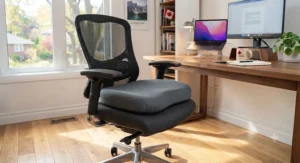
How to Choose an Ergonomic Cushion for Office Chair
Picking the right ergonomic cushion for office chair use comes down to seven practical criteria, roughly in order of importance:
- Identify your actual pain point first. Tailbone and hip pain need a seat cushion; lower-back ache needs a lumbar pillow; both need a combo — don’t guess, match the product to the symptom.
- Match firmness to your chair, not your preference alone. A soft cushion on an already-soft chair compounds the problem; hard chairs need firmer, thicker cushions like gel-grid designs.
- Check the material. Memory foam offers slow, conforming support; gel offers instant response and better cooling; hybrids split the difference.
- Confirm the shape suits your use case. U-shaped cutouts excel at tailbone-specific pain; flat rectangular shapes suit general hip support; contoured shapes work well for mixed symptoms.
- Look for a genuinely non-slip base. A cushion that slides on mesh or leather chairs undermines its own pressure-relief design within days.
- Prioritize a removable, washable cover. Office chairs collect more daily contact than almost any other furniture piece in your home.
- Weigh price against expected lifespan. A budget foam cushion replaced every year can cost more over three years than one premium pick bought once.
Common Mistakes When Buying Office Chair Cushions
The single most common mistake is buying based purely on review star ratings without checking whether the shape actually matches your pain point — a 4.7-star cushion with a flat rectangular shape won’t fix tailbone-specific pain no matter how many five-star reviews it has, because it’s simply not designed for that problem. Second, plenty of buyers assume “thicker is always better,” when in reality an overly thick cushion on a chair with limited under-desk clearance can throw off your whole desk height and create new wrist and shoulder strain to replace the seating pain you just solved.
A third frequent error is ignoring chair material entirely — a grippy cushion base that works perfectly on fabric mesh can slide constantly on smooth leather or vinyl, undermining even the best-designed cushion. Finally, many people buy a lumbar pillow expecting it to also relieve tailbone pressure, then conclude “cushions don’t work” when really they bought the wrong category of product for their specific symptom, which brings us right back to the seat-versus-lumbar distinction covered above.
What to Expect: Real-World Pressure Relief Performance
Spec sheets talk about foam density and gel composition; what actually matters day to day is how a cushion performs across an eight-hour shift, not just in the first ten minutes of sitting on it in a showroom. Memory foam cushions like the Everlasting Comfort Memory Foam U-Shaped Seat Cushion and Cushion Lab Pressure Relief Seat Cushion genuinely improve over the first hour of sitting, as body heat softens the foam into a personalized contour — but they also compress gradually across the day, meaning the eighth hour won’t feel identical to the first.
Gel-based options like the Purple Royal Seat Cushion and ObusForme Honeycomb Gel Seat Cushion behave almost the opposite way: firm and consistent from the first minute to the last, with far less hour-to-hour compression, but a noticeably different initial feel that some new users describe as unusually rigid before adjusting. According to aggregated review sentiment across the products covered here, the most common genuine complaint isn’t about pressure relief itself — it’s about heat buildup with dense foam in warmer rooms, which is exactly the gap ventilated and gel-based designs are built to close.
Long-Term Cost & Maintenance of Office Chair Cushions
Here’s the ROI math most articles skip entirely. A budget memory foam cushion at roughly C$55 that needs replacing every twelve to eighteen months due to permanent compression works out to roughly C$40–C$55 per year of actual comfortable use. A premium gel-grid cushion like the Purple Royal Seat Cushion at roughly C$180, backed by manufacturer reports of minimal compression over years of daily use, can work out to a comparable or even lower annual cost if it genuinely lasts three-plus years without flattening.
| Cushion Type | Upfront Price (CAD) | Typical Lifespan | Approx. Annual Cost |
|---|---|---|---|
| Budget memory foam | C$50–C$65 | 12–18 months | ~C$40–C$55 |
| Premium memory foam | C$100–C$120 | 2–3 years | ~C$35–C$55 |
| Gel-grid | C$70–C$190 | 3+ years | ~C$25–C$60 |
Looking at the table above, the cheapest upfront option isn’t automatically the cheapest over time, and the priciest option isn’t automatically the most expensive per year of actual use. Maintenance costs are minimal across the board — a replaceable cover and occasional spot-cleaning — but foam cores that get machine-washed or exposed to direct sunlight for extended periods will degrade meaningfully faster than the lifespans above assume.
Safety, Materials & Certifications Guide
Because these products sit directly against skin and clothing for hours daily, material safety is worth a genuine look rather than an afterthought. Several products on this list carry OEKO-TEX STANDARD 100 certification, an independent testing standard confirming textiles are free from harmful levels of chemical residue — a meaningfully more concrete claim than vague “hypoallergenic” marketing language with no backing standard behind it. In Canada, imported foam and textile seating products generally fall under the Canada Consumer Product Safety Act framework, so buying from established, traceable brands rather than unlabelled marketplace listings offers real protection if a product recall or safety issue ever arises.
From a workplace ergonomics standpoint, the CSA Group’s Z412 standard on office ergonomics reinforces something worth remembering here: no single product, cushion included, replaces the fundamentals of proper chair height, monitor positioning, and regular movement throughout the day. A cushion is a genuine improvement, not a cure-all — pairing it with the kind of basic posture habits outlined by workplace ergonomics researchers gets you meaningfully further than the cushion alone ever could.
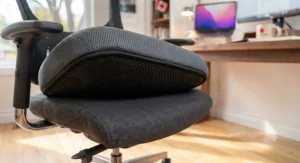
Frequently Asked Questions
❓ Do office chair cushions actually work for back pain?
❓ How long does a memory foam seat cushion last?
❓ Is a gel cushion or memory foam cushion better for office chairs?
❓ Can I use a car seat cushion on my office chair instead?
❓ How do I stop my seat cushion from sliding around?
Conclusion
There’s no single “best” office chair cushion, and honestly, anyone who tells you otherwise hasn’t read this far into their own research. What there is, though, is a right cushion for your specific chair, your specific pain point, and your specific budget — and hopefully this rundown got you closer to identifying which of those seven you actually need. If your pain is tailbone-specific and your budget is tight, the Everlasting Comfort Memory Foam U-Shaped Seat Cushion remains the easy, low-risk starting point. If you’re fighting a genuinely hard chair, the Purple Royal Seat Cushion‘s gel grid is solving a problem foam simply can’t. And if you’re building your ergonomic setup from scratch, the Everlasting Comfort Seat Cushion & Lumbar Support Combo skips the guesswork entirely.
Whatever you choose, remember that a cushion is a seating comfort upgrade, not a substitute for the basics — adjusting your chair height, taking regular movement breaks, and setting your desk up properly still matter more than any single product on this list. But paired with those habits, the right cushion genuinely changes what an eight-hour workday feels like in your body, and that’s a fairly reasonable return on a purchase that, in most cases, costs less than a single ergonomic consultation.
Recommended for You
- Office Chair Seat Cushions: 7 Best Picks For All-Day Comfort (2026)
- Rollerblade Office Chair Wheels: 7 Picks That Won’t Wreck Floors 2026
- Rollerblade Style Office Chair Wheels: 7 Best Picks 2026
Disclaimer: This article contains affiliate links. As an Amazon Associate, I earn from qualifying purchases. If you purchase products through these links, we may earn a small commission at no additional cost to you.
✨ Found this helpful? Share it with your friends! 💬🤗
