
In This Article
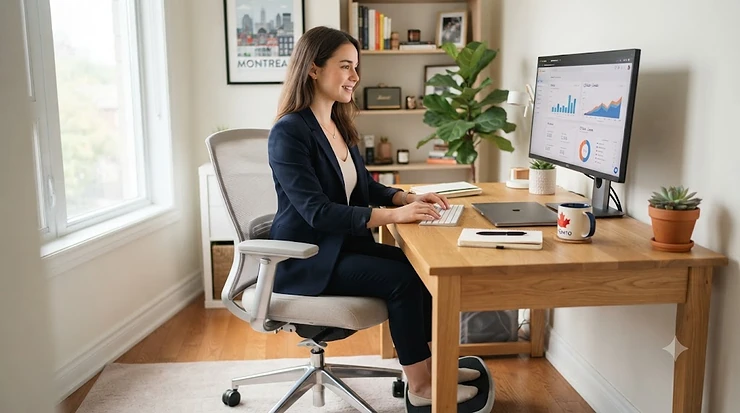
A petite office chair is a task chair engineered with a lower seat height, shorter seat depth, and narrower proportions so shorter or smaller-framed users can sit with feet flat and knees supported, rather than fighting a chair built for a 6-foot average. If you’ve ever finished a workday with numb thighs, a sore lower back, or feet dangling above the floor, the problem probably isn’t your posture. It’s your chair. Most task chairs on the market are scaled for a mythical “average” adult who, statistically, doesn’t represent a huge chunk of the population.
Here’s the thing nobody tells you at the furniture store: seat depth matters more than seat height for most petite sitters, and almost no standard chair gets both right. A chair can drop low enough for your feet to touch the floor and still dig into the back of your knees because the seat pan is two inches too long for your thighs. That combination — low height and short depth, together — is what actually defines a proper petite office chair, and it’s rarer than you’d think on a typical Amazon.ca search results page.
This guide walks through seven real, currently available petite office chair options for the Canadian market, from budget mesh chairs under C$300 to premium ergonomic seating that rivals what physiotherapists recommend. We’ll also cover how to measure yourself properly, common buying mistakes, and how compact ergonomic seating fits into a small home office setup. According to the CCOHS guidance on selecting an ergonomic chair, seat height and seat depth range should be checked against the actual user before anything else — a principle that’s easy to state and surprisingly hard to shop for.
Quick Comparison Table: Petite Office Chair Picks at a Glance
| Chair | Tier | Seat Height Range | Best For |
|---|---|---|---|
| Alera Etros Series Petite | Budget | ~17.2″-20.9″ | First petite upgrade on a tight budget |
| SIDIZ T50 | Mid-range | Fits 5’1″-6’2″ | Households with mixed heights sharing one chair |
| Office Master Paramount PT62 Petite | Mid-range | 15.5″-19.5″ | Very short users (under 5’2″) needing narrow arms |
| Neutral Posture XSM Petite | Upper-mid | Adjustable, petite-specific shell | Chronic back pain in a small frame |
| Herman Miller Aeron Size A | Premium | Down to 14.75″ | Petite users who want mesh breathability |
| Steelcase Leap V2 (low cylinder) | Premium | Lowered with short cylinder | Long workdays needing spinal tracking |
| CabLady S1 Petite | Budget/style | ~15.9″-19″ | Very small frames wanting built-in footrest |
Looking at the spread above, the real split isn’t budget versus premium — it’s fixed-fit versus fully adjustable. The Alera Etros Series Petite and CabLady S1 Petite solve the height problem cheaply but don’t let you fine-tune lumbar position, which matters if your discomfort comes from your lower back rather than your legs. The Neutral Posture XSM Petite and Herman Miller Aeron Size A sit at the other end, charging a premium for genuine head-to-toe customization. Somewhere in the middle, the SIDIZ T50 and Office Master Paramount PT62 Petite try to give you most of the adjustability without the four-figure price tag, which is exactly why they show up so often in short-person buying guides.
💬 Just one click — help others make better buying decisions too!😊
Top 7 Petite Office Chairs: Expert Analysis
Every product below is a real, currently sold item — no invented models, no fictional brands. Price ranges are approximate and reflect what we found at the time of research; always check current pricing on Amazon.ca before buying, since retail prices shift constantly.
1. Alera Etros Series Petite Mid-Back Mesh Chair — most affordable true petite fit
The standout here is simple: it’s one of the few sub-C$300 chairs actually engineered for a smaller frame instead of just being a smaller-looking version of a standard chair. The Alera Etros Series Petite drops its seat height down into the 17-to-21-inch range depending on the exact model variant, several inches lower than the 18-to-22-inch range you’ll find on most generic mesh task chairs. Its three-lever multifunction mechanism controls back angle relative to the seat, seat glide, and forward tilt independently, which is unusual generosity at this price point.
Based on the spec sheet, this chair is aimed squarely at buyers who are close to average height but have a shorter torso or shorter thighs — the seat depth sits around 15.7 to 18.3 inches, tight enough to avoid the classic “knee pressure” problem. Reviewers consistently note that assembly is quick and the mesh stays breathable through long sessions, though several also mention the armrests feel spindly under sustained pressure. If your budget is the primary constraint and your main complaint is dangling feet rather than chronic back pain, this is a sensible entry point.
Pros:
- ✅ Genuinely low seat height range for the price
- ✅ Independent seat glide, tilt, and back angle controls
- ✅ Height- and width-adjustable arms included
Cons:
- ❌ Lumbar support is fixed, not position-adjustable
- ❌ Armrests feel less sturdy than pricier alternatives
Priced in the C$220-C$300 range at the time of research, this is a reasonable value pick if you mainly need the seat height fixed and can live without deep lumbar customization.
2. SIDIZ T50 Highly Adjustable Ergonomic Office Chair — most adjustable mid-range option
What most buyers overlook about the SIDIZ T50 is that it wasn’t marketed as a petite chair at all, yet its sheer number of adjustment points — reportedly over ten, covering headrest, lumbar, seat depth, seat slope, and tilt tension — means a small-framed user can dial it in almost as precisely as a chair built specifically for them. Sidiz states the T50 comfortably supports users between roughly 5’1″ and 6’2″, which puts it right at the edge of usable for petite sitters, especially once the seat depth (forward tilt) adjustment is pulled all the way in.
The S-curve backrest design earned several international design awards, but the practical upshot for a petite sitter is that the lumbar curve sits lower on the backrest than on many competitors, which tends to match a shorter torso better without extra padding. It’s GREENGUARD certified and ANSI/BIFMA tested, so the build quality checks out on paper, not just in marketing copy. Aggregated reviewer sentiment points to strong satisfaction with the mesh ventilation and the 3D armrests, with the occasional complaint that the seat cushion runs firmer than expected.
Pros:
- ✅ Ten-plus adjustable points including seat depth and slope
- ✅ GREENGUARD certified and BIFMA tested for durability
- ✅ Works for households where more than one body size shares it
Cons:
- ❌ Seat cushion firmness surprises some petite users
- ❌ Sits at the taller edge of “petite-friendly” without a footrest
Expect a price in the mid-C$400s to mid-C$500s range, which puts the SIDIZ T50 squarely between budget mesh chairs and true petite-engineered seating.
3. Office Master Paramount PT62 Petite — narrowest arms, extra-low cylinder
The Office Master Paramount PT62 Petite uses what the manufacturer calls an extra-low cylinder, which drops the seat height down to about 15.5 inches — genuinely low, and close to what a 5-foot user needs without a footrest. What the spec sheet won’t tell you outright is how much this matters in practice: most “petite” chairs still bottom out around 16.5 to 17 inches, so an extra inch of headroom on the low end is the difference between feet flat on the floor and feet still hovering.
Arm width is where this chair quietly wins. At roughly 13.25 inches, the optional KR-25 arms are the narrowest of any chair in this roundup, which matters more than people expect for narrower shoulders — wide-set armrests force petite users into an unnatural outward elbow angle all day. Aggregated buyer feedback describes it as the most adjustable chair available under roughly C$600, though a few users note the shell and upholstery feel a step below Steelcase- or Neutral Posture-level materials.
Pros:
- ✅ Extra-low cylinder reaches a genuine 15.5-inch seat height
- ✅ Narrowest arm width in this comparison
- ✅ Seat depth, seat angle, and back height all independently adjustable
Cons:
- ❌ Build materials feel a notch below premium competitors
- ❌ Fewer upholstery and back-height options than the Neutral Posture line
Value here sits in the C$550-C$750 range depending on arm and back configuration, backed by a 12-year limited warranty on core components.
4. Neutral Posture XSM Petite Series — most medically oriented adjustability
The Neutral Posture XSM Petite Series (sold as the XSM5300 mid-back or XSM8300 high-back) stands out because it’s registered with the FDA as a medical device in its home market, a detail that signals a level of engineering rigor most office chairs never bother pursuing. Its seat measures roughly 17 inches wide by 15.5 to 18 inches deep with minimal contour, purpose-built for a smaller frame rather than adapted from a standard shell.
Here’s what to weigh: with 15 total adjustment points, an inflatable lumbar pillow, and five-way arms that move in height, width, and rotation, this chair is built for someone whose discomfort is chronic and specific, not casual. Reviewers who’ve owned earlier Neutral Posture chairs for a decade-plus describe the brand’s durability favorably, though the newer seat foam reportedly runs slightly softer than older generations. GREENGUARD certification and a 12-year warranty on most components back up the premium pricing.
Pros:
- ✅ FDA-registered medical device build quality
- ✅ Petite-specific seat shell, not a scaled-down standard chair
- ✅ Inflatable lumbar plus 5-way arm adjustment
Cons:
- ❌ Seat foam feels softer than older Neutral Posture generations
- ❌ Assembly and shipping lead times run longer than mass-market chairs
Pricing typically lands in the C$750-C$1,000 range, positioning it as a strong middle ground between mid-range adjustability and Herman Miller-tier spending.
5. Herman Miller Aeron Size A — the mesh chair that actually goes low
The Herman Miller Aeron Size A is the only widely available mesh ergonomic chair engineered from the ground up in a genuinely smaller size, rather than offered as a single one-size-fits-all shell. Herman Miller lists the Size A at 38.5 inches tall, 26 inches wide, and 16 inches deep, suited to users roughly between 4’8″ and 5’9″. Seat height reportedly drops to about 14.75 inches on some configurations, which is low enough that a full 5-foot user can often sit with feet flat and no footrest at all — a rarity in this list.
On paper this means you’re paying for the PostureFit SL lumbar system and 8Z Pellicle mesh suspension, which distributes pressure across eight tension zones instead of relying on foam padding that compresses over time. Weight and capacity figures vary by source — some listings cap the Size A around 150 pounds, others cite a 300-pound rating — so it’s worth double-checking current specs before buying rather than assuming either number. Aggregated reviewer sentiment is strongly positive on long-term durability (the 12-year warranty backs that up) and mixed on initial seat firmness, which some petite users find too rigid without a break-in period.
Pros:
- ✅ True small-body engineering, not a resized standard shell
- ✅ 8Z Pellicle mesh spreads pressure across eight zones
- ✅ 12-year warranty reflects serious long-term durability
Cons:
- ❌ Seat firmness feels rigid to some users before break-in
- ❌ Listed weight capacity varies confusingly between sources
New units and Herman Miller-certified renewed models both circulate on Amazon.ca, generally in the C$1,500-C$2,500 range for new stock, with renewed or open-box units sometimes available closer to C$1,000-C$1,400 — a detail worth checking since the cost-per-year math changes significantly with the warranty intact.
6. Steelcase Leap V2 with low-height cylinder — best for full-day spinal tracking
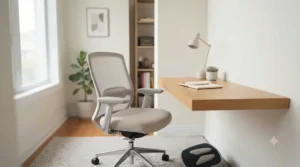
The Steelcase Leap V2 isn’t marketed as a petite chair out of the box, but paired with Steelcase’s shorter gas cylinder option, it becomes one of the more capable choices for smaller frames who still want serious lumbar engineering. The seat depth slider lets you bring the front edge closer so your knees bend at roughly 90 degrees rather than leaving a gap behind the knee, and the LiveBack mechanism is designed to flex with your spine as you shift position through the day rather than staying rigid.
What most buyers overlook about the Leap is its 4D arms — height, width, depth, and pivot adjustment — which matter disproportionately for petite users whose shoulder breadth is narrower than the chair’s default arm spacing. Reviewers who fit the “under 5’4″ and adjustable” profile describe the default cylinder as sitting a touch high without the shorter option, reinforcing that this chair needs the right configuration at purchase, not just the right model name.
Pros:
- ✅ LiveBack lumbar flexes with your spine through the day
- ✅ 4D arms adjust for narrower petite shoulder width
- ✅ Firm, durable build designed for daily multi-shift use
Cons:
- ❌ Default cylinder sits high without the short-cylinder option
- ❌ Seat feel is firm rather than plush out of the box
Expect the Steelcase Leap V2 to land in the C$1,200-C$1,800 range on Amazon.ca depending on upholstery and arm configuration — premium pricing that reflects a chair designed for eight-hour-plus daily use.
7. CabLady S1 Petite Ergonomic Home Desk Chair — built-in footrest for very small frames
The CabLady S1 Petite takes a different approach than every other chair on this list: instead of relying purely on mechanical adjustment, it ships with a fixed, generously padded shell plus a bow-shaped removable lumbar pillow and a flip-up footrest and headrest built in. For a very petite user — someone whose feet still won’t reach the floor even at the lowest setting of a “regular” petite chair — that built-in footrest solves a problem no amount of gas-cylinder adjustment can.
Reported seat height range runs roughly 15.9 to 19 inches with a seat depth of about 16.9 to 19.2 inches, numbers that specifically target smaller proportions rather than splitting the difference for an average adult. It’s rated to 300 pounds despite its compact footprint, and the styling leans toward a softer, more residential look than the utilitarian mesh chairs dominating this category. Aggregated review sentiment highlights the reclining headrest and built-in coat hanger as unexpectedly useful small-space touches, while some buyers note the fixed lumbar (versus a fully adjustable one) won’t satisfy anyone with more specific back-support needs.
Pros:
- ✅ Built-in footrest solves the “feet still don’t reach” problem
- ✅ Removable bow-shaped lumbar pillow adds targeted support
- ✅ Softer, more residential styling than typical mesh task chairs
Cons:
- ❌ Lumbar support is fixed, not independently adjustable
- ❌ Less suited to shared or multi-user households
At an approximate C$150-C$220 range, this is one of the most budget-friendly ways to solve a genuinely small-frame fit problem without sacrificing comfort features.
Top 7 Petite Office Chairs: Specs & Value Comparison
| Chair | Seat Height | Seat Depth | Weight Capacity | Price Range (CAD) | Best For |
|---|---|---|---|---|---|
| Alera Etros Series Petite | ~17.2″-20.9″ | ~15.7″-18.3″ | 275 lb | C$220-C$300 | Budget-first buyers |
| SIDIZ T50 | Fits 5’1″-6’2″ | Adjustable slide | 275 lb | C$450-C$550 | Shared/mixed-height homes |
| Office Master Paramount PT62 Petite | 15.5″-19.5″ | 16″-19.1″ | 300 lb | C$550-C$750 | Very short, narrow-shouldered users |
| Neutral Posture XSM Petite | Petite-specific shell | 15.5″-18″ | Not widely listed | C$750-C$1,000 | Chronic back pain |
| Herman Miller Aeron Size A | Down to ~14.75″ | 16″ (fixed shell) | Varies by source | C$1,500-C$2,500 | Mesh lovers, 4’8″-5’9″ |
| Steelcase Leap V2 (low cylinder) | Lowered w/ short cylinder | Slider adjustable | Not widely listed | C$1,200-C$1,800 | Full-day heavy use |
| CabLady S1 Petite | ~15.9″-19″ | ~16.9″-19.2″ | 300 lb | C$150-C$220 | Very small frames, footrest need |
Read together, this table makes the tiering pattern obvious: price climbs almost in direct proportion to how much of the chair is independently adjustable, not to how “petite” the chair actually is. The CabLady S1 Petite and Office Master Paramount PT62 Petite arguably fit a small frame more precisely than the Herman Miller Aeron Size A does, yet cost a fraction of the price — the Aeron’s premium is really about mesh engineering and 12-year durability, not fit alone. If your budget caps out around C$300, don’t assume you’re settling for a worse fit; you may just be settling for less material engineering.
Practical Usage Guide: Setting Up Your Petite Office Chair Right
Buying the right petite office chair solves maybe half the problem — the rest comes down to setup, and this is the part most product pages skip entirely. Start with seat height before anything else. Following the CCOHS method for adjusting office chairs, stand in front of the chair and set the seat pan just below your kneecap, then sit and fine-tune until your feet rest flat with knees at roughly 90 to 100 degrees. Resist the urge to set height based on your desk instead of your body; that’s the single most common mistake we see, and it’s the fastest way to undo an otherwise great chair purchase.
Next, dial in seat depth, if your chair allows it. You want two to three fingers’ width of clearance between the front edge of the seat and the back of your knee — any tighter and circulation suffers over a long day; any looser and your lower back loses contact with the lumbar support. Lumbar position comes third: raise or lower it until the curve sits directly against the small of your back, not your mid-spine. Finally, set armrests so your shoulders stay relaxed and forearms rest near elbow height, adjusting width inward if the default spacing forces your elbows outward.
In the first 30 days, the most common mistake is “setting and forgetting.” Bodies shift throughout the day — readjust tilt tension or lumbar position after lunch if you’ve been static all morning. A cheap footrest (roughly C$20-C$40) pairs well with any chair that still sits slightly high even at its lowest setting, effectively extending the usable range of a near-miss petite office chair without an upgrade.
Real-World Scenarios: Who Actually Needs a Petite Office Chair
The remote-working grad student, 5’1″, budget under C$300. With roughly 22 percent of Canadians working from home in some capacity as of late 2025, plenty of home offices are furnished on a shoestring. For this profile, the Alera Etros Series Petite or CabLady S1 Petite solves the immediate problem — feet on the floor, knees supported — without a four-figure commitment. A supplementary footrest closes any remaining gap.
The hybrid office worker, 5’4″, chronic mid-back tension. Splitting time between a corporate desk and a home setup means two chairs need to agree with each other, or at least not fight each other. A rise in Canadian commuting has pushed more workers back into hybrid arrangements, so consistency between office and home seating now matters more than it did during full remote years. The SIDIZ T50 or Office Master Paramount PT62 Petite offer enough adjustability to closely match a corporate ergonomic chair’s feel at home.
The small-business owner, 4’11”, eight-plus hours daily, existing back pain. This is the profile premium petite seating is actually built for. The Herman Miller Aeron Size A or a properly configured Steelcase Leap V2 justify their price through genuine long-term cost-per-use math and medical-grade lumbar engineering — not luxury branding. For someone sitting all day, every day, the difference between a C$300 chair and a C$1,500 one often shows up as a physiotherapy bill within two years.
Buyer’s Decision Framework: Which Small Office Chair Fits You
Use this simple priority checklist rather than shopping by price alone:
- If your feet don’t reach the floor and budget is tight, choose a fixed-fit petite chair like the CabLady S1 Petite, because a built-in footrest solves the core problem cheaply.
- If you share a chair with a taller partner or roommate, choose a highly adjustable option like the SIDIZ T50, because its wide adjustment range accommodates more than one body.
- If your discomfort is specifically lower-back pain, not leg fatigue, choose the Neutral Posture XSM Petite or Herman Miller Aeron Size A, because both prioritize lumbar engineering over general adjustability.
- If you sit more than seven hours a day, five days a week, choose premium seating like the Steelcase Leap V2, because the cost-per-year math favors durability over sticker price.
- If you’re under 5 feet tall specifically, choose the Office Master Paramount PT62 Petite for its extra-low cylinder and narrow arm width, because most “petite” chairs still don’t go low enough for this height range.
How to Choose a Petite Office Chair: 7 Expert Criteria
What is a petite office chair supposed to fit? A properly fitted chair should let a smaller-framed user sit with feet flat, knees at roughly 90 degrees, and two to three fingers of clearance behind the knee — a standard drawn directly from BIFMA G1 ergonomic guidance and echoed by Canadian workplace safety resources.
- Measure your popliteal height first. Sit on a firm surface and measure floor-to-back-of-knee; this number, plus one to two inches, is your target seat height.
- Check the minimum seat depth, not just the range. A chair advertising “adjustable depth” is meaningless if the shortest setting is still too long for your thighs.
- Confirm arm width, not just arm height. Narrow shoulders need narrower arm spacing, something few listings mention up front.
- Prioritize lumbar position adjustability over lumbar padding. A soft cushion in the wrong spot helps less than a firm one in the right spot.
- Weigh warranty length against expected daily hours. A 12-year warranty on a chair used eight hours a day is worth more than the same warranty on occasional use.
- Look for GREENGUARD or BIFMA certification. These aren’t marketing fluff — they indicate independently tested emissions and structural standards.
- Budget for a footrest as a backup, not a first resort. It’s a cheap fix for the last inch or two of height mismatch, not a substitute for the right chair.
Petite Office Chair vs Standard Office Chair: The Real Differences
| Feature | Petite Office Chair | Standard Office Chair | Why It Matters |
|---|---|---|---|
| Minimum seat height | ~14.75″-17″ | ~18″-19″ | Feet flat vs feet dangling |
| Seat depth | ~15″-18″ | ~17″-20″ | Knee clearance vs thigh pressure |
| Arm spacing | Narrower, often adjustable width | Fixed, wider default | Natural elbow angle |
| Weight distribution feel | Built for lighter average body weight | Built for broader weight range | Cushion firmness over time |
| Price premium | Sometimes higher for true petite engineering | Usually cheaper at scale | Mass production economics |
A standard office chair for a small person isn’t automatically wrong — it’s simply built around statistical averages that don’t match every body. The practical cost of that mismatch shows up gradually: circulation issues behind the knee, a habit of perching on the edge of the seat, or shoulders creeping upward to reach armrests set too high. None of that is dramatic on day one, which is exactly why so many people spend years assuming discomfort is just “how office chairs feel,” rather than a solvable sizing problem.
Common Mistakes When Buying a Small Office Chair Canada Shoppers Make
Even with good intentions, a small office chair Canada shopper often makes a handful of predictable errors. The first is judging fit from product photos rather than the actual dimension chart — a chair can look compact in marketing images and still list an 18-inch minimum seat height. The second is ignoring seat depth entirely and shopping on seat height alone, which leaves the classic “feet touch, knees don’t” problem unsolved.
A third mistake is assuming “ergonomic” on the label means “adjustable for small bodies” — the two aren’t the same thing, and plenty of ergonomic chairs are still scaled for an average or larger frame. Fourth, many buyers skip checking the weight capacity relative to the seat foam density; a chair rated for 300 pounds isn’t necessarily built with soft padding that suits a much lighter petite user, and vice versa. Finally, shoppers frequently overlook return policies on furniture, which matters enormously here — a chair that reads perfectly on a spec sheet can still feel wrong in person, and Amazon.ca’s return windows differ by seller, so it’s worth confirming before purchase rather than after unboxing a chair that doesn’t fit.
Compact Ergonomic Seating: Features That Actually Matter (And Those That Don’t)
When shopping for compact ergonomic seating, a handful of features genuinely change day-to-day comfort, and a longer list mostly exists to justify a higher price tag. What actually matters: independent seat depth adjustment, a lumbar mechanism you can raise or lower (not just tilt), narrow arm spacing options, and a seat height range that genuinely dips below 17 inches. These four features solve the specific problems petite sitters run into, and their absence explains most of the discomfort people blame on “just needing to get used to” a new chair.
What matters less than the marketing suggests: headrests (useful for reclining breaks, largely irrelevant during active typing), an enormous weight capacity number (irrelevant if it doesn’t correspond to appropriately sized cushioning), and flashy tilt-lock positions beyond three or four practical angles. Mesh versus foam-and-fabric is mostly personal preference rather than an ergonomic winner or loser — mesh breathes better and holds its shape longer, but well-made foam can feel more supportive for smaller, lighter frames who don’t generate enough body heat or pressure to make mesh’s benefits obvious.
What to Expect: Real-World Performance of an Adjustable Chair Small Body Types Actually Need
Specs on a page don’t tell you what the first week actually feels like. In practice, an adjustable chair small body types can use comfortably usually needs about two to three adjustment sessions before it feels right — day one gets you close, day three or four is when most people notice a lingering pressure point and nudge the lumbar or seat depth slightly. That’s normal, not a sign the chair is wrong for you.
Expect a genuine improvement in end-of-day fatigue within roughly one to two weeks if the fit is right, particularly around the lower back and behind the knees. If discomfort persists past that window despite careful adjustment, the chair likely isn’t suited to your frame regardless of its “petite” labeling — at that point, checking the actual measurements against your own popliteal height and thigh length matters more than trusting the product name. Reviewers across nearly every model in this guide echo the same pattern: satisfaction climbs sharply once seat depth is dialed in correctly, more so than from any other single adjustment.
Long-Term Cost & Maintenance of Small-Scale Office Furniture
Small-scale office furniture carries a cost story that rarely shows up on the price tag alone. A C$250 chair that needs replacing every two to three years works out to roughly C$85-C$125 per year before factoring in the hassle of reassembly and disposal. A C$1,500 chair backed by a genuine 12-year warranty works out closer to C$125 per year — comparable, or sometimes cheaper, once you account for the fact that premium chairs rarely need full replacement, only occasional part swaps like casters or gas cylinders.
| Chair Tier | Typical Price (CAD) | Expected Lifespan | Approx. Cost per Year |
|---|---|---|---|
| Budget (e.g., Alera Etros Series Petite) | C$220-C$300 | 2-4 years | ~C$60-C$100 |
| Mid-range (e.g., Office Master Paramount PT62 Petite) | C$550-C$750 | 6-8 years | ~C$85-C$100 |
| Premium (e.g., Herman Miller Aeron Size A) | C$1,500-C$2,500 | 12+ years | ~C$125-C$170 |
The analysis above suggests the real inflection point sits in the mid-range tier: chairs like the SIDIZ T50 and Office Master Paramount PT62 Petite often deliver the best cost-per-year value because their warranties are long enough to matter without premium-tier pricing. Maintenance itself is simple across all tiers — wipe mesh or fabric monthly, check caster mobility every few months on carpet, and re-tighten armrest bolts twice a year, since loosening hardware is the single most common (and most avoidable) failure point on any adjustable chair.
Safety, Regulations & Compliance Guide for Canadian Home Offices
Canada doesn’t mandate a specific chair model for home offices, but workplace ergonomics guidance still applies as a useful benchmark even outside a traditional office. The CCOHS guide on sitting and standing work positions recommends a minimum seat width around 45 centimetres (about 18 inches), padding roughly 2 to 3 centimetres thick, and a footrest whenever seat height can’t be lowered enough for a 90-degree knee angle — all directly relevant to petite chair shopping, since seat width and padding depth vary meaningfully between the budget and premium options covered above.
Look for GREENGUARD certification if indoor air quality matters to you, since it independently verifies low chemical emissions from foam and upholstery — several chairs in this guide, including the Alera Etros Series Petite, SIDIZ T50, and Neutral Posture XSM Petite, carry this certification. BIFMA testing (referenced across multiple products here) verifies structural durability under repeated use, which matters more for daily eight-hour sitters than occasional users. None of this is legally mandated for a home office in most provinces, but it’s a reasonable proxy for build quality when a product page’s marketing claims are hard to verify independently.
FAQ: Petite Office Chair Questions Canadians Actually Ask
❓ What is the best small office chair for a 5-foot person?
❓ How do I know if I need a petite office chair?
❓ Can a regular office chair be adjusted to fit a small person?
❓ What is the ideal seat height for a petite office chair?
❓ Are petite office chairs more expensive than standard chairs?
Conclusion
Finding the right petite office chair comes down to two numbers most shoppers never check closely enough: seat height and seat depth, measured against your own body rather than a size chart’s assumptions. Across the seven options covered here, the pattern holds steady — budget picks like the Alera Etros Series Petite and CabLady S1 Petite solve the immediate fit problem affordably, mid-range chairs like the SIDIZ T50 and Office Master Paramount PT62 Petite add real adjustability without four-figure pricing, and premium options like the Herman Miller Aeron Size A, Steelcase Leap V2, and Neutral Posture XSM Petite justify their cost through engineering depth and multi-year durability.
There’s no single “best” answer here, only the best match for your height, your budget, and how many hours you actually spend sitting each day. Measure yourself before you shop, use the decision framework above to narrow the field, and treat a footrest as a legitimate backup tool rather than an admission that your chair search failed. Small adjustments — literally — tend to make the biggest difference.
✨ Don’t Miss These Exclusive Deals!
🔍 Take your home office setup to the next level with these carefully selected picks. Click on any highlighted item to check current pricing and availability on Amazon.ca. The right petite office chair can turn an eight-hour workday from something you endure into something you barely notice!
Recommended for You
- Office chair 500 lb capacity: 7 rock-solid picks for 2026
- 24 Hour Office Chair: 7 Best Heavy-Duty Picks for 2026
- Bariatric Office Chair 2026: 7 Best Heavy-Duty Picks for Comfort
Disclaimer: This article contains affiliate links. As an Amazon Associate, I earn from qualifying purchases. If you purchase products through these links, we may earn a small commission at no additional cost to you.
✨ Found this helpful? Share it with your friends! 💬🤗
