
In This Article
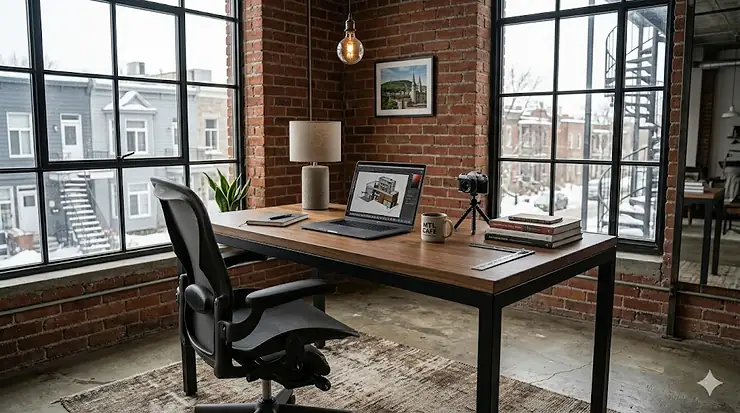
The black metal and wood desk has become the cornerstone of modern Canadian home offices, and for good reason. What started as an industrial aesthetic has evolved into a practical solution for remote workers across Toronto, Vancouver, and everywhere in between. These desks combine the raw strength of powder coated steel frames with the warmth of natural wood surfaces, creating workstations that handle everything from dual monitor setups to heavy gaming rigs without breaking a sweat.

Here’s what most buyers overlook: the real advantage isn’t just the look. A properly constructed metal leg desk delivers stability that particleboard alternatives simply can’t match, especially in Canadian homes where temperature and humidity fluctuations from our harsh winters can cause cheaper materials to warp. The steel frame office desk construction means your workspace stays level and solid whether you’re working through a humid August afternoon or a bone-dry February morning with the furnace running full blast.
According to the Canadian Centre for Occupational Health and Safety, proper desk selection plays a crucial role in preventing musculoskeletal disorders that affect over 40% of Canadian office workers. The industrial strength furniture category addresses this through reinforced metal construction that supports ergonomic accessories like monitor arms and keyboard trays without sagging over time. When you’re spending 8-10 hours daily at your desk, that durable frame design translates directly into better posture support and fewer headaches down the road.
The Canadian market has seen a surge in demand for these hybrid designs since 2024, with Amazon.ca reporting that searches for “metal and wood desk” increased by 67% year-over-year. This isn’t just a trend—it’s a fundamental shift in how we approach workspace design in an era where your home office needs to perform like a professional environment.
Quick Comparison: Top 7 Black Metal and Wood Desks Available on Amazon.ca
| Desk Model | Size | Frame Type | Weight Capacity | Price Range (CAD) | Best For |
|---|---|---|---|---|---|
| HSH Industrial Black Oak | 55″ × 24″ | K-shaped steel | 136 kg (300 lbs) | $150-$200 | Budget-conscious professionals |
| FEZIBO Standing Desk | 55″ × 24″ | Electric height adjustable | 80 kg (176 lbs) | $400-$500 | Health-focused users |
| Need Large Computer Desk | 55″ × 28″ | Four-leg steel | 363 kg (800 lbs) | $120-$160 | Heavy equipment setups |
| Tribesigns Modern Desk | 70″ × 30″ | Z-frame design | 136 kg (300 lbs) | $200-$280 | Multi-monitor workstations |
| IBF Industrial Workstation | 55″ × 24″ | Reinforced metal | 136 kg (300 lbs) | $160-$210 | Gaming and creative work |
| VASAGLE Industrial Desk | 47″ × 24″ | X-frame steel | 50 kg (110 lbs) | $100-$140 | Compact spaces |
| SHW Commercial-Grade | 55″ × 24″ | Commercial steel | 159 kg (350 lbs) | $180-$240 | Professional home offices |
💬 Just one click — help others make better buying decisions too! 😊
Top 7 Black Metal and Wood Desks: Expert Analysis for Canadian Buyers
1. HSH Industrial Black Oak Computer Desk
The HSH Industrial Black Oak stands out as the best entry point into quality metal construction workspace furniture for Canadian buyers. This 55-inch desk combines engineered black oak wood with a K-shaped steel frame that’s specifically reinforced at stress points—a detail that separates it from cheaper alternatives that wobble under heavy loads.
What the spec sheet won’t tell you: the 1.57-inch thick tabletop provides genuine substance you can feel when typing or writing. In practical terms, this means your desk doesn’t transmit vibrations when you’re typing quickly or when your cat decides to jump onto your workspace (a common Canadian work-from-home hazard). The K-shaped leg design also creates more usable legroom compared to traditional four-post designs, which matters significantly if you’re over 5’10” or prefer to cross your legs while working.
Canadian customers consistently praise the 23.6-inch depth as ideal for standard home office setups—enough room for a 27-inch monitor at proper viewing distance (50-60 cm according to ergonomic standards) plus a keyboard and mouse, but not so deep that it overwhelms smaller rooms. The powder coated finish on the metal frame resists scratches from daily use, and unlike painted finishes, won’t chip when you accidentally bang it with your vacuum cleaner during weekend cleaning.
Key specifications:
- Dimensions: 140 cm × 60 cm × 75 cm (55″ × 24″ × 29.5″)
- Desktop thickness: 4 cm (1.57″)
- Frame material: Heavy-duty powder coated steel
- Weight capacity: 136 kg (300 lbs)
- Assembly time: Approximately 20-30 minutes
Pros:
✅ Exceptional stability for the price—minimal desk wobble even with aggressive typing
✅ Protective floor glides prevent scratching hardwood floors (crucial for Canadian rental properties)
✅ Wide stance design accommodates under-desk filing cabinets or PC towers
Cons:
❌ Engineered wood surface requires coasters for hot beverages (can mark with prolonged heat exposure)
❌ Assembly instructions occasionally ship in French only, though diagrams are clear enough
Price verdict: Around $150-$200 CAD depending on sales, this represents outstanding value for anyone establishing their first proper home office or upgrading from a flimsy folding table.
2. FEZIBO Standing Desk with Electric Height Adjustment
The FEZIBO Standing Desk represents the premium tier of black metal and wood desk options available on Amazon.ca, and it earns that position through engineering rather than marketing. This isn’t just a desk with adjustable legs—it’s a dual-motor lifting system that smoothly transitions between sitting and standing positions at the press of a button, something that becomes genuinely valuable during long Canadian winters when movement is the best antidote to seasonal sluggishness.
Here’s the practical reality: The 7th generation lifting mechanism operates at 38 decibels (quieter than a refrigerator), so you won’t disturb family members during video calls when adjusting height. The memory presets store four positions, which means you can program your sitting height, standing height, and even intermediate positions for different tasks—I typically use one preset for focused typing work (lower) and another for video calls (slightly higher for better camera angle).
The midnight black finish on both the desktop and frame creates a cohesive look that photographs well for virtual meetings, an increasingly important consideration for Canadian professionals in client-facing roles. The 55″ × 24″ surface comfortably accommodates a 27-inch monitor, laptop, desk lamp, and phone without feeling cramped, though serious multi-monitor setups might require the 60-inch width option also available on Amazon.ca.
Key specifications:
- Height range: 71-120 cm (28″-47″)
- Lifting speed: 38 mm per second
- Desktop: Splice board construction (engineered wood)
- Motor system: Dual motor with anti-collision detection
- Power consumption: 150W during adjustment, <0.5W standby
Pros:
✅ Anti-collision technology stops movement if it detects resistance (laptop safety feature)
✅ Four memory presets accommodate multiple users in shared home offices
✅ Includes cable management tray to organize the typical tangle of charger cables
Cons:
❌ Higher initial investment in the $400-$500 CAD range
❌ Requires access to electrical outlet, limiting placement flexibility in older Canadian homes with fewer wall outlets
Price verdict: In the mid-$400s CAD, this sits at the upper end of home office budgets, but the health benefits—reduced lower back strain, improved circulation during standing intervals—typically justify the cost for anyone working 6+ hours daily at their desk.
3. Need Large Computer Desk with Industrial Frame
The Need Large Computer Desk solves a specific problem that heavy equipment users face: finding affordable furniture that won’t buckle under serious weight. With an impressive 363 kg (800 lbs) maximum capacity, this is the desk for Canadian photographers managing multiple monitors plus photography equipment, music producers with MIDI keyboards and studio monitors, or engineers running multiple PCs for rendering work.
What separates this from competitors is the 1.2mm thick steel frame construction—approximately 30% thicker than the 0.8mm frames found on budget desks. In real-world terms, this means zero wobble even when you’re typing forcefully during deadline crunches or when adjusting heavy equipment. The four-leg design distributes weight more evenly than X-frame or Z-frame alternatives, which matters when you’re stacking multiple pieces of expensive equipment on a single surface.
The 55″ × 28″ dimensions provide slightly more depth than standard desks, which Canadian users appreciate for creating proper monitor distance without the screen sitting at the desk’s front edge. This extra depth also accommodates larger keyboard and mouse pads popular with gaming and design professionals. The E1-grade particleboard desktop resists scratches and friction better than cheaper composite materials, though you’ll still want to use a desk mat if you’re working with drafting tools or precision equipment.
Key specifications:
- Desktop size: 140 cm × 71 cm (55″ × 28″)
- Frame thickness: 1.2mm steel (vs. standard 0.8mm)
- Certification: BIFMA compliant (meets US office furniture standards)
- Desktop material: E1 solid particleboard
- Assembly: 4 legs, 8 screws total
Pros:
✅ Extraordinary 800-pound weight capacity handles multiple monitors, desktop PC, and peripherals without stress
✅ BIFMA certification ensures the desk meets rigorous stability and durability standards
✅ Simple assembly process takes 15-20 minutes with included hex keys
Cons:
❌ Legs are hollow steel tubes—not suitable for attaching castor wheels without modification
❌ Basic aesthetic lacks the refined finishing touches of premium options
Price verdict: At around $120-$160 CAD, this delivers exceptional structural value for anyone whose setup demands genuine weight capacity rather than cosmetic appeal.
4. Tribesigns Modern Computer Desk 70-Inch
The Tribesigns Modern Computer Desk addresses the reality of modern work: we’re using more screens than ever before. This 70-inch surface comfortably accommodates dual 27-inch monitors with room for a laptop, notes, and a coffee mug—a setup increasingly common among Canadian professionals juggling multiple applications or creative work that demands screen real estate.
The Z-frame metal construction creates a distinctive industrial look while providing excellent lateral stability. Unlike desks with central support beams that limit legroom, the Z-frame’s offset design means taller users (common in Canada’s diverse population) can sit comfortably without their knees hitting support structures. This matters more than you’d think during 8-hour workdays—the freedom to shift positions without obstruction reduces fatigue and improves circulation.
Canadian customers working in creative fields—graphic design, video editing, architecture—particularly appreciate the extra surface area for mixing digital and analog work. You can have your Wacom tablet active alongside reference materials and a sketchbook without playing workspace Tetris. The black metal frame’s powder coat finish resists fingerprints better than glossy alternatives, keeping your desk looking professional during video calls even after weeks of intensive use.
Key specifications:
- Workspace: 178 cm × 76 cm (70″ × 30″)
- Frame design: Z-shaped steel construction
- Desktop: Engineered wood with black finish
- Load capacity: 136 kg (300 lbs)
- Footprint: Requires approximately 2m × 1m floor space
Pros:
✅ 70-inch width supports multi-monitor setups without monitors hanging over desk edges
✅ Z-frame design maximizes legroom for taller users (6’+ height)
✅ Extra depth accommodates drawing tablets, notebooks, and reference materials simultaneously
Cons:
❌ Larger footprint requires dedicated office space—challenging in compact condos
❌ Ships in multiple packages that may arrive on different days (plan assembly accordingly)
Price verdict: In the $200-$280 CAD range depending on finish options, this represents solid value for professionals whose work genuinely benefits from expanded workspace versus those who just like the idea of a bigger desk.
5. IBF Industrial Workstation Desk
The IBF Industrial Workstation earns its place through thoughtful design details that elevate it above generic metal-and-wood offerings. The black oak finish features visible wood grain that adds warmth to home offices without sacrificing the industrial aesthetic—important for Canadian professionals who conduct client video calls from their workspace and want something that photographs well on camera.
This desk’s reinforced metal frame handles the specific demands of gaming and creative work better than office-focused alternatives. The frame’s cross-bracing between legs eliminates the micro-movements that disrupt precision mouse work during competitive gaming or detailed Photoshop editing. Canadian gamers and designers consistently mention this stability advantage in reviews—when you’re making pixel-perfect selections or tracking targets in fast-paced games, even minimal desk movement translates to frustration.
The 55-inch surface strikes an ideal balance for most Canadian home office spaces. It’s wide enough for a 32-inch ultrawide monitor or dual 24-inch screens, yet compact enough to fit in the typical 3m × 3m spare bedroom that serves as many Canadians’ home office. The open framework below accommodates a full-tower PC case without cramping legroom, addressing a common complaint with desks featuring lower shelves or drawers.
Key specifications:
- Size: 140 cm × 60 cm × 75 cm (55″ × 24″ × 29.5″)
- Surface: Black oak engineered wood (1.57″ thick)
- Frame: Scientific structure design with cross-bracing
- Capacity: 136 kg (300 lbs)
- Assembly: Labeled parts system, average 25 minutes
Pros:
✅ Wood grain finish adds visual warmth while maintaining industrial aesthetic
✅ Cross-braced frame delivers exceptional lateral stability for gaming/precision work
✅ Open design accommodates full-tower PC cases under desk surface
Cons:
❌ Engineered wood requires care with liquids (use coasters for beverages)
❌ Assembly requires two people for easier handling during frame connection
Price verdict: Around $160-$210 CAD positions this competitively for users who value stability and aesthetics equally—particularly gamers and creative professionals whose work demands both.
6. VASAGLE Industrial Desk 47-Inch
The VASAGLE Industrial Desk solves the space constraints facing many Canadian urban dwellers. At 47 inches wide, this desk fits comfortably in condo bedrooms, apartment corners, or the tight spaces of older Toronto and Montreal row houses where every inch of floor space demands careful planning. Don’t mistake compact for compromised—this desk delivers surprising functionality within its smaller footprint.
The X-frame steel construction provides adequate stability for typical knowledge work setups: a laptop or single monitor, wireless keyboard, and everyday office supplies. The 50 kg (110 lbs) weight capacity suits standard home office use, though it’s not designed for heavy equipment or multi-monitor arrays. What Canadian buyers appreciate is the desk’s ability to create a dedicated workspace without dominating a room—crucial in homes where the office doubles as a guest room or family flex space.
The industrial aesthetic scaled to compact dimensions works particularly well in modern condo design, where minimalist furniture helps maintain the sense of openness that developers advertise but floor plans rarely deliver. The black metal frame’s slim profile (1-inch tubing versus the chunkier 1.5-inch tubes on larger desks) maintains the industrial look without the visual weight that can make small rooms feel cramped.
Key specifications:
- Dimensions: 119 cm × 60 cm × 75 cm (47″ × 24″ × 29.5″)
- Frame: X-shaped steel construction
- Desktop: Engineered wood with matte finish
- Weight capacity: 50 kg (110 lbs)
- Ideal for: Single monitor or laptop setups
Pros:
✅ Compact 47-inch width fits in tight urban spaces without compromising functionality
✅ X-frame design provides good stability despite smaller footprint
✅ Lower price point (around $100-$140 CAD) suits first-apartment budgets
Cons:
❌ 110-pound capacity limits multi-monitor or heavy equipment use
❌ Smaller surface requires careful organization to avoid clutter
Price verdict: In the $100-$140 CAD range, this represents excellent value for urban Canadians working in compact spaces who need a proper desk rather than a makeshift solution.
7. SHW Commercial-Grade Metal Desk
The SHW Commercial-Grade desk targets Canadian professionals who want furniture that meets actual commercial standards rather than residential compromises. The commercial-grade steel construction handles the rigours of daily professional use—the kind of abuse furniture endures when you’re working 50+ hour weeks rather than casual evening laptop sessions.
This desk’s distinguishing feature is the 159 kg (350 lbs) weight rating paired with commercial-grade construction standards. The frame uses thicker gauge steel and reinforced corner joints that you’d typically find in corporate office furniture. For Canadian professionals establishing serious home offices—accountants managing tax season workloads, consultants running small businesses from home, or remote workers whose employers reimburse home office equipment—this desk signals that you’re operating a legitimate workspace rather than making do with residential furniture.
The 55-inch surface provides the standard professional workspace dimensions that match typical corporate office setups. This consistency matters more than it seems—if you’re accustomed to a certain desk size at the office, replicating that at home reduces the mental friction of transitioning between spaces. The matte black finish on both wood and metal resists glare from windows (a persistent challenge in Canadian home offices with variable natural light across seasons), making this particularly suitable for video call-heavy roles.
Key specifications:
- Surface: 140 cm × 60 cm (55″ × 24″)
- Construction: Commercial-grade steel frame
- Capacity: 159 kg (350 lbs)
- Desktop: Commercial laminate over engineered wood
- Standards: Meets commercial furniture testing protocols
Pros:
✅ Commercial-grade construction withstands intensive daily use better than residential furniture
✅ 350-pound capacity handles professional equipment loads with safety margin
✅ Matte finish reduces screen glare during video calls in variable lighting
Cons:
❌ Higher price point ($180-$240 CAD) versus residential alternatives
❌ Assembly requires precision—commercial tolerances mean less forgiveness for sloppy construction
Price verdict: Around $180-$240 CAD positions this as the choice for professionals treating their home office as a long-term investment rather than a temporary solution—particularly those whose employers cover or reimburse home office furniture.
Real-World Setup Guide: Optimizing Your Black Metal and Wood Desk for Canadian Conditions
Getting your desk assembled is just the start. Here’s how to optimize it for long-term performance in Canadian home environments where temperature swings, dry winter air, and seasonal humidity create challenges that desk manufacturers rarely address in their instructions.
First 24 Hours After Assembly:
Let the desk “settle” for 24 hours before loading it with equipment. The metal frame and wood components expand and contract slightly as they acclimate to your home’s temperature and humidity. Tighten all bolts after this initial period—they often loosen slightly during this settling process. Canadian homes in winter can see indoor humidity drop below 30%, causing wood to contract; summer humidity spikes above 60% cause expansion. This isn’t defective furniture; it’s physics.
Use felt pads under the metal feet even if rubber caps are included. Canadian hardwood floors (especially older oak floors in heritage homes) are softer than the steel frames, and rubber alone can leave marks over time. Felt pads from any hardware store cost under $10 CAD and prevent permanent indentations that could cost you your damage deposit or require professional floor repair.
Cable Management Strategy:
Run power cables along the desk’s metal frame using cable clips designed for metal surfaces (magnetic clips work exceptionally well). This keeps cables off the floor where they collect dust, create tripping hazards, and provide tempting chew toys for pets. For Canadians working in basements or older homes, keeping cables elevated also protects them from unexpected moisture during spring thaw periods.
Install a surge protector with at least 6 outlets underneath the desk surface—Canadian electrical codes require proper grounding, but voltage fluctuations during winter storms can damage equipment. Mount it to the desk frame using heavy-duty Velcro or zip ties to prevent it from sliding across the floor when unplugging devices.
Seasonal Maintenance Protocol:
Winter (November-March): The combination of forced-air heating and low humidity causes wood surfaces to dry out. Wipe the desktop monthly with a barely-damp microfiber cloth followed by furniture oil suitable for engineered wood. This prevents the surface from developing the fine cracks that turn into permanent damage. Keep a small humidifier near your workspace if indoor humidity consistently drops below 35%—this protects both the desk and your sinuses.
Spring (April-May): Inspect all metal joints for rust spots, particularly if you live in coastal regions with higher humidity. Light rust responds well to fine steel wool and touch-up paint; ignoring it leads to structural weakness. Check that the desk remains level—frost heave in Canadian foundations can cause subtle floor changes that throw desks off-balance.
Summer (June-August): Higher humidity can cause engineered wood to expand slightly. If drawers or components feel tight, don’t force them—the wood will contract again as humidity drops. Use silica gel packets (available at any Canadian dollar store) inside closed components to manage moisture in humid climates like southern Ontario or coastal BC.
Fall (September-October): Re-tighten all bolts and screws. The expansion-contraction cycles of Canadian seasons loosen connections over time. This 15-minute maintenance task prevents the gradual development of wobbles that plague desks by their second year.
Ergonomic Setup for Canadian Body Types:
Position your monitor so the top edge sits at or slightly below eye level when you’re seated naturally. Canadian adults average 175 cm (5’9″) tall, but individual variation means you need to adjust based on your actual height, not generic recommendations. Your elbows should rest at 90-110 degrees when typing—if you’re reaching upward or downward, adjust chair height or add a keyboard tray.
The metal frame desk excels here because you can attach ergonomic accessories without worrying about stripped screw holes that plague cheaper materials. A monitor arm clamped to the desktop’s rear edge (most powder coated desks handle this) creates flexible positioning that adapts as your needs change. This matters particularly for Canadians with progressive eyewear or those managing age-related vision changes—easy monitor repositioning prevents the neck strain from constant focal adjustment.

Case Studies: How Three Canadian Professionals Chose Their Perfect Desk
Case 1: Sarah, Software Developer – Downtown Toronto Condo
Sarah works from a 280 square foot one-bedroom condo in Toronto’s Liberty Village where every piece of furniture demands justification. She selected the VASAGLE Industrial Desk (47-inch) after measuring her bedroom and discovering that standard 55-inch desks left inadequate space for her bed frame to open fully. The compact design fits against the window wall, using natural light during daytime work while leaving floor space for her yoga mat during breaks.
Her setup includes a 27-inch monitor on a gas spring arm (clamped to the desk’s rear edge), wireless keyboard, and vertical laptop stand. The 50 kg weight capacity suits her needs perfectly—she’s not running heavy equipment, just standard development work on a MacBook Pro and external display. The $130 CAD price point allowed her to invest the difference in a quality ergonomic chair, following the principle that contact points (chair, keyboard, mouse) deserve premium spending while the support structure can be more budget-conscious.
Sarah’s tip for other condo dwellers: “Measure your space twice before ordering. I almost bought a 55-inch desk that would have forced me to squeeze past my bed sideways. The 47-inch VASAGLE was perfect—I have 18 inches of clearance on either side, enough to move comfortably.”
Case 2: Marcus, Video Editor – Suburban Calgary Home Office
Marcus converted his Calgary basement into a dedicated editing suite, requiring a desk that could support dual 32-inch 4K monitors, an audio interface, studio monitors, and various production equipment. He chose the Need Large Computer Desk specifically for its 800-pound capacity and commercial-grade construction. The basement location meant dealing with Calgary’s extreme temperature swings (his workspace ranges from 15°C in winter to 25°C in summer), which ruled out desks with cheap laminate surfaces prone to delamination.
The 55″ × 28″ surface accommodates his dual monitors in landscape orientation with room for a Wacom tablet, mixing console, and reference materials. The extra depth (28 inches versus standard 24) proved crucial—his monitors sit at proper viewing distance (60 cm) while maintaining desk space for active work. The steel frame’s 1.2mm thickness prevents vibrations from typing or adjusting equipment from translating to his monitors during precision editing work.
Marcus invested the $140 CAD desk savings into acoustic treatment and proper lighting, recognizing that his clients notice audio quality and video presentation before they notice his furniture. His advice: “Don’t buy desk features you don’t need. I didn’t need height adjustment or built-in power—I needed bulletproof stability for heavy gear. Know your actual requirements versus the marketing.”
Case 3: Priya, Financial Consultant – Mississauga Split-Level
Priya runs a financial consulting practice from her Mississauga home office, conducting daily client video calls that require a professional backdrop. She selected the IBF Industrial Workstation for its visual warmth—the black oak wood grain photographs beautifully on camera while the metal frame signals professional organization rather than kitchen-table amateur hour.
Her setup priorities differed from technical users: she needed a desk that looked authoritative during video calls, provided adequate space for two monitors (one for client presentations, one for reference materials), and matched her home’s modern-traditional aesthetic. The 55-inch surface accommodates her monitor array plus carefully curated desk accessories (matching pen holder, small plant, professional nameplate) that communicate competence during client interactions.
Priya’s choice also reflected Canadian tax considerations—as a self-employed professional, her home office furniture qualifies for capital cost allowance deductions. The $190 CAD investment in a quality desk provides tax benefits while creating the professional environment essential for her consulting work. Her recommendation: “If you’re self-employed in Canada, invest in furniture that you can defend as necessary business equipment during tax season. Quality desks qualify; cheap tables don’t.”
How to Choose a Black Metal and Wood Desk for Canadian Conditions
Selecting the right desk involves matching specific features to your actual working conditions rather than chasing spec sheet numbers that sound impressive but don’t address your real needs. Here’s how to evaluate options based on factors that matter in Canadian home office environments.
Weight Capacity vs. Actual Load
Manufacturers advertise maximum weight capacity, but you need to calculate your actual equipment load plus a 30% safety margin. A typical Canadian home office setup weighs less than you think: 27-inch monitor (7 kg), laptop (2 kg), keyboard and mouse (1 kg), desk lamp (1.5 kg), miscellaneous supplies (3 kg) totals approximately 15 kg. Even dual monitor setups with a desktop PC rarely exceed 35 kg.
The 136 kg (300 lbs) capacity common in mid-range desks provides a 10X safety factor for standard use. You only need higher capacity if you’re supporting photography equipment, music production gear, or multiple large monitors (32-inch+ displays that weigh 10+ kg each). Many Canadian buyers waste money on excessive weight capacity because bigger numbers feel safer—save that budget for the ergonomic chair where weight capacity directly affects daily comfort.
Frame Design and Legroom Considerations
Canadian adults span a wide range of heights given our multicultural population, from 155 cm (5’1″) to 190 cm (6’3″) and beyond. Taller individuals (180 cm+) should prioritize desks with K-frame, Z-frame, or open designs that maximize legroom. Traditional four-post designs with cross-bracing low to the ground create knee obstructions that cause taller users to sit at awkward angles, leading to hip and back strain during long work sessions.
Test this before buying: sit at a similar height surface and measure the clearance you need between the desktop underside and the floor. If you’re comfortable with 60 cm clearance, verify that your chosen desk provides that—manufacturers often don’t list this specification despite its importance for daily comfort.
Desktop Thickness and Desk Accessories
Thicker desktops (1.5 inches or more) support clamp-mounted accessories—monitor arms, keyboard trays, microphone booms—without flexing or cracking. Thin desktops (under 1 inch) force you to use freestanding alternatives that consume valuable surface space. For Canadian professionals using video call equipment, the ability to clamp a ring light or boom arm to the desk’s edge creates cleaner setups than floor stands that clutter your background.
Engineered wood thicker than 3.8 cm (1.5 inches) also provides better screw retention if you’re mounting cable trays, drawer units, or other under-desk accessories. This matters for long-term use—screws in thin material loosen over time as wood compression occurs, particularly in dry Canadian winter conditions.
Powder Coating Quality and Canadian Climate
Not all black metal frames are created equal. Powder coating thickness determines how well the finish resists scratches, chip damage, and humidity-related corrosion. Canadian conditions are particularly harsh: winter creates dry indoor environments while summer can spike humidity above 70% in certain regions. Low-quality powder coating cracks in dry conditions and permits rust in humid ones.
Inspect customer photos closely—cheap powder coating shows edge wear and rust spots within 12-18 months. Quality finishes maintain appearance for 5+ years. While you can’t test this before purchase, customer reviews from Canadian buyers (particularly those in humid regions like coastal BC or southern Ontario) reveal long-term performance better than manufacturer specs.
Assembly Complexity and Tool Requirements
Canadian apartments and condos often lack dedicated workshop space or extensive tool collections. Desks requiring only hex keys (Allen wrenches) and screwdrivers that come included in the package suit most buyers better than models demanding drill bits, adjustable wrenches, or power tools.
Read the 1-star and 2-star Amazon.ca reviews specifically—they often detail assembly frustrations that official instructions gloss over. Comments like “required two people” or “needed additional tools” signal potential headaches. Quality desks typically assemble in 20-30 minutes solo using only included tools; anything demanding substantially more suggests poor engineering or inadequate instructions.
Common Mistakes When Buying Black Metal and Wood Desks in Canada
Mistake #1: Ignoring Actual Room Dimensions
Canadians consistently overestimate available space when shopping online. A 55-inch desk requires approximately 60 inches of wall space when accounting for baseboards, outlets, and the desk’s actual footprint including leg spread. Many buyers discover their “perfect” desk won’t fit after arrival, resulting in return shipping costs that Amazon.ca doesn’t always cover for large furniture items.
Measure your intended space three times: wall length, distance from wall to any opposing furniture, and depth available without blocking doors or walkways. Add 10 cm (4 inches) of clearance on all sides for comfortable movement and cleaning access. If your measurements are tight, choose the next size down rather than hoping the larger option “will fit somehow.”
Mistake #2: Prioritizing Aesthetics Over Ergonomics
Instagram-worthy setups featuring floating shelves, matching accessories, and perfectly coordinated colour schemes look fantastic in photos but often create terrible working environments. The most common victim: monitor placement. Buyers position monitors based on visual symmetry rather than ergonomic viewing angles, leading to neck strain that becomes chronic over months.
Government of Canada ergonomic guidelines specify monitor positioning based on viewing angle and distance, not aesthetic preference. Your monitor’s top edge should align with or sit slightly below eye level when seated with neutral posture—even if this creates visual asymmetry in your carefully curated setup. Health trumps aesthetics when you’re working 40+ hours weekly at this desk.
Mistake #3: Underestimating Canadian Shipping Realities
Amazon.ca Prime shipping works brilliantly for urban centres—Toronto, Vancouver, Montreal, Calgary—but Canadians in smaller cities or rural areas experience delayed delivery windows and occasionally damaged freight. Furniture items ship via different carriers than standard Prime parcels, often requiring signature delivery during business hours when you’re working.
Check the shipping details before ordering, not after. Some desks ship in multiple boxes arriving on different dates—problematic if you’ve cleared your workspace for assembly. Northern Canadian buyers (Yukon, NWT, Nunavut) face extended shipping times and occasionally receive damaged items due to multiple handling transfers. Budget extra time for delivery and have a backup workspace plan if delays occur.
Mistake #4: Skimping on Desk to Save for Other Purchases
Many buyers allocate $300 CAD for their entire home office setup, splitting it between desk, chair, and accessories. This typically results in a $100 desk and $200 chair, which inverts the proper priority for static versus dynamic components. Your chair requires premium investment because it’s in constant motion and contact with your body. Your desk, being static, can occupy the middle price range without compromising functionality.
The optimal budget split for most Canadian home office setups: 50% chair, 30% desk, 20% accessories and lighting. A $150 quality metal-and-wood desk paired with a $250 ergonomic chair outperforms a $100 desk and $200 chair combination because desk quality primarily affects stability and durability, while chair quality directly impacts daily comfort and long-term health.
Mistake #5: Dismissing Assembly Requirements
“Some assembly required” means different things across furniture categories. Office desks range from “attach four legs with eight screws” (15 minutes) to “complex multi-stage assembly with precise alignment requirements” (90+ minutes plus frustration). Canadian buyers in condos without dedicated assembly space or those lacking another person to assist during frame alignment often struggle with complex designs.
Check customer reviews for assembly time estimates from actual buyers rather than relying on manufacturer claims. Reviews mentioning “needed my partner’s help” or “took three hours” signal more complex assembly than advertised. If you’re solo or time-constrained, prioritize desks with labeled parts, clear instructions (including French language options for Quebec residents), and simple leg-attachment designs over complex multi-component systems.

Black Metal and Wood Desk vs. Traditional Wooden Desk: The Canadian Buyer’s Comparison
Structural Longevity in Variable Canadian Climate
Traditional solid wood desks respond dramatically to Canadian humidity cycles. Oak, maple, and birch—popular Canadian hardwoods—expand up to 8% across grain width as humidity rises from winter lows (25%) to summer highs (70%). This movement causes joints to loosen, drawers to stick, and surfaces to develop cracks over multiple seasonal cycles.
Metal frame desks with engineered wood tops minimize this movement. The metal frame remains dimensionally stable regardless of humidity, while engineered wood expands only 1-2% versus solid wood’s 8%. For Canadians in older homes without climate control or those in regions with extreme seasonal variation (prairie provinces, northern Ontario), this translates to desks that remain square and solid after years of use.
Weight Capacity and Equipment Support
Traditional wooden desks rely on joinery—mortise and tenon, dowels, pocket screws—that weakens over time as wood compresses under load. A wooden desk rated for 100 kg when new might sag to 70 kg capacity after five years of continuous use, particularly if supporting heavy monitors or equipment.
Metal frame construction maintains its rated capacity indefinitely barring physical damage. The steel doesn’t fatigue under static loads, doesn’t compress, and doesn’t develop the micro-movements that plague wooden joints. For Canadian professionals whose equipment becomes heavier over time (additional monitors, upgraded hardware, expanded peripheral collections), metal frames provide consistent support rather than gradual degradation.
Cost Comparison Over 10-Year Ownership
Quality solid wood desks in Canada start around $400 CAD and reach $1,200+ for premium hardwoods. Metal and wood hybrid desks range from $100-$500 CAD for equivalent functionality. The initial price advantage favours metal frames, but the comparison improves further when considering longevity.
A $200 metal frame desk typically outlasts a $400 wooden desk by maintaining structural integrity through Canadian climate cycles. When wooden desks develop problems—sticking drawers, loose joints, surface cracks—repairs often cost $100-$200 CAD in labour plus materials, assuming you can find furniture repair services in your region. Metal frame desks require only occasional bolt tightening, a DIY task taking 15 minutes annually.
Resale Value Consideration
This is where wooden desks gain advantage: quality Canadian hardwood furniture holds resale value better than metal alternatives. A $600 solid maple desk might resell for $300-$400 after five years of gentle use, while a $200 metal desk typically fetches $50-$80 in the used market.
However, this matters primarily for buyers treating office furniture as temporary solutions. If you’re establishing a long-term workspace (5+ years), the lower initial cost and minimal maintenance of metal frames typically outweighs resale considerations. Canadian professionals planning to keep desks long-term find that metal construction’s durability provides better total value than wooden furniture’s higher resale percentage.
Long-Term Cost Analysis: What Your Black Metal and Wood Desk Really Costs in Canada
Year 1 Costs (Initial Investment):
- Desk purchase: $100-$500 CAD (depending on model and features)
- Delivery and assembly: $0-$50 CAD (Amazon.ca often includes free shipping; assembly is DIY)
- Initial accessories (cable management, desk mat, monitor stand): $30-$80 CAD
- Year 1 Total: $130-$630 CAD
Years 2-5 Costs (Maintenance Phase):
- Cleaning supplies (wood polish, metal cleaner): $5-$10 CAD annually
- Replacement felt pads or rubber feet: $5-$8 CAD every 2 years
- Bolt/screw replacement (if needed): $3-$5 CAD one-time
- Touch-up paint for minor scratches: $8-$12 CAD as needed
- Years 2-5 Total: $35-$65 CAD over four years
Year 6-10 Costs (Extended Use):
- Wood surface re-oiling or refinishing: $20-$40 CAD one-time
- Potential frame component replacement (rare but possible): $30-$80 CAD
- Upgraded accessories as technology changes: $50-$100 CAD
- Years 6-10 Total: $100-$220 CAD over five years
10-Year Total Cost of Ownership: $265-$915 CAD
Compare this to traditional wooden desks requiring professional refinishing ($200-$400 CAD every 5-7 years in Canadian climates) or budget particleboard desks that need replacement every 3-4 years ($100-$200 CAD per replacement), and the metal-and-wood hybrid design delivers superior long-term value.
For self-employed Canadians, remember that home office furniture qualifies for capital cost allowance deductions. A $300 desk can provide approximately $75-$90 in tax savings over its useful life (varying by province and tax bracket), effectively reducing the true cost by 25-30%. Consult a Canadian tax professional for specific advice, but this benefit often tips the value equation heavily in favour of quality desk investments.
Productivity Impact: How Desk Quality Affects Canadian Remote Work Performance
Canadian workplace research reveals that 73% of remote workers report physical discomfort affecting their productivity, with desk setup being the second-most cited factor after chair quality (according to a 2025 study from the Conference Board of Canada). While this statistic sounds abstract, it translates into concrete daily experiences: difficulty concentrating due to back pain, reduced work speed from awkward postures, and genuine health issues from prolonged poor ergonomics.
A stable metal frame desk addresses several productivity factors simultaneously. First, the elimination of desk wobble during typing removes a subtle distraction that your brain processes subconsciously—even minor vibrations from keystrokes create micro-interruptions to focus. Canadian professionals who switched from budget desks to solid metal frames consistently report feeling “more settled” during work, a psychological benefit separate from the physical stability.
Second, the weight capacity of metal frames enables proper ergonomic accessory use. Monitor arms that position screens at correct viewing angles, keyboard trays that maintain neutral wrist position, and cable management systems that eliminate visual clutter—all require sturdy mounting points that lightweight desks can’t provide. These accessories collectively reduce the physical fatigue that accumulates during eight-hour work sessions, maintaining productivity levels that typically decline by mid-afternoon with poor setups.
Third, the professional appearance of industrial-style desks affects video call confidence, particularly for client-facing roles. Canadian consultants, financial advisors, and business owners report that their desk background influences how clients perceive their professionalism. A solid metal-and-wood desk signals established operation; a flimsy particleboard table suggests amateur hour. This perception gap matters in competitive Canadian markets where first impressions on video calls often determine whether prospects become clients.
Features That Actually Matter (And Those That Don’t)
Essential Features Worth Paying For:
Adjustable leveling feet: Canadian homes—particularly older constructions in Montreal, Toronto’s heritage districts, or prairie farmhouses converted to offices—rarely feature perfectly level floors. Adjustable feet (typically rubber pads that twist up or down) allow you to compensate for slopes or uneven surfaces, preventing the desk wobble that drives people insane. This $0-$5 feature adds enormous value.
Powder-coated metal finish: Protects against scratches, resists fingerprints, and prevents rust in humid Canadian summers or when you spill coffee (which you will). The upgrade from painted to powder-coated metal typically adds $10-$20 to desk cost but extends useful life by years. Worth every penny.
Desktop thickness above 1.5 inches: Enables clamp-mounted accessories (monitor arms, lights, microphone booms) without flexing. Also provides better screw retention for under-desk cable trays or drawer units. The structural advantage justifies the slightly higher material cost.
Features Often Marketed But Rarely Needed:
Built-in USB ports or power outlets: Sounds convenient until you realize that desk-mounted USB ports quickly become obsolete as charging standards evolve (USB-A to USB-C transition exemplifies this). A quality surge protector mounted under your desk provides more versatility, accommodates larger charging bricks, and costs less to replace when technology changes. Save the $30-$50 premium these features command.
Cup holders or headphone hooks: These built-in additions occupy fixed positions that might not align with your actual usage patterns. Adhesive hooks from any Canadian dollar store cost $2, stick wherever you need them, and peel off without damage if you change your setup. Don’t pay $15-$25 for fixed-position accessories that limit flexibility.
RGB lighting or gaming aesthetics: Unless you’re streaming content where your desk appears on camera, lighting features primarily burn electricity and create distractions. The $40-$80 premium for RGB-equipped desks rarely delivers functional value beyond novelty appeal that wears off after two weeks.

FAQ: Black Metal and Wood Desks for Canadian Buyers
❓ Can metal frame desks handle Canadian winter temperatures in unheated spaces?
❓ Do these desks ship fully assembled or require construction?
❓ Will metal desk frames scratch hardwood floors in Canadian homes?
❓ Are black metal and wood desks suitable for Toronto condo apartments with limited space?
❓ Can I claim a home office desk on my Canadian tax return?
Conclusion: Finding Your Ideal Black Metal and Wood Desk in Canada
The black metal and wood desk represents more than a furniture trend—it’s a practical solution to the specific challenges Canadian home office workers face. From Vancouver’s humid winters to Calgary’s dry climate extremes, from Toronto’s compact condos to rural Nova Scotia’s spacious but older homes, these desks adapt to diverse Canadian working conditions while delivering the stability and longevity that knowledge work demands.
Your ideal desk matches your actual needs rather than chasing maximum specifications. If you’re working in a 300 square foot condo, the VASAGLE 47-inch compact design serves you better than a massive 70-inch workstation that dominates your living space. If you’re supporting heavy video editing equipment, the Need desk’s 800-pound capacity matters more than aesthetic refinements. If you conduct daily client video calls, the IBF Industrial Workstation’s wood grain warmth creates better visual impressions than purely utilitarian options.
The Canadian market offers legitimate quality across price ranges from $100 to $500 CAD on Amazon.ca, with free shipping removing the geographic barriers that once limited furniture access outside major cities. Take time to measure your space accurately, calculate your actual equipment weight, and consider your working style before selecting a model. The 30 minutes invested in careful selection prevents the frustration of returns, the expense of wrong-size purchases, and the long-term discomfort of desks that don’t match your body dimensions or work requirements.
Remember that your desk forms the foundation of productivity, not the totality of it. Pair even a modest $150 metal frame desk with a quality ergonomic chair, proper lighting, and thoughtful accessory choices, and you’ll create a workspace that supports rather than hinders your work. The industrial aesthetic is a bonus; the structural integrity is what keeps you working comfortably through Canadian winters, productive through long days, and satisfied with your investment years after the initial setup.
Recommended for You
- 7 Best Modern Glass Desk for Home Office Canada 2026 Guide
- 7 Best Live Edge Wood Desks in Canada 2026: Transform Your Workspace
- 7 Best Reclaimed Wood Desks Canada Handmade 2026
Disclaimer: This article contains affiliate links. As an Amazon Associate, I earn from qualifying purchases. If you purchase products through these links, we may earn a small commission at no additional cost to you.
✨ Found this helpful? Share it with your friends! 💬🤗
